
Parquet flooring confuses a surprising number of homeowners. Is it the same as engineered wood? Is it just old-fashioned block flooring from a Victorian hallway? The truth is more interesting. Parquet is a type of wood flooring made from small strips or blocks of hardwood arranged in geometric patterns, and that single design detail changes everything about how a floor looks and feels. This guide will walk you through what parquet actually is, which styles suit different rooms, and what to expect from professional installation in a Glasgow home.
Key Takeaways
| Point | Details |
|---|---|
| Distinctive geometric patterns | Parquet flooring is defined by its timeless geometric layouts like herringbone and chevron. |
| Combines style with durability | Parquet floors withstand daily use and bring a classic look to any room. |
| Expert installation recommended | Professional fitting ensures maximum performance, especially in Scottish homes. |
| Wide style and wood choices | Homeowners can select from various patterns and wood types to suit their space. |
What makes parquet flooring unique?
Parquet stands apart from standard plank flooring the moment you see it. Where plank floors run in straight, uniform lines, parquet arranges small hardwood strips in repeating geometric layouts that draw the eye across the whole floor rather than along a single direction.
Those geometric layouts are the heart of parquet’s appeal. The most recognised patterns include:
- Herringbone: Rectangular blocks set at 45 or 90 degrees to create a V-shaped zigzag
- Chevron: Similar to herringbone but with angled cuts so the points align perfectly
- Basketweave: Alternating horizontal and vertical groupings that mimic woven texture
- Brickwork: Offset rows that echo traditional brickwork for a relaxed, linear feel
Parquet has its origins in the grand European interiors of 17th-century France, where palace floors were designed to impress. Today, those same patterns are appearing in contemporary Glasgow flats and family homes, updated with lighter oak tones and wider blocks that suit modern proportions.
Parquet is not a material. It is a method of laying wood. You can have parquet in solid oak, engineered oak, or even reclaimed timber. The pattern is what defines it, not the species or board construction.
If you want to see how the layout translates into a real room, herringbone pattern ideas for Glasgow homes offer excellent visual reference. For a sharper, more contemporary direction, chevron flooring tips cover the key decisions around angle, width, and finish.
Popular parquet flooring patterns and styles
Parquet patterns like herringbone and chevron are the classics for good reason: they work across a wide range of room sizes and interior styles. But each pattern creates a genuinely different atmosphere.

| Pattern | Visual effect | Best suited to |
|---|---|---|
| Herringbone | Dynamic movement, traditional warmth | Living rooms, hallways |
| Chevron | Clean, precise, contemporary | Open-plan kitchens, bedrooms |
| Basketweave | Intricate texture, period character | Dining rooms, studies |
| Brickwork | Relaxed, understated geometry | Family rooms, casual spaces |
Beyond the pattern, the width and length of each block affects how a room feels. Narrower, shorter blocks make a space feel intricate and detailed. Wider blocks in a chevron layout feel bolder and more contemporary. Lighter wood tones expand smaller rooms visually, while darker stains add intimacy to larger, open spaces.
A few points worth noting when choosing:
- Herringbone works particularly well in hallways because the diagonal lines draw the eye forward
- Chevron wood flooring suits open-plan rooms where the sharp point alignment creates a strong visual anchor
- Basketweave suits period properties, where it complements original architectural details
For Glasgow homes specifically, lighter European oak in a herringbone flooring layout has become a popular choice, pairing well with both traditional tenement features and modern fitted interiors. Seeing Glasgow herringbone styles in finished projects makes the pattern decisions much easier.
Benefits and drawbacks of parquet flooring
Parquet is durable and decorative but does require experienced fitting. It is worth understanding both sides clearly before committing.
Key benefits:
- Highly durable under daily foot traffic when properly installed and finished
- Distinctive visual character that plain plank flooring simply cannot match
- Solid wood parquet can be sanded and refinished multiple times over its lifetime
- Adds significant appeal and perceived value to a property
Potential drawbacks:
- More sensitive to moisture than some other flooring types, which matters in Scotland’s climate
- Installation requires greater skill and takes longer than laying standard planks
- Can be more expensive per square metre, particularly in intricate patterns
| Flooring type | Durability | Moisture sensitivity | Visual impact | Refinishable |
|---|---|---|---|---|
| Parquet | High | Moderate to high | Very high | Yes |
| Engineered wood | High | Lower | High | Limited |
| Solid wood | Very high | High | High | Yes |
Engineered parquet is worth considering for Glasgow homes because its layered construction handles humidity fluctuations better than solid wood. You can browse the full range of wood flooring options to compare constructions side by side.
Pro Tip: In Scotland, allow wood flooring to acclimatise in the room for at least 48 hours before installation. This simple step reduces the risk of expansion or gapping after fitting.
Expert advice on installation and maintenance
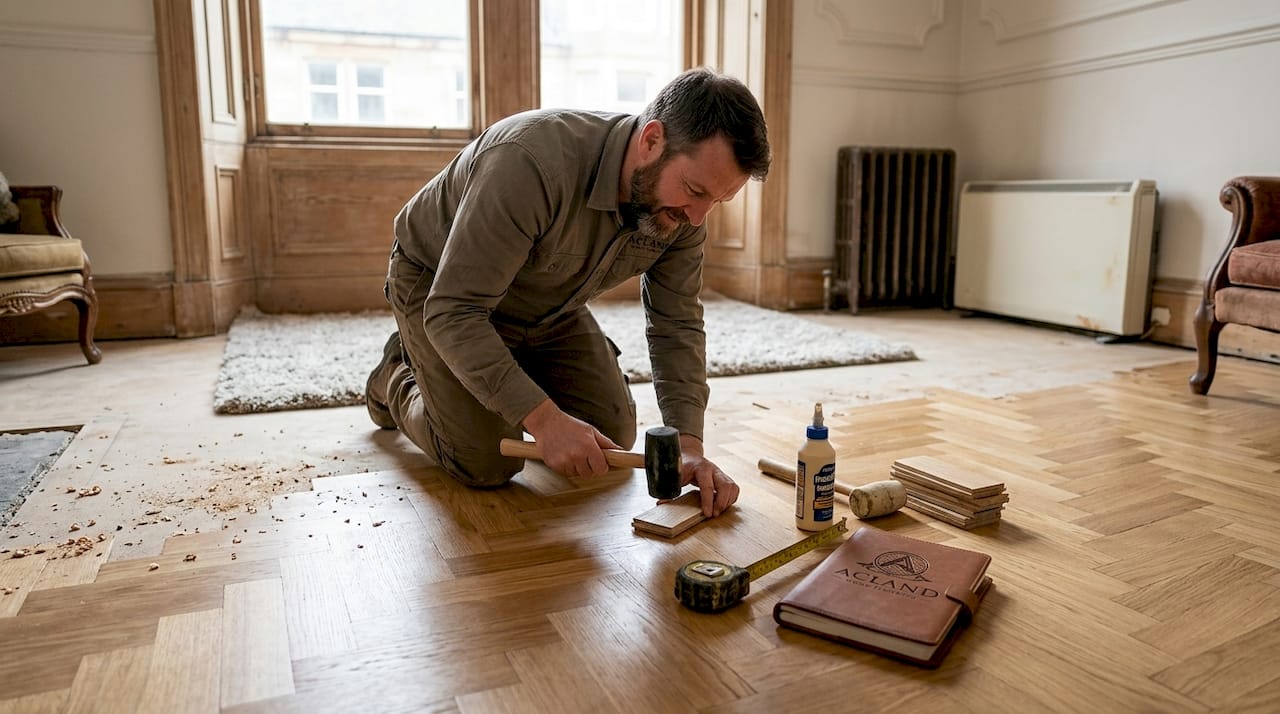
Skilled fitting and subfloor preparation are what separate a parquet floor that lasts decades from one that lifts, gaps, or creaks within a year. The process has clear stages, and knowing what to expect helps you plan properly.
- Initial survey and quotation: A specialist visits to assess the subfloor condition, measure accurately, and discuss pattern options suited to your room dimensions.
- Subfloor preparation: The floor must be level, dry, and clean before any wood goes down. Even minor imperfections in the subfloor will telegraph through the finished floor over time.
- Acclimatisation: The wood sits in the room for a minimum of 48 hours, adjusting to the ambient temperature and humidity before fitting begins.
- Fitting: Each block or strip is precisely positioned, glued, and checked for alignment. Parquet patterns leave no room for shortcuts.
- Sanding and finishing: Once fitted, the floor is sanded flat and sealed or oiled to protect the surface and bring out the wood’s natural character.
For ongoing care, sweep regularly with a soft brush and use a pH-neutral wood floor cleaner. Avoid wet mopping entirely. Check our herringbone installation tips for more detail on the fitting process. Our recent Glasgow parquet projects show finished results across a range of property types.
Pro Tip: Place felt pads under furniture legs on parquet floors. The individual blocks in parquet patterns are more susceptible to localised scratching than continuous plank floors.
Local expertise matters more with parquet than with most other floor types. Glasgow’s older tenement buildings often have subfloors that need particular attention, and a fitter who understands Scottish construction makes a real difference. Expert wood floor advice from someone who knows the local context is genuinely valuable.
A fresh perspective on parquet flooring for Glasgow homes
Most people assume parquet belongs in old villas or period flats. We understand why. The pattern carries history. But in practice, fitting parquet in a modern Glasgow home tells a completely different story. The same herringbone layout that graced a 19th-century Parisian apartment looks striking in a contemporary open-plan living space when you choose a wide-format block in pale, lightly oiled oak. The geometry is timeless. What changes is the wood tone, the block size, and the finish. Parquet is not a period statement. It is a design tool, and a flexible one. Explore herringbone design innovations to see just how far the pattern has evolved.
Ready to transform your home with parquet flooring?
If this guide has clarified what parquet can do for your home, the next step is seeing real options and getting honest advice tailored to your space.

At Acland Wood Flooring, we supply and install Glasgow herringbone flooring and precision chevron installations across Glasgow and Central Scotland. Our team works exclusively with wood floors, which means every recommendation we make is grounded in real fitting experience. If you are exploring options, our expert wood flooring fitters page covers the range of engineered and solid constructions we work with. Get in touch to discuss your project.
Frequently asked questions
Is parquet flooring suitable for kitchens and bathrooms?
Parquet can work well in kitchens when properly sealed, but it is moisture-sensitive in wet areas and is generally not recommended for bathrooms where steam and standing water are common.
Can you refinish parquet flooring if it gets scratched?
Yes. Most solid wood parquet can be sanded and refinished to remove scratches, and parquet can be refinished multiple times depending on the thickness of each block.
Does parquet flooring add value to my home?
High-quality parquet adds genuine appeal to a property. Parquet’s decorative reputation is well established, and buyers often view it as a premium feature that justifies a higher asking price.
What is the typical lifespan of parquet flooring?
With proper care, parquet floors last for several decades. Durability with suitable care is one of parquet’s strongest arguments over other flooring types, particularly when solid wood blocks are used.