
Choosing wood flooring for your Glasgow home sounds straightforward until you’re standing in a showroom, faced with dozens of species, finishes, and pattern options at wildly different price points. Scotland’s damp climate, older housing stock, and modern tastes for open-plan living all pull in different directions. Get the decision right and your floor becomes one of the most admired features in your home. Get it wrong and you’re dealing with warping, fading, or a costly replacement far sooner than expected. This guide cuts through the confusion.
Key Takeaways
| Point | Details |
|---|---|
| Solid vs engineered wood | Solid wood lasts the longest but engineered wood is more stable for Scottish climate. |
| Professional installation matters | Expert fitting significantly lengthens the life and appearance of your floor. |
| Pattern and finish choice | Choosing the right pattern and a durable finish like aluminium oxide improves resilience and style. |
| Excellent value over time | All real-wood flooring types deliver high resale value and impressive long-term returns. |
How to choose the right wood flooring for your home
The single most overlooked factor for Glasgow homeowners is moisture. Scotland’s west coast sees more rainfall than almost anywhere else in the UK, and that ambient humidity works its way into your home constantly. Wood is a natural material that breathes, expanding when it absorbs moisture and contracting when conditions dry out. If your flooring choice doesn’t account for this, problems appear within the first year.
Before you browse any catalogue, ask yourself these four questions:
- What is the room’s moisture exposure? Kitchens and bathrooms demand more stable materials than a living room.
- How much foot traffic does this area see? A hallway needs a harder species and tougher finish than a bedroom.
- Do you have underfloor heating? Not all wood types work well with it, and some can crack if fitted incorrectly.
- What is your realistic long-term budget? A cheap floor replaced in ten years costs far more than a quality floor lasting fifty.
On the question of finish, the coating protecting your floor’s surface matters enormously. Aluminium oxide finishes are extremely hard-wearing and resist scratches well. UV-cured lacquers seal the grain beautifully. Oil finishes penetrate the wood and give a more natural feel, but require more frequent maintenance. The right finish extends your floor’s life significantly.
It’s worth knowing that solid and engineered wood floors both deliver a return on investment of 118% to 147% at resale, but their upfront costs and lifespans vary considerably. Understanding that difference before you commit is essential.
For a room-by-room breakdown of which materials perform best where, take a look at our guide to wood flooring by room. If humidity is a particular concern in your property, our detailed overview of best options for humid climates is well worth reading.
Pro Tip: Always acclimatise your wood flooring in the room where it will be fitted for at least 48 to 72 hours before installation. This allows the boards to adjust to the room’s specific temperature and humidity, dramatically reducing the risk of gaps or buckling later on.
Solid wood flooring
With the main selection criteria in mind, let’s review the central types, starting with the timeless solid wood option.
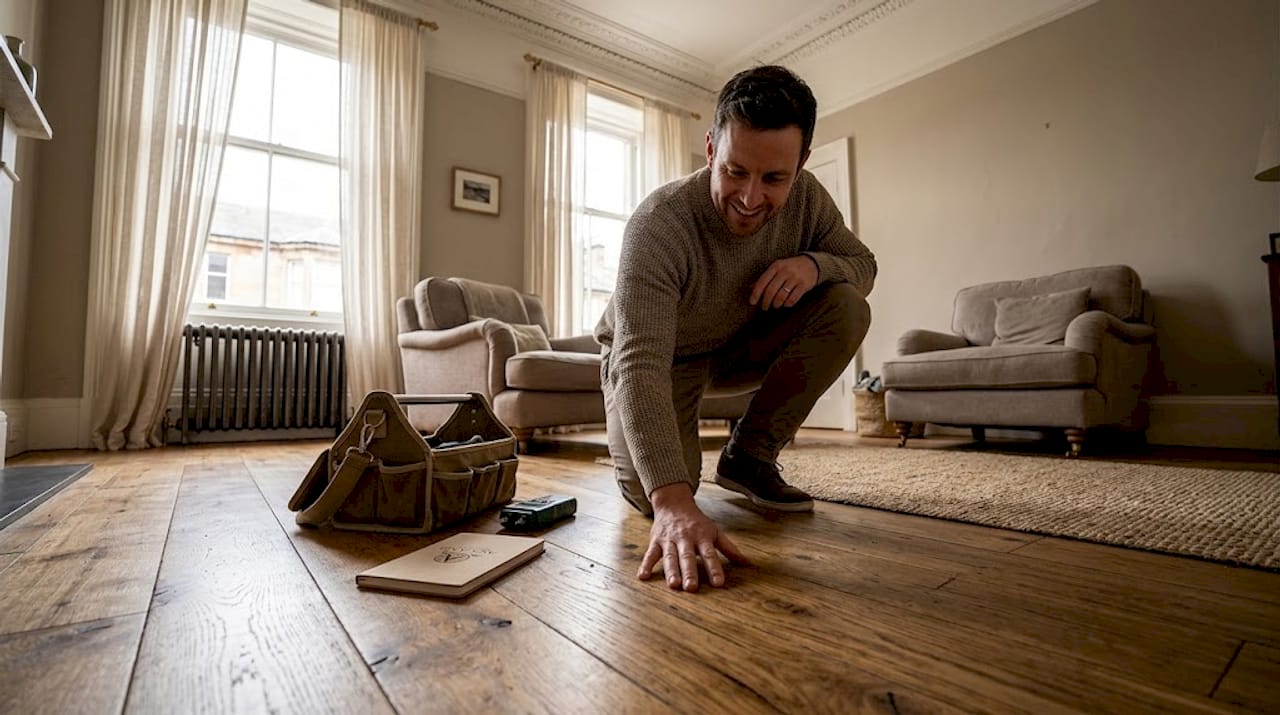
Solid wood flooring is milled from a single piece of timber all the way through. That means every plank is genuine wood from top to bottom, with no core layers or adhesive bonding. This construction gives it an unmatched sense of depth, warmth, and luxury underfoot. When you see the grain on a solid oak or walnut board, you’re seeing the real thing.
Here’s what makes solid wood stand out:
- Refinishing potential: Because it’s solid timber, it can be sanded back and refinished multiple times across its life. A well-laid floor from the Victorian era can still look stunning today if it’s been properly maintained.
- Lifespan: According to flooring research, solid wood lasts 50 to 100+ years when properly installed and maintained, making it genuinely generational.
- Prestige: Period Glasgow properties in areas like Kelvinside or Pollokshields often have original solid wood floors that owners restore rather than replace.
The main challenge with solid wood in Scotland is its sensitivity to moisture fluctuations. Boards expand in humid summers and contract in dry, centrally heated winters. Poor installation that doesn’t allow for adequate expansion gaps will cause boards to buckle or crack. This is why professional, moisture-aware fitting is non-negotiable with this material.
“A solid wood floor is not just a surface. It is a structural feature of your home. Treat it accordingly, and it will outlast everything else in the room.”
Explore our range of solid wood flooring in Glasgow to see species, grades, and widths available for your property. For more on what’s involved in fitting, our page on timber floor installation gives a clear picture of the process.
Pro Tip: In older Glasgow tenements or sandstone properties, subfloors are often uneven or damp-prone. Always get a subfloor assessment before committing to solid wood, as preparation work here protects your investment long-term.
Engineered wood flooring
Solid wood may be classic, but engineered wood opens up flexibility and value for many homes.
Engineered wood is constructed from multiple layers of timber bonded together, with a real wood veneer on top. That core structure is the key to its performance advantage. Where solid wood moves significantly with changes in humidity, the cross-ply core of engineered boards reduces movement by 50 to 70% compared with solid timber. For Glasgow’s climate, that stability is genuinely valuable.
Key benefits to consider:
- Underfloor heating compatibility: Engineered wood’s stable core makes it far better suited to underfloor heating systems, which can dry out solid wood excessively.
- Wider planks: The structural stability allows for much wider boards without the warping risk you’d see with solid wood of the same width.
- Refinishing: A thicker veneer above 4mm means you can sand and refinish engineered floors, extending their life considerably.
- Cost: Engineered wood typically costs less to install than solid, with installed costs of £4 to £12 per square foot and a lifespan of 20 to 50+ years depending on construction quality.
The look on the surface of an engineered board is indistinguishable from solid wood to the naked eye, because the wear layer is genuine timber. Oak, walnut, ash, and smoked finishes are all available in engineered form. Many homeowners are surprised to discover that their preferred aesthetic is achievable at a lower price point through engineered construction.
Discover our selection of engineered wood in Glasgow and find out which construction quality suits your usage. Our guide on avoiding common flooring errors is also worth reading before you commit to any product.
Popular patterns and alternative types
Beyond board type, pattern and alternative products also influence outcome and style.
The pattern in which boards are laid transforms the character of a room entirely. Herringbone and chevron are the two most requested decorative patterns we see, and both add an undeniable sense of luxury and intention to a space. Herringbone uses rectangular boards laid in a staggered zigzag, while chevron boards are cut at an angle so the pattern forms a continuous pointed shape. Both require precise cutting and experienced fitting. A poorly executed herringbone is immediately visible, so expert installation matters significantly here.
For pattern inspiration and how each style affects different room sizes, explore our guide to herringbone wood style and chevron flooring tips.
| Option | Cost (approx.) | Best use | Key consideration |
|---|---|---|---|
| Herringbone | Higher | Formal rooms, hallways | Requires expert fitting |
| Chevron | Higher | Living rooms, dining areas | Precise angle cuts needed |
| Laminate | Budget | Rental properties | Not refinishable |
| Bamboo | Mid-range | Eco-conscious buyers | Harder than most woods |
Laminate uses a photographic layer over a composite core, making it inexpensive but ultimately limited in lifespan and authenticity. Bamboo is technically a grass, but its hardness rivals many hardwoods and it appeals to buyers prioritising sustainability. Neither matches solid or engineered wood for longevity or resale value. For broader style inspiration, our flooring design ideas page showcases a wide range of finished projects.
Head-to-head comparison: solid vs engineered vs alternatives
To clarify your decision further, let’s see how these options compare side by side in a single glance.
| Type | Lifespan | Cost per sq ft | Underfloor heating | Refinishable | Best for |
|---|---|---|---|---|---|
| Solid wood | 50 to 100+ years | £8 to £15 | Limited | Yes (many times) | Period homes, long-term investment |
| Engineered wood | 20 to 50+ years | £4 to £12 | Yes | Yes (thick veneer) | Modern homes, heating systems |
| Laminate | 10 to 25 years | £1 to £5 | Sometimes | No | Rentals, tight budgets |
| Bamboo | 20 to 30 years | £3 to £8 | Limited | Rarely | Sustainability-focused buyers |
Both solid and engineered wood deliver strong resale ROI, but the right choice depends on your property type and lifestyle. A Victorian tenement with original joists suits solid wood beautifully. A modern new-build with underfloor heating and an open-plan layout is better served by a quality engineered board in a wide plank format.
For commercial or mixed-use properties, our overview of hardwood options in Glasgow covers additional considerations specific to higher-traffic environments.
Expert perspective: what most guides miss about wood flooring
Tables and comparisons are helpful, but experience reveals a few crucial truths that most articles simply don’t address.
The species of wood you choose matters far less than the quality of the installation and the finish applied. We’ve seen premium oak floors fail within five years because they were laid without adequate moisture barriers on a damp Scottish concrete subfloor. We’ve also seen mid-grade engineered boards still performing perfectly after 25 years because the fitter knew exactly what they were doing. The floor you buy is only as good as the person who lays it.
On the subject of finish, aluminium oxide coatings offer proven durability advantages over traditional oils and lacquers, particularly in high-traffic areas. Many homeowners overlook this entirely, drawn in by the warm appearance of an oiled floor without understanding the maintenance commitment that comes with it. Our detailed thinking on this is outlined in our piece on expert wood flooring advice. The real cost of a floor is rarely in the material alone.
Find your perfect flooring with expert local fitters
If you’re ready to invest in beautiful, lasting wood flooring, here’s how we can help.
At Acland Wood Flooring, we supply and install premium wood floors across Glasgow and central Scotland. Every project starts with honest advice tailored to your property, not a generic sales recommendation.

Whether you’re drawn to engineered wood in Glasgow for its climate-friendly stability, the prestige of solid timber floors for a period property, or you want to explore patterns and finishes across our full flooring service, we’re here to guide you from first conversation to finished installation. Get in touch to arrange a consultation.
Frequently asked questions
How long does solid wood flooring last in Scottish homes?
Solid wood flooring can last 50 to 100+ years with expert installation and regular care, making it one of the most durable flooring investments available.
Is engineered wood suitable for Glasgow’s climate?
Yes. Engineered wood’s cross-ply core reduces movement by 50 to 70% compared with solid wood, making it highly suited to Scotland’s humidity and temperature variation.
Can I refinish engineered wood floors?
Yes, provided the wear layer is at least 4mm thick, engineered floors can be sanded and refinished a few times, extending their lifespan considerably.
What is the return on investment for wood floors?
Hardwood and engineered wood floors typically recoup 118% to 147% of their cost at resale, making them one of the strongest home improvement investments available.