
Flooring is one of the most underestimated decisions in any home renovation. Most homeowners spend weeks agonising over paint colours and furniture, yet treat the floor as something to sort out last. That is a costly mistake. Your floor sets the tone for everything above it, influencing how light travels, how warm a room feels underfoot, and how well your entire design hangs together. For homeowners across Glasgow and central Scotland, where damp winters and older housing stock present real practical challenges, making the right flooring choice is both an aesthetic and a structural decision.
Key Takeaways
| Point | Details |
|---|---|
| Flooring shapes your space | The right flooring choice impacts comfort, appearance, and overall cohesion. |
| Match type and finish | Different wood types and finishes suit different needs, from busy families to stylish minimalism. |
| Maintain visual unity | Stick to three flooring types for a seamless and attractive home. |
| Invest for the long term | Quality craftsmanship and material selection elevate daily life and your property’s value. |
Why flooring is the foundation of good interior design
Think of your floor as the canvas beneath everything else. Walls, furniture, and lighting all compete for attention, but the floor quietly pulls them together or tears them apart. A mismatched floor can make even a well-styled room feel disjointed and small. Get it right, and your entire home suddenly feels intentional.
Flooring affects several things that go far beyond looks:
- Warmth and comfort: Hard floors retain less heat than carpet, but quality wood brings natural warmth that other hard surfaces cannot match.
- Sound: Solid or engineered wood absorbs more noise than tiles, reducing echo in open-plan spaces.
- Perceived space: Light-coloured, wide-plank boards reflect natural light and make rooms feel larger and airier.
- Visual flow: Consistent flooring across connected rooms creates a seamless sense of space.
One of the most practical principles for any renovation is the three flooring rule, which recommends limiting your entire home to no more than three flooring types to maintain cohesion and prevent a cluttered, patchwork effect. In Scottish tenements and traditional semi-detached homes, where room transitions happen frequently and corridors are often narrow, this principle is especially relevant.
“Plank width dramatically changes the character of a room. Wide planks lend a contemporary, open feel, while narrow boards suit traditional and period properties with their finer, more intricate look.”
This is why top Scottish wood flooring choices often prioritise wide-board engineered oak for modern interiors, while narrower solid wood strips are reserved for traditional Victorian or Edwardian properties. Seeking expert advice for premium floors before committing to a flooring plan saves you from expensive missteps that are hard to reverse once the boards are down. Beyond wood, there are also creative material options worth exploring when planning a layered, multi-room design scheme.
Popular wooden flooring types and their strengths
Choosing the right type of wooden floor starts with understanding your home, your lifestyle, and Scotland’s climate. Not all wood performs equally, and the wrong choice can lead to warping, cracking, or rapid wear.
| Flooring type | Best for | Durability | Humidity resistance |
|---|---|---|---|
| Solid wood | Period homes, dry rooms | Very high | Low |
| Engineered wood | Most rooms, underfloor heating | High | High |
| Parquet/herringbone | Feature rooms, hallways | High | Medium |
| Wide plank | Modern, open-plan interiors | High | Medium to high |
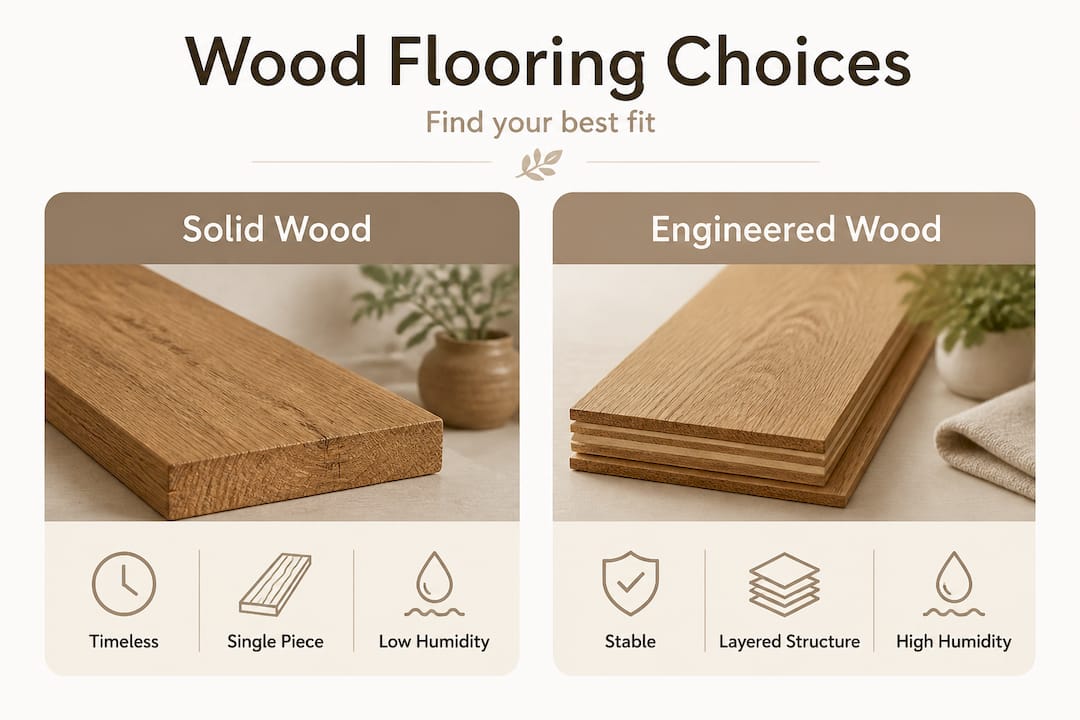
Engineered wood is particularly well-suited to Scottish homes because its layered construction resists the expansion and contraction that solid wood experiences when humidity fluctuates between seasons. Solid wood is a beautiful, long-lasting option, but it needs careful acclimatisation and consistent conditions to perform at its best.
For finish, the choice between oil, lacquer, and hardwax oil makes a significant difference to both appearance and maintenance. Oak flooring style guides confirm that polyurethane-based finishes (both oil and water-based) offer strong protection, while oil-rubbed finishes enhance the wood’s natural grain and tone.
Bullet points to consider when selecting your floor type:
- Solid wood suits rooms with stable temperature and humidity, such as bedrooms and living rooms on upper floors.
- Engineered wood is the smart choice for ground-floor rooms, kitchens, and any space with underfloor heating.
- Parquet and herringbone patterns add visual interest to hallways and reception rooms without requiring additional décor.
- Wide-plank boards work brilliantly in open-plan kitchen-diners, giving a contemporary, relaxed feel.
Pro Tip: If your Glasgow home has older solid walls and variable indoor humidity, engineered wood gives you the look of solid wood with far greater stability. Pair it with a hardwax oil finish for a floor that handles family life without looking tired within a few years. Explore wood floor design ideas or review guidance on flooring for every room to match your specific layout and lifestyle.
How finish and maintenance influence flooring performance
The finish you choose is as important as the wood itself. It determines how the floor looks on day one, how it ages over time, and how much effort is needed to keep it looking its best.
| Finish type | Appearance | Maintenance | Best use case |
|---|---|---|---|
| Oil | Natural, matte | Spot-repair possible | Low-traffic rooms |
| Lacquer | Gloss to satin | Requires full refinish | Moderate traffic |
| Matte/satin | Soft sheen | Disguises minor wear | Busy households |
| Hardwax oil | Rich, tactile | Periodic re-oiling | High traffic, families |
As confirmed by specialist oak flooring guidance, oil finishes offer a natural feel and the benefit of being maintainable in sections, while lacquer delivers strong protective coverage that is better suited to rooms where spills and stains are a concern.
Here is a straightforward approach to maintaining your wooden floor, regardless of finish type:
- Sweep or vacuum regularly using a soft-bristle attachment to remove grit before it scratches.
- Wipe spills immediately with a dry or barely damp cloth to prevent moisture penetrating the surface.
- Use pH-neutral cleaning products designed specifically for wood floors.
- Re-oil or re-apply hardwax oil to oiled floors every one to two years depending on traffic.
- Avoid steam mops entirely, as prolonged moisture damages the wood’s structure over time.
Pro Tip: Matte and satin finishes are far more forgiving in busy households. They mask fine scratches and everyday scuffs that would be glaringly obvious on a high-gloss lacquered surface. For homes with children or pets, hardwax oil is the most practical choice because it can be refreshed in targeted areas without sanding the entire floor. Read more about professional wood floor installation and how to sidestep common flooring mistakes before your project begins.
Achieving flow and cohesion with smart flooring choices
One of the biggest challenges in whole-home renovations is making different flooring choices feel like they belong together. Walk through a house where every room has a different floor material, shade, and width, and it feels unsettled, even if each room is individually well-designed.
Applying the three flooring rule keeps your home feeling considered and calm. Limit yourself to three floor types across the entire property. In practice, this might mean engineered wood throughout the ground floor, a complementary wood upstairs, and a single tile option for wet rooms.
Follow these steps when planning flooring across a full renovation:
- Draw a simple floor plan and assign each room a flooring category before purchasing anything.
- Select a dominant floor for the largest connected spaces, typically the living area and hallway.
- Choose secondary floors that share tonal values with your dominant choice.
- Use transition strips or threshold bars to handle level changes neatly between room types.
- Align plank direction with the main light source or the longest wall to maximise the sense of space.
Common mistakes to avoid include:
- Abrupt contrast: Switching from pale oak to dark walnut between adjacent rooms creates visual tension.
- Clashing widths: Mixing very wide planks with narrow strips in connected spaces looks inconsistent.
- Ignoring the hallway: This is the first floor your guests see; it should set the tone for the rest of the home.
For those tackling decorative patterns, the herringbone floor workflow is a useful resource. And if you are working in a property prone to damp, reviewing flooring for humid climates will help you choose materials that last.
Why the right flooring pays back for decades
There is a tendency in renovation projects to cut costs on flooring and spend more on things that feel more visible, such as kitchen worktops or bathroom tiles. But flooring covers every square metre of your home. It is touched every single day. Its quality is felt before it is seen.
The honest truth is that a poorly chosen or cheaply installed floor will cost you more over time, not just financially through early replacement, but in daily irritation. A floor that creaks, stains easily, or looks worn within three years undermines the comfort and confidence you should feel in your own home.
A well-chosen, expertly fitted wood floor, on the other hand, outlasts almost every other design decision you will make in a renovation. It survives multiple repaints, furniture changes, and even full kitchen refits. Quality wood floors can be sanded and refinished several times over decades, making them genuinely sustainable investments. When it comes to property value, estate agents consistently highlight wood flooring as one of the most attractive features for prospective buyers in Scotland.
Our perspective at Acland Wood Flooring is straightforward: buy the best floor you can afford, have it fitted properly, and maintain it well. The returns in comfort, beauty, and resale value will far exceed the initial outlay.
Ready to transform your home with exceptional flooring?
Whether you are planning a full renovation or simply upgrading one key room, choosing the right wooden floor is one of the most rewarding decisions you can make. At Acland Wood Flooring, we work exclusively with wood floors, which means every recommendation we make is grounded in deep, specialist knowledge of materials, installation, and long-term performance.

Browse our full Glasgow wood flooring supply range to see the breadth of options available, from solid wood flooring to premium engineered and parquet styles. If you would like inspiration before committing to a direction, our wood floor design ideas gallery is a great starting point. Get in touch with our Glasgow team for honest, straightforward advice tailored to your home.
Frequently asked questions
What flooring is best for homes in damp Scottish climates?
Engineered wood floors offer stability and resist warping, making them well-suited to Scotland’s changing humidity. Their layered construction handles moisture fluctuations far better than solid wood.
How many flooring types should I use in my home?
Limit to three flooring types throughout your home for a cohesive, intentional look that avoids a cluttered or disjointed feel.
Is oil or lacquer finish better for wooden floors?
Oil finishes highlight wood’s natural feel and are easy to refresh in sections, while lacquer delivers robust protection against spills and stains across the whole surface.
How does plank width influence style?
Wide planks give a modern, open feel to a room, while narrow planks suit more traditional and period-style interiors with a finer, more classic character.
Can wooden floors increase my property’s value?
High-quality wood flooring is a sought-after feature that can boost both visual appeal and long-term resale value, particularly in the competitive Glasgow and central Scotland property market.