
Choosing the wrong wood floor for an underfloor heating system is one of the most expensive mistakes a homeowner can make. Floors can gap, cup, warp, or crack within a single heating season, and by then the damage is done. Specifying wood floors for underfloor heating is not complicated, but it does require knowing which product properties actually matter, which species to avoid, and how to manage temperature and humidity once the system is running. This guide covers exactly that, in plain language, so you can make a confident decision from the start.
Key takeaways
| Point | Details |
|---|---|
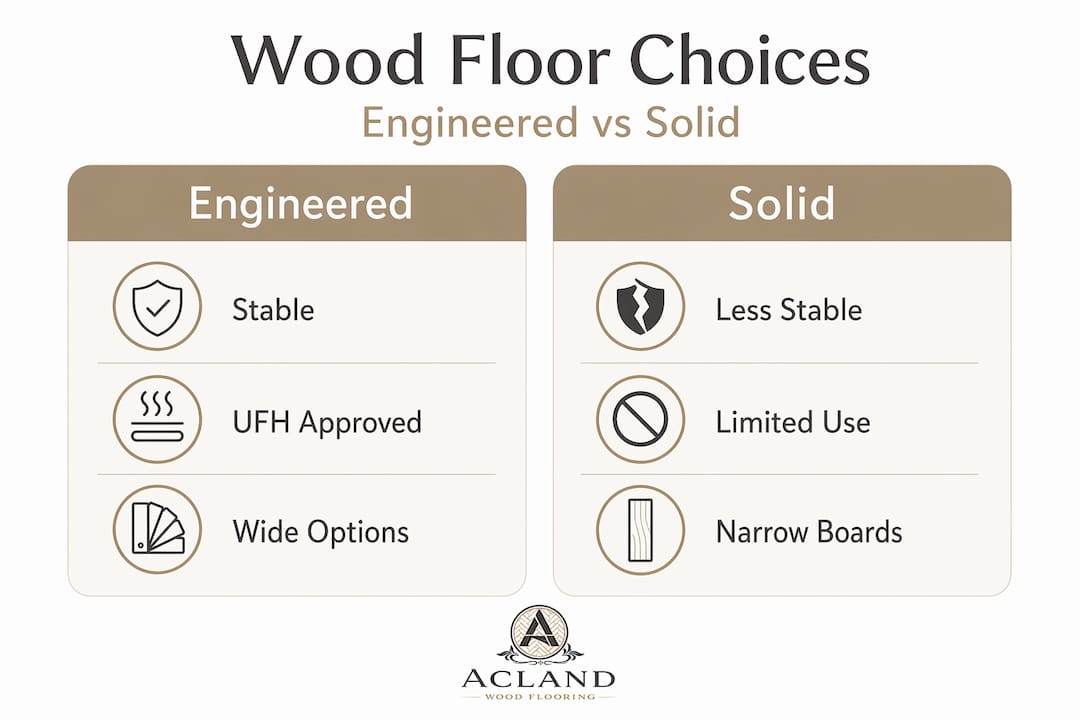
| Choose engineered over solid | Engineered wood offers far greater dimensional stability under the heat and moisture cycles of UFH. |
| Keep planks narrow | Plank widths of 127mm or less reduce seasonal movement and visible gapping over time. |
| Control surface temperature | The floor surface must not exceed 27°C; use a floor sensor thermostat, not just water temperature control. |
| Manage humidity year-round | Keep indoor relative humidity between 35–55% throughout the heating season to prevent drying and distortion. |
| Confirm manufacturer approval | Always verify the specific product is approved for use with radiant heat before purchasing. |
Specifying wood floors for underfloor heating: what actually matters
Not all wood floors are created equal when heat enters the equation. The key properties to look for when selecting wood flooring for underfloor heating come down to stability, geometry, moisture content, and manufacturer approval.
Engineered wood is the most reliable choice for underfloor heating due to its cross-layered construction, which resists expansion and contraction far better than solid wood. Most manufacturers approve engineered products for use over UFH, while solid hardwood approval is far less common and subject to strict conditions.
Plank size matters more than most people realise. Narrower plank widths of 127mm or less and a thickness of at least 9.5mm reduce the risk of seasonal gapping and cupping as the floor heats and cools. Quarter-sawn or rift-sawn boards are cut at an angle that makes them inherently more stable, so they are worth seeking out if you want the best long-term results.
Species selection is another area where poor choices can cause real problems. The following species are generally poor candidates for wood flooring over underfloor heating:
- Pine moves significantly with moisture changes and is prone to soft denting under heat stress
- Hickory has high natural movement rates that make gapping almost inevitable
- Bamboo (often marketed as wood flooring) reacts poorly to the dry conditions that UFH creates
- Maple has tight grain but is among the more reactive hardwoods when it comes to humidity fluctuations
European oak, walnut, and ash with good dimensional stability ratings tend to perform well. Kiln-dried boards with a moisture content of 6–9% at the time of installation are the starting point for any stable result.
Pro Tip: Always check the specific product data sheet, not just the species. Manufacturer approval for radiant heat use must be confirmed in writing before you commit to a purchase.
Designing and installing your system with wood in mind
The biggest mistake in most UFH and wood floor projects is treating the two as separate decisions. They are not. The floor covering directly affects the heat loss calculation, the flow temperatures required, and the overall efficiency of the system.
Coordinating your floor choice early in the heating system design avoids the costly rework that comes from discovering your chosen floor has a thermal resistance that forces the system to run hotter than planned. If you are installing a heat pump, this coordination is not optional. It changes the pipe spacing and flow temperature from the outset.
Here is a practical installation sequence that protects both your floor and your system:
- Confirm floor product approval before the heating system is designed, not after. Give the installer the product specification sheet.
- Prepare the subfloor to be flat within 3mm over a 1.8-metre span. Any unevenness concentrates heat and stress on specific boards.
- Check subfloor moisture with a calibrated meter. Concrete subfloors should read below 75% relative humidity before any wood floor is laid.
- Install insulation beneath the UFH pipes on concrete subfloors to direct heat upward rather than into the slab.
- Fit a floor temperature limiting sensor at the same level as the finished floor surface, not just a room air thermostat.
- Commission the system gradually, raising floor temperature by no more than 1°C per day over the first two weeks after installation.
Avoid routing heating pipes beneath fixed cabinetry, kitchen island bases, or any built-in furniture. Wood beneath those areas cannot respond to heat in the same way as the open floor, and differential movement causes localised cracking.
Pro Tip: For floating floor installation over UFH, leave the expansion gap the manufacturer specifies around all fixed objects. Omitting this gap because the room looks tidy is one of the most common causes of buckling.
Protecting your floor with temperature and humidity control
Once your floor is down, the battle is not over. Ongoing environmental management is what separates floors that last decades from floors that fail within a few years.
The industry standard maximum floor surface temperature is 27°C. Exceeding this causes the wood to dry out rapidly, leading to gaps between boards, surface cracking, and in severe cases, structural distortion that cannot be reversed. This is the surface temperature, not the water flow temperature, so it must be measured and controlled at floor level.
The risks of poor control are worth spelling out clearly:
- Gapping between boards as wood shrinks in overly dry conditions
- Cupping where board edges rise above the centre when moisture distribution is uneven
- Warping in wider or thicker boards exposed to sustained heat above recommended limits
- Cracking on the surface or at board ends from repeated thermal cycling without humidity correction
Maintaining indoor humidity between 35–55% throughout the heating season is the single most overlooked aspect of wood floor care over UFH. Whole-home humidifiers connected to the central heating system make this manageable. A standalone hygrometer in the main living area costs very little and tells you exactly where you stand.
The floor surface temperature sensor is not an optional extra. It is the only way to know, with certainty, that your floor is not being cooked slowly from below.
Programme your thermostat to ramp up heating gradually at the start of each season rather than jumping to full temperature on the first cold morning. That single habit extends floor life considerably.
Wood types and system options compared
| Feature | Engineered hardwood | Solid hardwood |
|---|---|---|
| UFH suitability | High, widely approved | Limited, strict conditions |
| Plank width guidance | Up to 127mm preferred | Up to 75mm maximum |
| Installation method | Floating or glued | Glued only (if approved) |
| Moisture sensitivity | Low to medium | High |
| Thermal resistance | Lower (better heat transfer) | Higher (less efficient) |
Hydronic underfloor heating produces stable floor surface temperatures in the range of 20–27°C when correctly designed, making it well suited to wood floors. Electric UFH systems heat up and cool down more quickly, which increases the thermal cycling that wood experiences. If you are using electric UFH, the case for engineered wood over solid becomes even stronger.
For installation method, floating floors offer flexibility and are generally well tolerated by most engineered products. Glued installations transfer heat more directly but require the adhesive to be rated for underfloor heating use.
My honest take on where projects go wrong
I have seen the same pattern repeatedly. Homeowners choose a beautiful wide-plank solid oak floor, fall in love with it at the showroom, and then learn six months into the heating season that no one checked manufacturer approval and the flow temperature was never adjusted.
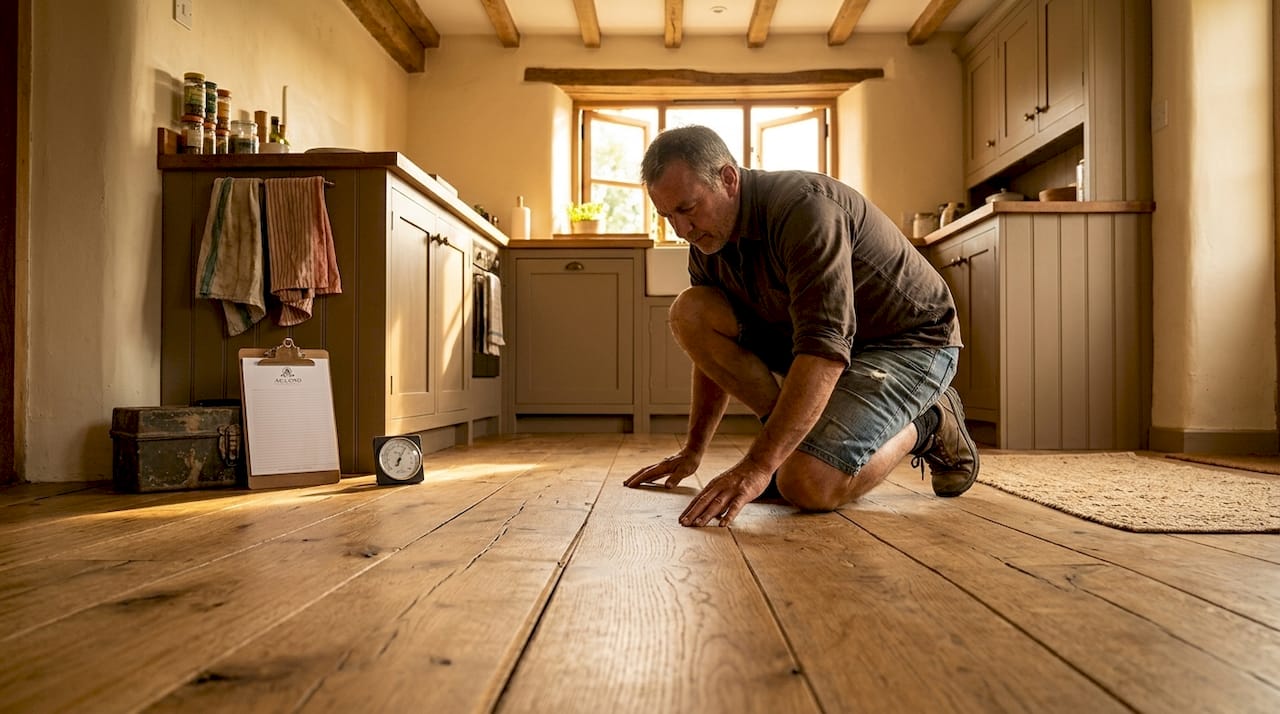
From my experience, the floor surface temperature sensor is where most systems fail in practice. People focus on the boiler flow temperature or the heat pump settings, but controlling actual surface temperature with a dedicated floor sensor is what protects the wood. Water temperature control alone is not sufficient.
My recommendation is always to choose engineered wood and confirm the product approval before anything else is decided. Narrow planks, stable species, and a properly specified thermostat system will outlast any floor that was chosen on aesthetics alone.
Humidity is the other thing people neglect until they see gaps forming. It feels like a small detail. It is not.
— John
Wood flooring for heated homes: get expert guidance
If you are planning a project with underfloor heating, the engineered wood flooring range at Aclandwoodflooring includes products specifically suited to heated subfloors, with full manufacturer approval and guidance on plank sizing and species selection.

For those wanting to understand how layers work together over a heated screed or timber substrate, the wood floor layering guide at Aclandwoodflooring covers the practical steps in detail. The team at Aclandwoodflooring works with homeowners across Glasgow and the surrounding areas to specify, supply, and install wood floors that perform correctly from day one. Get in touch for honest advice tailored to your specific system.
FAQ
What is the best wood floor for underfloor heating?
Engineered hardwood with plank widths of 127mm or less is the most reliable choice, as its layered construction resists the expansion and contraction caused by heating cycles. Always confirm the specific product carries manufacturer approval for use with radiant heat.
Can solid wood floors be used with underfloor heating?
Solid wood can be used in limited circumstances, but manufacturer approval is essential and conditions are strict, typically requiring narrow planks and glued installation. Engineered wood is the far safer and more practical specification for most homes.
What temperature should a wood floor over underfloor heating reach?
The maximum floor surface temperature is 27°C. Exceeding this causes drying, gapping, and long-term structural damage that cannot be repaired without replacing boards.
Why is humidity control important with wood floors and underfloor heating?
Underfloor heating dries out the air significantly, and without maintaining indoor humidity at 35–55%, wood boards shrink and develop visible gaps. A whole-home humidifier or room humidifier keeps conditions stable throughout the heating season.
Should I use a floating or glued installation over underfloor heating?
Both methods can work, but a floating installation gives the floor more freedom to respond to minor temperature changes, while a glued installation transfers heat more directly. Check the flooring manufacturer’s recommendation for your specific product before deciding.