
If you’ve been comparing wood floors and hit a wall of confusing terminology, you’re not alone. What is multi-ply wood flooring, exactly, and how does it differ from solid wood or basic engineered boards? The answer lies in construction. Multi-ply floors are built with a real hardwood wear layer bonded over a cross-laminated plywood core, giving them a stability that neither solid wood nor simpler engineered products can reliably match. This guide covers everything you need to know: how it’s built, why it performs well, how to install it, and how to keep it looking its best for years.
Key takeaways
| Point | Details |
|---|---|
| Multi-ply construction | A real hardwood top layer bonded to a cross-laminated plywood core for exceptional dimensional stability. |
| Moisture resistance | Cross-laminated layers resist expansion and contraction far better than solid wood or lower-ply boards. |
| Installation flexibility | Floating, glue-down, and nail-down methods all work, depending on your subfloor and room conditions. |
| Wear layer matters | Thicker wear layers allow more sanding and refinishing cycles, directly extending the floor’s usable life. |
| Humidity control is key | Keeping indoor humidity between 35% and 55% prevents movement stress and prolongs the floor’s condition. |
What is multi-ply wood flooring and how it’s built
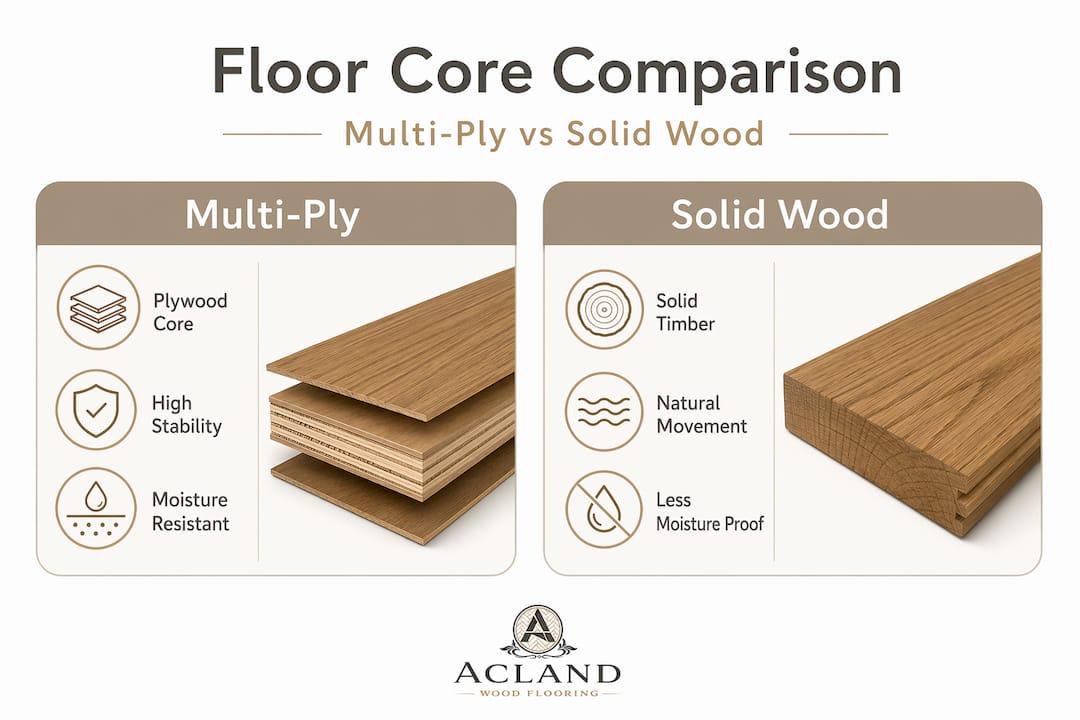
Multi-ply engineered flooring is constructed with a genuine hardwood veneer on top, bonded to a core made up of multiple plywood layers arranged in alternating grain directions. That alternating arrangement is the critical detail. Each layer runs perpendicular to the one above and below it, which locks the board’s dimensions in place against changes in temperature and moisture.
The structure typically has three distinct parts. First, the wear layer: this is the real wood you see and walk on, usually oak, walnut, or ash. Second, the multi-layer plywood core, which provides the dimensional strength. Third, a backing or balancing layer at the bottom, which counterbalances tension and keeps the board flat.
Where things get interesting is in wear layer thickness, which ranges from roughly 0.6 mm up to 6 mm. A thicker wear layer means more sanding and refinishing cycles over the floor’s lifetime, which translates directly to how long it serves you well. A 0.6 mm layer might be refinished once or not at all. A 4 mm or 6 mm layer could take two or three refinishes across its life.
The plywood core also matters more than most people realise. Plywood cores outperform HDF in moisture resistance and structural strength, making them the better choice for kitchens, hallways, and Scotland’s famously damp climate.
Comparing flooring types at a glance:
| Type | Core material | Moisture resistance | Refinishable |
|---|---|---|---|
| Solid hardwood | Solid timber throughout | Low | Yes, multiple times |
| 2-ply or 3-ply engineered | Fewer cross-laminated layers | Moderate | Once or twice |
| Multi-ply engineered | Cross-laminated plywood | High | Depends on wear layer |
Pro Tip: When buying multi-ply flooring, always ask for the exact wear layer thickness in millimetres rather than accepting vague terms like “thick” or “durable.” It’s the most honest measure of long-term value.
The real advantages of multi-ply flooring
The biggest reason homeowners choose multi-ply over solid wood is dimensional stability. Cross-laminated layers reduce expansion and contraction caused by fluctuating temperatures and humidity, which is exactly what you need in a Scottish home where heating cycles and damp conditions are facts of life.
Here are the standout advantages worth knowing:
- Stability in changing conditions. Multi-ply boards move far less than solid hardwood when the heating comes on or a wet day drives up indoor humidity.
- Suitability for radiant heating. Engineered multi-ply floors work over underfloor heating where solid wood would risk cracking or gapping. Always check the manufacturer’s rating before installing.
- Design variety. Multi-ply floors are available in a wide range of species, widths, and finishes, from narrow-plank oak in a brushed matt finish to wide-board walnut with an oiled surface. You’re not sacrificing aesthetics for practicality.
- Cost savings on labour. Because many multi-ply boards use a floating click-lock system, installation is faster than nailing down solid wood board by board. That speed can meaningfully reduce your fitting costs.
- Durability in busy areas. High-traffic hallways and open-plan living spaces that would wear down a thin solid floor quickly are far better suited to a multi-ply product with a robust wear layer.
For homeowners weighing up the benefits of engineered wood against solid hardwood, multi-ply sits in a strong position. It delivers the look and warmth of real wood with significantly better resilience where it counts.
Installation methods and what to consider
Understanding how to install multi-ply wood flooring is not just a question of technique. It’s about matching the method to your specific situation.
There are three main methods available:
- Floating (click-lock). Boards lock together without being fixed to the subfloor. This method works well over plywood subfloors and is the easiest for DIY installation. Boards can expand and contract as a single unit, which suits multi-ply’s stable construction. See the full breakdown in this practical layering guide.
- Glue-down. Adhesive bonds the boards directly to a concrete or plywood subfloor. This gives a solid, firm feel underfoot and is particularly well suited to ground floor rooms in older properties. It’s also recommended for wider planks that benefit from being fully secured.
- Nail-down. Boards are fastened to a timber subfloor using secret nailing through the tongue. This method suits renovation projects where an existing timber floor or batten system is in place.
Installation method and moisture management have a greater impact on long-term floor performance than product choice alone. Getting these two things right matters more than most homeowners expect.
Before any method, acclimatisation is non-negotiable. Proper acclimatisation before installation reduces the risk of warping and movement, particularly when laying over concrete. Leave boards in the room for at least 48 hours in their unopened packaging, and test the subfloor’s moisture content before committing to any adhesive or fixing method.
Caring for your multi-ply floor
Multi-ply flooring rewards straightforward, consistent care. The good news is that you don’t need specialist products or complicated routines. What you do need is to avoid the one thing that damages most wood floors: excess water.
- Sweep or vacuum first, always. Loose dirt and grit act like sandpaper on a finished surface. A soft-bristle brush or vacuum on a hard-floor setting should be your daily or every-other-day habit in busy rooms.
- Damp mop only. Avoid excess water when mopping; wring the mop thoroughly so it’s barely damp. A lightly damp cloth removes everyday grime without threatening the wear layer or the core below.
- Use the right cleaner. Stick to products formulated for finished hardwood. Strong household detergents and steam mops strip finishes and force moisture into the boards.
- Control indoor humidity. Maintaining relative humidity between 35% and 55% prevents the movement stress that causes boards to gap in winter or press against each other in summer. A humidifier or dehumidifier is a worthwhile investment, especially in Scottish homes with variable heating.
- Inspect periodically. Check the wear layer every few years. If it’s looking dull or showing wear in high-traffic areas, a light sand and refinish can bring it back, depending on your wear layer thickness.
Pro Tip: Water causes more damage to wood floors over time than almost any other factor, including foot traffic. Build the habit of wringing your mop properly, and you’ll add years to your floor’s life with no extra effort.
My honest take on multi-ply floors
I’ve seen a lot of homeowners spend real money on flooring and then undermine it entirely with the wrong care routine or a rushed installation. In my experience, multi-ply is one of the most forgiving and rewarding floor choices you can make for a typical Scottish home. But it’s not foolproof.
The mistake I see most often is treating multi-ply like it’s indestructible because it’s engineered. It isn’t. The cross-laminated core genuinely does make it more stable than solid wood, but the wear layer on top is still real timber. It still reacts to grit, moisture, and neglect.
What I’d urge any renovator to think about before buying is this: match the wear layer to your actual lifestyle. A household with young children, dogs, and a busy hallway needs at least 3 mm. A first-floor bedroom with light use can get away with less. It sounds obvious, but most people don’t ask about wear layer thickness at all.
My other strong opinion is about installation. Don’t cut corners on acclimatisation or subfloor preparation. I’ve seen beautiful floors buckle within a year because the installer skipped moisture testing. That outcome is preventable every single time.
— John
Explore your options with Aclandwoodflooring
If this article has made multi-ply flooring feel like the right direction for your home, the next step is choosing the right product and installation approach for your specific space.

At Aclandwoodflooring, we specialise exclusively in wood floors, which means every piece of advice we give is grounded in real expertise rather than a broad flooring catalogue. Whether you’re looking at floating floor options for a first-floor renovation or exploring species and finishes through our Glasgow species guide, we’re here to help you make a decision you’ll be happy with for decades. Get in touch with the team for an honest consultation, and we’ll make sure the floor you choose is the right fit for your home, your subfloor, and your lifestyle.
FAQ
What is multi-ply wood flooring made of?
Multi-ply wood flooring consists of a real hardwood wear layer bonded to a core of multiple cross-laminated plywood layers, finished with a balancing backing layer. The cross-laminated construction is what gives it superior dimensional stability compared to solid or lower-ply boards.
Is multi-ply flooring the same as engineered wood?
Multi-ply is a type of engineered wood flooring, distinguished by its use of multiple cross-laminated plywood layers in the core. Not all engineered floors are multi-ply; some use fewer layers or HDF cores, which offer less moisture resistance and stability.
Can multi-ply flooring be used with underfloor heating?
Yes. Multi-ply engineered floors are suitable for use over radiant heating systems, provided the product is rated for this by the manufacturer. Their dimensional stability makes them far less prone to cracking or gapping than solid hardwood in the same conditions.
How do I maintain multi-ply wood flooring?
Sweep or vacuum regularly to remove grit, and clean with a lightly damp mop using a cleaner designed for finished hardwood. Keep indoor humidity between 35% and 55%, and avoid steam mops or wet mopping at any time.
How long does multi-ply wood flooring last?
Lifespan depends largely on wear layer thickness. Floors with a 3 mm to 6 mm wear layer can be sanded and refinished multiple times, potentially lasting 30 or more years with proper care and humidity management.