Choosing the right wood floor texture does far more than affect how a room looks. It shapes how the space feels underfoot, how often you’ll need to clean it, and how well it holds up over years of real life. The wood floor texture options available today range from perfectly flat and polished to deeply grooved and aged, and each one carries its own set of trade-offs. Whether you’re fitting out a Glasgow tenement flat or a new-build family home, understanding these options properly will save you from expensive regrets.
Key takeaways
| Point | Details |
|---|---|
| Texture affects more than looks | Your texture choice directly influences slip resistance, maintenance effort, and how wear marks appear over time. |
| Match texture to your interior style | Smooth suits modern and formal rooms; wire-brushed works well in contemporary homes; hand-scraped fits rustic and traditional settings. |
| Matte textures age better | Textured, matte finishes feel more expensive and hide everyday wear far better than high-gloss surfaces. |
| Room conditions matter | Lighting, room size, and humidity levels in Scotland all influence which texture will perform best long-term. |
| Balance rough and smooth | Good interior design uses at least one rough surface per two smooth areas to keep a room feeling warm rather than clinical. |
What to consider when choosing wood floor texture options
Before you settle on any particular texture, it helps to think through a few practical factors. The three primary categories of wood floor texture are smooth, wire-brushed, and hand-scraped, but each sits within a wider spectrum of finish types. Your decision should account for more than aesthetics alone.
Here are the key factors worth thinking through:
- Interior style compatibility. Smooth textures suit contemporary, formal, and minimalist spaces. Heavily distressed or hand-scraped boards feel at home in farmhouse, country, and traditional interiors.
- Maintenance expectations. Flat, smooth floors are easier to sweep and mop but show scratches and scuffs more readily. Textured finishes conceal everyday wear far better.
- Slip resistance. Raised grain textures offer more grip underfoot, which is worth considering in households with young children or elderly residents.
- Room size and light. Smooth, lighter-toned floors reflect more light and make smaller rooms feel larger. Darker, heavily textured floors absorb light and add intimacy.
- Scotland’s climate. In Glasgow specifically, humidity fluctuations can affect wood movement, so texture choice should always account for the floor’s overall construction and finish.
Pro Tip: In rooms with strong directional light from windows, heavily textured floors show off their grain and depth beautifully. In darker rooms, the same texture can make the space feel heavier.
1. Smooth wood floor textures
A smooth floor is sanded flat and finished to a uniform surface. It’s the most traditional wood flooring surface style in formal and modern interiors, and it works particularly well in open-plan spaces where you want a clean, uninterrupted visual line from one end of the room to the other.
The key advantages and drawbacks:
- Visual clarity. Smooth floors let the natural colour and grain of the wood take centre stage without interference from surface texture.
- Easy to clean. Dirt and dust sit on the surface without collecting in grooves, making daily maintenance straightforward.
- Shows wear clearly. Scratches, heel marks, and pet claw marks are much more visible on a smooth floor than on any textured alternative.
- Reflects light. This makes smaller rooms feel more spacious, particularly when paired with a lighter timber species.
Smooth floors work best in low-traffic formal rooms, master bedrooms, and open-plan living areas where furniture stays in one place. If you have young children or pets with claws, the daily evidence of that lifestyle will show clearly.
2. Wire-brushed wood floor textures
Wire-brushed is arguably the most popular of all the wood floor texture types for modern homeowners, and with good reason. The technique involves brushing softer grain away with steel wire, leaving the harder grain raised for a subtle, tactile surface. The result looks natural and effortless, not manufactured.
- Tactile depth. You can feel the grain underfoot, which adds a satisfying, natural quality that smooth floors simply don’t offer.
- Hides everyday wear. The textured surface masks fine scratches, dust, and pet hair far more effectively than smooth finishes.
- Contemporary and transitional appeal. Wire-brushed works particularly well in modern home interiors and in spaces that blend old and new design elements.
- Works well in engineered wood. Wire-brushing is especially effective on engineered wood flooring where the construction provides dimensional stability alongside the textured surface.
Pro Tip: Wire-brushed oak is the single most requested finish at Aclandwoodflooring. If you want a floor that looks effortlessly stylish and holds up to daily life, this texture is consistently one of the best wood floor options available.
3. Hand-scraped wood floor textures
Hand-scraping is one of the oldest finishing techniques, originally done by craftsmen who scraped boards flat by hand before mechanical sanding existed. Today, it’s done deliberately to achieve character. Each plank carries unique scraper marks, which means no two floors look identical.
- Authentic character. Hand-scraped floors look genuinely artisan rather than factory-made.
- Best for rustic and traditional interiors. They suit farmhouse kitchens, period-style reception rooms, and country-style living spaces.
- Excellent wear concealment. The irregular surface absorbs and disguises dents and scratches exceptionally well.
- Warmth and texture. The varied surface depth adds a visual warmth that smooth floors cannot replicate, helping to transform a room’s design and atmosphere.
These floors do require slightly more care when cleaning because dirt can settle into the deeper marks. A microfibre mop works better than a standard flat-head mop for this reason.
4. Distressed wood floor textures
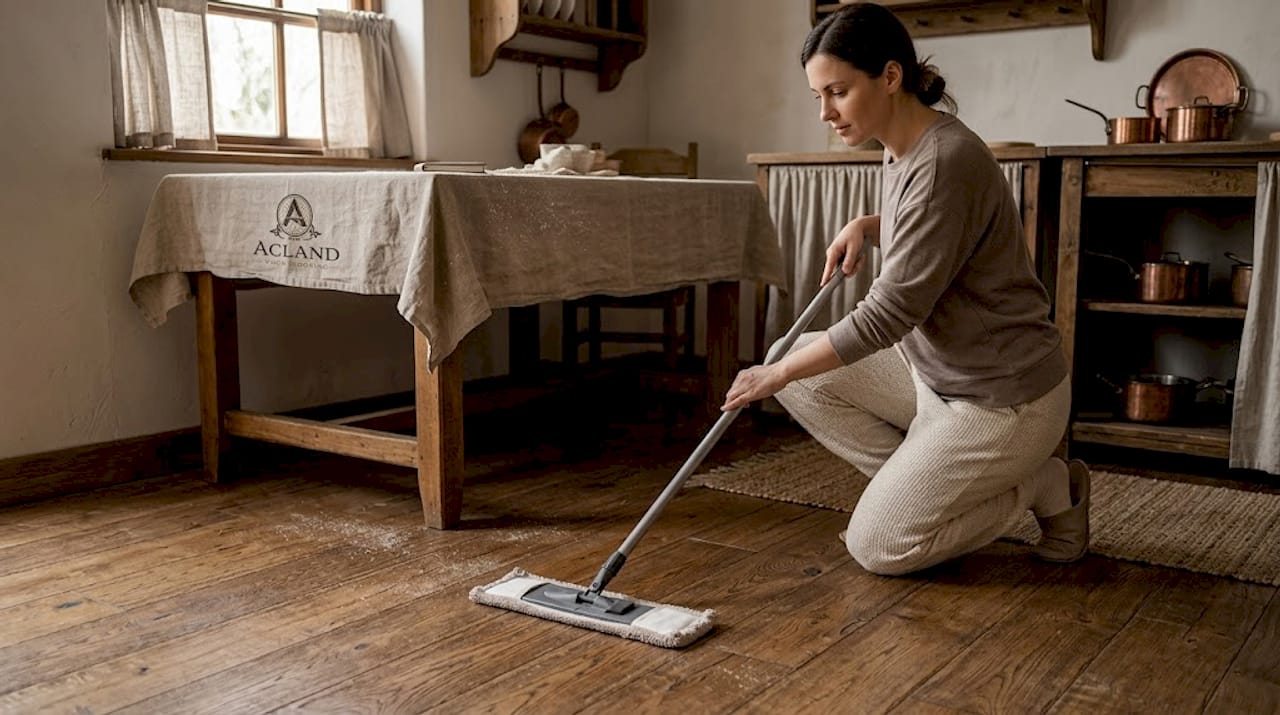
Distressed flooring takes the logic of hand-scraping further by adding deliberate dents, knots, and surface imperfections to simulate aged, reclaimed-look timber. Where hand-scraped boards look artisan-made, distressed boards look genuinely old.
This texture suits industrial, farmhouse, and eclectic interiors where a sense of history and wear is part of the aesthetic. It’s also one of the most forgiving textures you can choose for a busy household. Actual new dents and marks simply blend into the existing character of the floor, which means it genuinely improves with age rather than deteriorating visually.
The trade-off is that heavily distressed floors are harder to refinish if you ever want to change the look. The deliberate imperfections run deep, and sanding them back would change the character entirely.
5. Brushed and oiled wood floor textures
Brushed and oiled finishes combine the wire-brushing technique with a matte penetrating oil, creating a natural, low-sheen surface that enhances wood’s natural texture while letting the grain breathe. This finish is common in Scandinavian and minimalist interiors.
The oil soaks into the wood rather than sitting on top of it, which means the surface feels genuinely natural rather than coated. It also means the floor can be spot-repaired easily without refinishing the entire surface.
The maintenance requirement is slightly higher than lacquered finishes. Oiled floors need re-oiling every year or two depending on traffic, but the reward is a floor that looks and feels more like raw timber than any other option.
6. Cerused and reclaimed wood textures
| Texture | Key characteristic | Best suited to | Maintenance level |
|---|---|---|---|
| Cerused (limed) | White or coloured grain filler creates contrast | Contemporary and rustic schemes | Moderate |
| Reclaimed wood | Genuine aged character from salvaged timber | Industrial, country, eclectic interiors | Higher |
| Brushed and oiled | Matte oil finish with raised grain | Scandinavian, minimalist spaces | Moderate to high |
Cerused, also known as limed flooring, fills the open grain of the timber with a white or tinted paste. The result is a striking contrast between the natural wood tone and the lighter grain highlights. It’s a bold choice that works particularly well with pale ash or oak species.
Reclaimed wood is the most distinctive option of all. These boards carry genuine history, with nail holes, staining, and wear marks accumulated over decades. The cost is higher and installation requires more care, but the character and warmth a reclaimed floor brings to a room is genuinely difficult to replicate.
7. Comparing your wood floor texture options
| Texture | Wear concealment | Maintenance ease | Best style match |
|---|---|---|---|
| Smooth | Poor | Easy | Modern, formal |
| Wire-brushed | Good | Easy to moderate | Contemporary, transitional |
| Hand-scraped | Excellent | Moderate | Rustic, traditional |
| Distressed | Excellent | Moderate | Farmhouse, industrial |
| Brushed and oiled | Good | Moderate to high | Scandinavian, minimalist |
| Cerused | Moderate | Moderate | Contemporary, rustic |
| Reclaimed | Excellent | Higher | Country, eclectic |
For most family homes, wire-brushed and hand-scraped textures offer the best balance between aesthetics and practicality. Smooth floors suit spaces that see lighter foot traffic. If you want a floor that fits every room in your home, texture should be near the top of your decision-making list, not an afterthought.
My perspective on choosing wood floor textures
I’ve seen a lot of homeowners fixate on shade and species and barely think about texture until the floor is laid. That’s when they notice their new smooth oak shows every footprint and pet scratch within days, and the regret sets in.
The truth I’ve come to believe firmly is this: texture is the single most underrated decision in wood flooring. It doesn’t just affect looks. It determines how a floor ages, how a room feels, and how much time you’ll spend maintaining it over the next twenty years.
What I’ve also noticed is that the rooms people consistently call warm, inviting, and characterful almost always have some degree of texture on the floor. Natural wood textures prevent spaces from feeling sterile, and that’s not a stylistic opinion. It’s something you feel the moment you walk in.
My personal favourite remains wire-brushed oak with an oiled finish. It’s honest, ages beautifully, and works in almost any residential setting I’ve encountered. If someone tells me they want a floor that looks better at year ten than it did at day one, that’s always where I start.
— John
Ready to explore your options with expert guidance?
Choosing the right texture is one thing. Getting it installed correctly so it performs for decades is another. At Aclandwoodflooring, we work with homeowners across Glasgow to match texture, species, and construction to the specific demands of each room.

If you’re still weighing up your options, our guide to wood floor layering methods is a practical starting point for understanding how texture and construction work together. For inspiration on how textured floors work in contemporary settings, our modern home style guide covers the most popular options we install across Glasgow. Get in touch with our team for honest, tailored advice with no obligation.
FAQ
What are the main wood floor texture types?
The three primary wood floor textures are smooth, wire-brushed, and hand-scraped, with distressed, brushed and oiled, cerused, and reclaimed wood offering additional options for distinctive looks.
Which texture hides scratches best?
Hand-scraped and distressed textures conceal everyday wear most effectively because their irregular surfaces absorb minor marks without them becoming visible.
Is wire-brushed flooring good for family homes?
Yes. Wire-brushed is preferred for modern households because it balances a stylish, contemporary look with practical wear resistance and easy maintenance.
Do matte textured floors really look more expensive?
According to design professionals, matte textured finishes feel more expensive and welcoming than high-gloss floors, which tend to show wear quickly and can look cold in residential settings.
What wood floor texture suits a modern Glasgow flat?
Wire-brushed or brushed and oiled finishes work best in contemporary interiors. Both offer tactile depth and natural character while complementing the clean lines typical of modern Glasgow flats.