
A stunning wood floor doesn’t happen by accident. The difference between a floor that lasts twenty years and one that creaks, warps, or gaps within months often comes down to a single factor: installation quality. Many homeowners and developers across Glasgow and Central Scotland assume that any capable tradesperson can fit a wood floor, but that misconception leads to costly mistakes. This article cuts through the confusion, giving you a clear picture of what premium installation actually involves, how it affects your property’s value, and the practical steps you can take to get it right the first time.
Key Takeaways
| Point | Details |
|---|---|
| Quality installation matters | Skilled installation ensures your wood floor looks great and lasts for years. |
| Increases property value | Professional fitting can boost the resale price and appeal of your property. |
| Material choices are crucial | The right wood type and installation style suit both the local climate and your needs. |
| Preparation prevents errors | Advance planning and expert guidance lower the risk of installation mistakes. |
What defines premium wood floor installation?
Premium installation is far more than nailing boards to a subfloor. It begins well before the first plank is laid, with careful assessment of the subfloor condition, moisture levels, and the specific demands of your space. Gaps in the subfloor, poor levelling, or unchecked moisture are the most common culprits behind flooring failures. A specialist fitter identifies these issues before they become expensive problems.
Several components separate a premium installation from an average one:
- Subfloor preparation: levelling, cleaning, and addressing any moisture issues before laying begins
- Acclimatisation: allowing boards to adjust to the room’s temperature and humidity for at least 48 to 72 hours
- Correct adhesive or fixing method: chosen based on board type and subfloor material
- Precision cutting: tight, clean joints that prevent gaps and movement
- Expansion gaps: maintaining the correct space around the perimeter for seasonal wood movement
- Finishing: sanding, sealing, or oiling to the correct standard for the wood species
Professional installation delivers lasting results and enhances property value. That is not marketing language. It is the practical reality of what specialist knowledge and proper execution produce. Cutting corners on installation is the single most common reason wood floors deteriorate prematurely, and avoiding wood flooring errors from the outset saves you both money and frustration down the line.
Pro Tip: When interviewing fitters, ask specifically about their experience with the type of wood flooring you have chosen. A fitter who specialises solely in wood floors, rather than a general contractor who does everything, will bring a level of expert advice for premium floors that makes a measurable difference to the finished result.
The lasting impact of installation quality on property
Understanding what defines premium installation sets us up to appreciate its tangible effects on your property. A well installed wood floor does not simply look better on the day. It performs better for decades and contributes meaningfully to the resale value of your home or commercial premises.
Solid wood flooring adds warmth and value to properties in a way that carpet or laminate simply cannot replicate. Buyers and tenants notice the difference immediately. In competitive property markets like Glasgow, a professionally fitted floor signals quality throughout the entire building.

Here is how professional and DIY installation outcomes typically compare:
| Factor | Professional installation | DIY installation |
|---|---|---|
| Subfloor assessment | Thorough, tested | Often skipped |
| Acclimatisation | Correctly managed | Frequently rushed |
| Joint precision | Tight, consistent | Variable |
| Expansion gaps | Correctly calculated | Guesswork |
| Finish quality | Trade standard | Inconsistent |
| Longevity | 20 to 30 years | Often under 10 years |
| Warranty validity | Maintained | Frequently voided |
The financial case is straightforward. A premium floor fitted correctly may cost more upfront, but it avoids the expense of refitting within a few years. Consider these practical benefits:
- Fewer repairs and maintenance calls over the floor’s lifespan
- Preserved manufacturer warranties, which usually require professional installation
- Higher buyer confidence during property valuations
- Visual consistency that photographs well for listings and lettings
For those considering wood floor design ideas to elevate a space, the pattern and format you choose will only look as good as the installation beneath it. Herringbone and chevron layouts, in particular, demand exceptional precision. And wide plank flooring offers a sense of spaciousness and value that narrow boards simply cannot match, but the wider the board, the more critical the subfloor preparation becomes.
Materials, methods, and trends shaping installation
Installation quality is shaped by the choices you make from materials to method. Let’s look at how trends and practical factors influence the installation process, especially in a climate like Scotland’s.
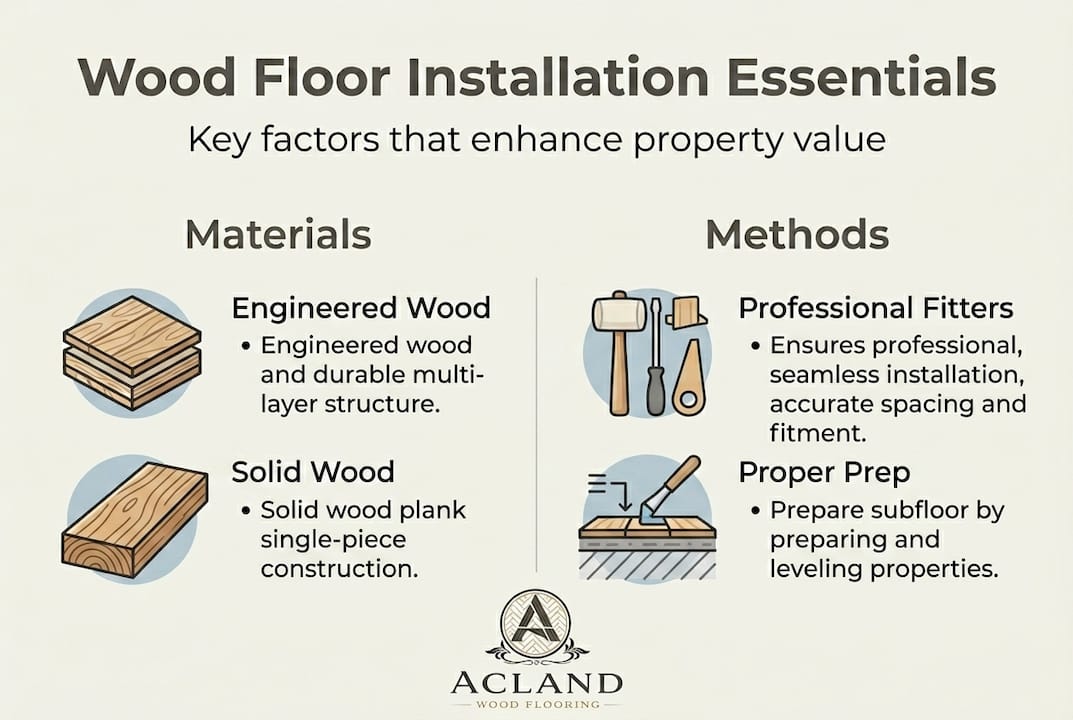
Engineered wood flooring offers stability and style for Glasgow’s climate, making it the preferred choice for most residential and commercial projects in Central Scotland. Unlike solid wood, engineered boards feature a layered construction that resists the expansion and contraction caused by humidity fluctuations. Glasgow’s wet winters and relatively mild summers create conditions that challenge solid wood floors considerably more than they would in drier climates.
| Wood type | Best suited to | Climate resilience | Refinishing options |
|---|---|---|---|
| Solid hardwood | Low humidity spaces | Moderate | Multiple times |
| Engineered wood | High humidity, underfloor heating | High | One to two times |
| Wide plank engineered | Open plan living | High | One to two times |
| Herringbone parquet | Hallways, reception areas | Moderate to high | Once |
Here is a practical numbered approach for selecting the right material:
- Assess the room’s purpose: Heavy footfall areas such as kitchens, hallways, and commercial receptions need harder, more resilient wood species such as oak or ash.
- Check subfloor type: Concrete subfloors require adhesive bonding or floating installation. Timber subfloors allow secret nailing or stapling.
- Consider underfloor heating: Only certain engineered boards are approved for use with underfloor heating systems. Check with your supplier before purchasing.
- Account for humidity: Use a moisture meter to test the subfloor before ordering materials. Readings above the acceptable threshold will guide your choice of board and installation method.
- Match the finish to lifestyle: Oiled finishes are easier to spot repair but need more maintenance. Lacquered finishes are more durable for busy households and hardwood options for business environments.
Pro Tip: In humid climates, always choose engineered wood over solid for areas at or below ground level. The layered construction provides the dimensional stability that solid wood lacks, and your plank installation will be far more predictable and reliable as a result.
Practical steps for achieving flawless installation
Once you have chosen materials and methods, execution is everything. Here is how to ensure your wood floor installation project goes smoothly and lasts.
Before your fitters arrive, carry out these essential checks:
- Confirm the subfloor is dry, level, and free from debris
- Ensure adequate heating is running in the room for at least two days beforehand
- Remove all furniture and existing floor coverings
- Check that door frames and skirting boards have been assessed for height adjustments
- Verify the wood boards have been in the room long enough to acclimatise
Following these steps reduces the likelihood of avoidable problems. The plank fitting guide for Glasgow homes covers subfloor requirements and preparation in practical detail.
During installation, the steps are sequential and each one affects the next:
- Lay a moisture barrier or underlay appropriate to the fixing method chosen.
- Begin from the straightest, most prominent wall and work outward.
- Stagger board joints by at least 300mm to avoid structural weak points.
- Maintain consistent expansion gaps of 10 to 15mm around all fixed points.
- Check for level and alignment regularly throughout the process.
- Apply finishing treatments only after the entire floor is laid and inspected.
“The most preventable flooring failures we see all share one thing in common: someone skipped a preparation step to save time. That shortcut almost always costs more to fix than the time saved.” This is the reality that avoiding installation errors consistently confirms.
Supervising your installation does not mean standing over your fitters. It means being clear about your expectations at the outset, reviewing progress at key stages, and asking questions when something looks unexpected.
Our experience: what most guides overlook about wood floor installation
Most guides focus on the technical sequence of laying a floor. Very few address the factors that actually separate a good outcome from a truly exceptional one. After years of working on wood floors across Glasgow and Central Scotland, we have learned that the pre-installation conversation matters as much as the installation itself.
Homeowners often arrive at a project thinking the main decision is the species or the colour of the wood. In reality, the decisions made before a single board is purchased, about room preparation, subfloor condition, acclimatisation time, and the method of fixing, have a far greater influence on the final result. A beautiful piece of oak laid incorrectly will disappoint. A less expensive engineered board fitted with care and precision will perform brilliantly for decades.
The relationship between you and your fitter is also consistently undervalued. Clear communication about your vision, your lifestyle, and even your cleaning habits allows a specialist to make informed recommendations that a general contractor simply would not think to ask about. We always encourage clients to share as much context as possible, because every detail shapes the advice we give. You can read more about this approach in our premium floor advice guide.
Ongoing maintenance also begins on the day of installation, not six months later when a gap appears. Knowing what cleaning products are safe, how to manage humidity seasonally, and when to schedule a light re-oil are all things your fitter should walk you through before leaving the site.
Transform your property with expert flooring solutions
Every stage of a wood floor project benefits from specialist knowledge, and that is precisely what we bring to homeowners and developers across Glasgow and Central Scotland.

At Acland Wood Flooring, we focus exclusively on wood floors, which means every recommendation we make is grounded in deep, practical experience. Whether you are drawn to the bold geometry of herringbone flooring installation, the elegant sweep of chevron flooring, or need guidance on wood flooring for humid climates, we can help you navigate the choices with confidence. Get in touch to explore the options most suited to your property and let us show you what a properly fitted floor looks and feels like.
Frequently asked questions
What is the most durable type of wood flooring for Glasgow homes?
Engineered wood flooring is widely regarded as the most durable and stable option for homes in Glasgow’s humid climate, offering excellent resistance to moisture-related movement.
How can I avoid common wood floor installation mistakes?
Work with experienced specialist fitters and ensure proper subfloor preparation and acclimatisation. Avoiding installation errors from the start is the most effective way to protect your investment.
Does wood floor installation really affect property value?
Yes, professional wood floor installation can significantly enhance the value and appeal of your home. Solid wood flooring in particular adds lasting warmth and buyer appeal that other floor types rarely match.
Should I choose solid or engineered wood for a business space?
Engineered wood is the better choice for business spaces because it withstands heavy foot traffic, temperature variation, and humidity fluctuation more reliably. Hardwood for business spaces guidance covers the specific species and formats best suited to commercial environments.