
Most homeowners assume that choosing a wood floor comes down to colour and finish. The pattern itself rarely gets a second thought. But chevron flooring proves that assumption wrong the moment you see it in a room. With its V-shaped planks cut at precise angles, typically 45° or 60°, and arranged to form a continuous, seamless zigzag, chevron creates visual flow and symmetry that no standard plank floor can match. If you are considering a premium wood floor for your Glasgow or Central Scotland home, this guide covers everything you need to know: what chevron flooring is, how it compares to herringbone, its design benefits, and what installation really involves.
Key Takeaways
| Point | Details |
|---|---|
| Chevron defined | Chevron flooring creates a striking V-shaped pattern for seamless, sophisticated floors. |
| Distinct from herringbone | Chevron uses angled planks for continuous lines, while herringbone is staggered. |
| Design benefits | Chevron adds visual flow, increases perceived space, and boosts home value. |
| Installation expertise matters | Precision fitting by specialists is essential for lasting results and perfect appearance. |
What is chevron flooring?
Chevron flooring is defined by its geometry. Each plank is cut at a precise angle at both ends, so when two planks meet at the centreline, they form a perfect V shape. Repeat that across an entire floor and you get a continuous, flowing zigzag that moves the eye forward through a room. It is not just a visual trick. The precision required to achieve that seamless result is what places chevron firmly in the premium category.
The angled planks form continuous Vs across the floor, which means every single cut must be accurate. A fraction of a millimetre out and the pattern breaks down. That is why chevron flooring demands specialist manufacturing and equally precise installation. You cannot simply buy standard planks and cut them on site without the right expertise and equipment.
“Chevron flooring is a premium wood flooring pattern featuring V-shaped planks cut at precise angles and arranged to form a continuous, seamless zigzag that creates visual flow and symmetry.”
Here is a quick overview of the key characteristics:
| Feature | Detail |
|---|---|
| Plank cut angle | Typically 45° or 60° |
| Pattern type | Continuous, seamless zigzag |
| Installation complexity | High, requires specialist fitter |
| Best suited for | Living rooms, hallways, focal areas |
| Material options | Solid or engineered hardwood |
Chevron works beautifully in a range of spaces. Hallways benefit enormously because the forward-moving pattern draws the eye down the length of the room, making narrow spaces feel longer and more purposeful. Living rooms gain a sense of sophistication and structure. Formal dining areas take on an almost architectural quality when chevron flooring is laid beneath the table.
The choice of types of wood for chevron flooring also plays a significant role in the final result. Oak is the most popular species, offering warmth and durability. Walnut delivers a darker, richer tone. Ash brings a lighter, more contemporary feel. Each species interacts differently with the chevron pattern, either softening or sharpening the visual impact depending on the grain direction and finish applied.
Key reasons homeowners choose chevron:
- Visual drama without the need for bold colours or busy décor
- Timeless appeal that suits both period properties and modern interiors
- Perceived space as the continuous lines elongate and open up rooms
- Resale value from a premium flooring choice that buyers notice immediately
Chevron vs herringbone: What’s the real difference?
This is the question we hear most often. Both patterns are popular, both use wood planks arranged at angles, and both create a zigzag effect. But they are genuinely different in their construction and visual impact, and confusing the two before you order is a costly mistake.
The core difference is in the cut. Chevron uses angled planks for a continuous pattern, while herringbone uses rectangular planks in a staggered design. In herringbone, the planks are not cut at an angle. Instead, standard rectangular boards are placed at 90° to each other in alternating directions. This creates a broken zigzag, where the lines do not meet at a single point. In chevron, the angled cuts mean the lines converge perfectly, forming that clean, uninterrupted V.
| Feature | Chevron | Herringbone |
|---|---|---|
| Plank shape | Angle-cut at both ends | Standard rectangular |
| Pattern result | Continuous, seamless zigzag | Broken, staggered zigzag |
| Visual effect | Movement and flow | Classic and traditional |
| Installation difficulty | Higher | Moderate |
| Best for | Contemporary and period focal spaces | Versatile, suits most rooms |
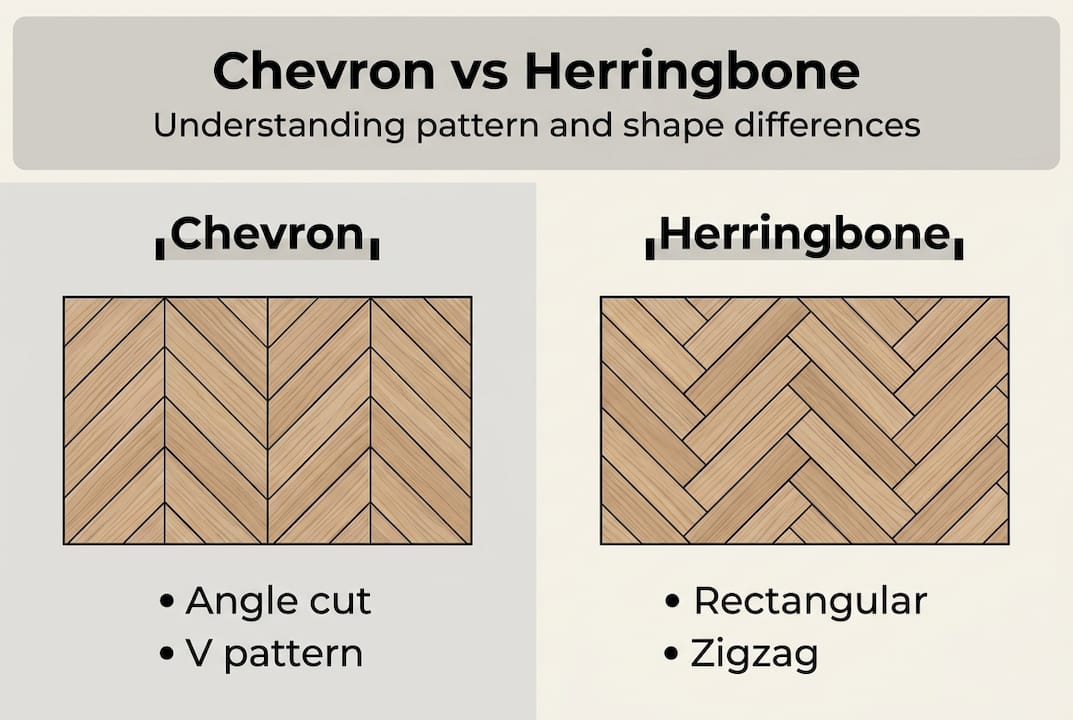
The visual effect is where the two patterns really diverge. Chevron suggests movement. The eye follows the continuous lines forward, which gives rooms a dynamic, almost directional quality. Herringbone is more static and traditional. It has a classic charm that has been used in French parquet floors for centuries, but it does not carry the same sense of forward momentum.
Neither pattern is objectively better. The right choice depends on the room, the property style, and the effect you want to achieve. Explore the full range of wood flooring pattern options to see how both look in real settings before you decide.
- Chevron suits long hallways and open-plan spaces where visual flow matters
- Herringbone suits traditional rooms where a classic, structured look is preferred
- Both work well with oak, but chevron tends to show off grain direction more dramatically
Pro Tip: Always confirm in writing with your installer which pattern you have chosen before any material is ordered. The planks for chevron and herringbone are cut differently at the factory. Once ordered, you cannot swap without starting again.
Design benefits of chevron flooring in modern homes
Once you understand how chevron stands apart design-wise, the benefits in the context of stylish living become clear. This is not a pattern that simply looks nice. It actively changes how a room feels.
The continuous lines create visual flow and symmetry, making rooms feel larger and more cohesive. This is particularly valuable in the kinds of properties common across Glasgow and Central Scotland, from Victorian terraces and Edwardian townhouses to contemporary new-build flats. In older properties, chevron flooring adds a layer of refined character that complements original cornicing and high ceilings. In modern spaces, it provides texture and warmth without competing with clean architectural lines.
Here are the standout design benefits:
- Space enhancement: The directional pattern elongates rooms, making them feel wider or longer depending on the laying direction
- Versatility: Works with light and dark wood species, matt and gloss finishes, and a wide range of interior colour palettes
- Focal point creation: A chevron floor in a hallway or living room becomes a design feature in its own right
- Period property compatibility: Suits the proportions and character of older Scottish homes beautifully
- Contemporary appeal: Equally at home in minimalist, Scandi-inspired, or industrial interiors
Finish choice matters enormously. A natural oiled finish brings out the warmth and grain of the wood, giving a more organic, lived-in feel. A lacquered finish offers a cleaner, more polished look and is easier to maintain in high-traffic areas. Smoked or brushed finishes add depth and texture, which can make the chevron pattern even more visually striking.
For ideas for modern chevron flooring that suit Scottish homes specifically, it is worth looking at how different species and finishes interact with the natural light levels typical in Glasgow interiors. North-facing rooms benefit from warmer, lighter wood tones. South-facing rooms can handle richer, darker species without feeling heavy.
Premium wood floors are consistently noted by estate agents as one of the features that increases buyer interest and perceived property value. Chevron, as the most visually distinctive of all wood flooring patterns, sits at the top of that list.
Chevron flooring installation: What you need to know
Understanding the benefits also means knowing how to achieve the best results from your investment. Installation is where chevron flooring either delivers on its promise or falls short.
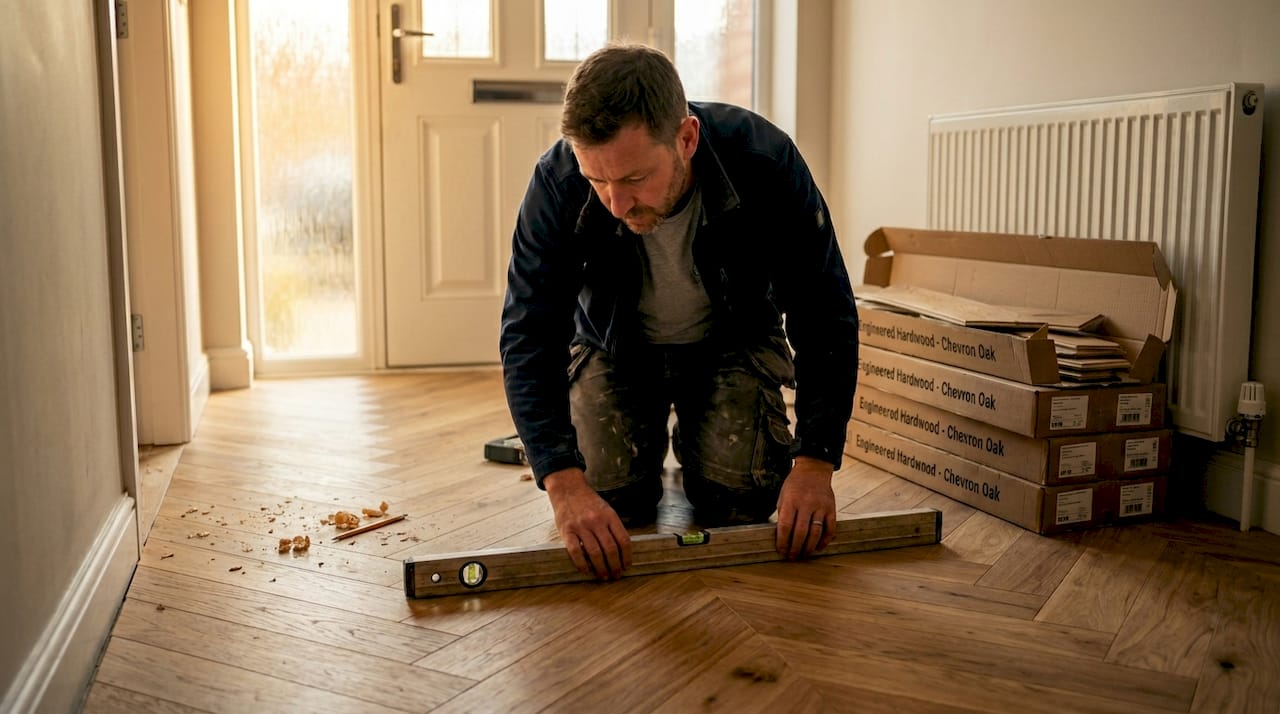
Chevron installation requires precision due to its angled cuts and seamless joins. This is not a job for a general builder or a fitter who primarily works with carpet or laminate. The tolerances are tight, the layout planning is complex, and any error compounds as the pattern extends across the floor. Choosing a specialist is not a luxury. It is a necessity.
Here is what a professional chevron installation involves:
- Sub-floor assessment: Check for levelness, moisture levels, and structural integrity. Older Glasgow properties often have uneven sub-floors that need attention before any flooring goes down.
- Layout planning: Establish the centreline of the room and plan the pattern outward from there. This ensures the chevron is symmetrical and visually balanced.
- Material preparation: Allow the wood to acclimatise to the room’s temperature and humidity for at least 48 hours before installation begins.
- Precision cutting: Each plank must be cut to the correct angle. Even a small deviation creates gaps or misalignment in the pattern.
- Fixing and finishing: Planks are glued, nailed, or floated depending on the sub-floor type, then sanded and finished on site for a seamless result.
Pro Tip: Always budget for 10 to 15 per cent extra material when ordering chevron flooring. The angled cuts produce more offcuts than standard plank installation, and having spare boards from the same batch ensures a perfect match if repairs are ever needed.
When speaking to potential fitters, ask specifically how many chevron floors they have installed in Scottish properties. Experience with the pattern in older buildings, where sub-floors are rarely perfectly flat, is what separates a good result from a great one. The expert chevron floor installers who understand these local conditions will give you an honest assessment of what your specific property needs.
Why chevron flooring is worth the investment in Scottish homes
There is a tendency to treat chevron flooring as a trend. Something fashionable now that might look dated in a decade. We disagree with that view entirely, and here is why.
Chevron is not new. It has appeared in European interiors for hundreds of years, from French châteaux to Georgian townhouses. What changes is its popularity, not its relevance. A well-installed chevron floor in a Glasgow period property looks as appropriate today as it would have in 1890 or 1950. That kind of longevity is rare in interior design.
The real risk is not choosing chevron. It is choosing it and then cutting corners on installation or materials. We have seen floors where the pattern breaks down within a few metres because the fitter lacked the experience to manage the precision required. Those floors are expensive to repair and demoralising to live with. The expert opinion on chevron floors consistently points to the same conclusion: the combined effect of quality materials, skilled installation, and thoughtful design is what makes chevron a genuine long-term investment rather than an expensive mistake.
For Scottish homeowners specifically, the durability of engineered hardwood chevron in a climate with significant humidity variation is also worth noting. Properly installed and finished, these floors handle Scotland’s conditions with ease and look better with age.
Transform your home with chevron flooring expertise in Glasgow
If you are seriously considering a chevron wood floor for your home, the next step is speaking with specialists who understand both the material and the installation demands specific to Scottish properties.

Acland Wood Flooring specialists bring focused expertise in premium wood flooring across Glasgow and Central Scotland. From helping you choose the right wood species and finish for your specific rooms, to delivering a precise, beautiful installation that does justice to the chevron pattern, the team offers honest advice at every stage. Whether you have a Victorian hallway in the West End or a contemporary open-plan living space in a new build, Acland Wood Flooring can guide you through the process with confidence and care.
Frequently asked questions
Do chevron floors suit period properties in Glasgow?
Yes, chevron flooring complements both period homes and modern flats across Central Scotland. Its visual flow and symmetry enhance the character of older properties while adding warmth to contemporary spaces.
How is chevron flooring different from herringbone?
Chevron planks are cut at angles to form a seamless V shape across the floor, while herringbone uses standard rectangular planks in a staggered, broken pattern that does not converge at a single point.
What type of wood works best for chevron flooring?
Both engineered and solid hardwood work well, but stable, high-quality species such as oak, walnut, and ash are recommended for lasting results, particularly in Scotland’s variable climate.
Does chevron flooring require special maintenance?
No special maintenance is needed beyond standard hardwood care. Sweep regularly, avoid excess moisture, and use appropriate cleaning products to keep your chevron floor looking its best for decades.