
Wood flooring is one of the most popular choices for Glasgow homes, but the belief that it works equally well in every room is one of the most expensive mistakes a homeowner can make. Suitability varies dramatically depending on moisture levels, foot traffic, heating systems, and how permanent you need the installation to be. Scotland’s wet climate, older tenement properties, and widespread underfloor heating add layers of complexity that generic advice simply does not address. This guide cuts through the confusion with practical, room-by-room guidance built for Central Scotland homes.
Key Takeaways
| Point | Details |
|---|---|
| Room-by-room suitability | Engineered wood suits most rooms except bathrooms, where water risk is too high. |
| Engineered versus solid | Engineered options cope better with underfloor heating and Glasgow’s climate than solid wood. |
| Design and installation flexibility | Plank width and finish can transform room feel, and click-lock systems suit renters. |
| Expert advice pays off | Consulting local professionals helps avoid costly mistakes and ensures long-term durability. |
Matching wood flooring types to the right rooms
Not every wood floor belongs in every room. The key is understanding how each space behaves throughout the day and across seasons, then matching that to the right product.
Living rooms and bedrooms are the most forgiving. Both solid and engineered wood perform well here, though engineered is the stronger choice if you have underfloor heating. Hallways and kitchens demand more resilience. Kitchens and hallways need moisture-resistant options, with engineered wood or parquet preferred over solid because of spill risks and humidity fluctuations. For hallways with heavy footfall, consider herringbone flooring for high-traffic areas as the interlocking pattern adds structural strength underfoot.

Bathrooms are the one room where wood flooring almost always fails. Bathrooms are unsuitable for most wood floors because even engineered boards risk moisture damage unless specially sealed variants are used with extreme care.
| Room | Recommended type | Caution |
|---|---|---|
| Living room | Solid or engineered | Engineered preferred for UFH |
| Bedroom | Solid or engineered | Either suits; consider comfort |
| Kitchen | Engineered or parquet | Avoid solid; use protective finish |
| Hallway | Engineered or herringbone | High wear; go for durable grade |
| Bathroom | Not recommended | Moisture risk; consider alternatives |
Common room-specific pitfalls to watch for:
- Laying solid wood directly near exterior doors where damp creeps in
- Choosing narrow plank width options in large, open rooms, which can look busy
- Ignoring finish grade in family kitchens, where scratches show quickly on smooth surfaces
- Fitting wood flooring before plumbing work is completed
Understanding engineered, solid, and parquet: strengths and drawbacks
Now you know which room suits which type, let’s break down how each flooring type performs in the real world.
Engineered wood is built from layers of real wood bonded at opposing angles. This cross-layer construction resists the expansion and contraction that comes with Scotland’s shifting temperatures. It is the most versatile option and works across nearly every room.
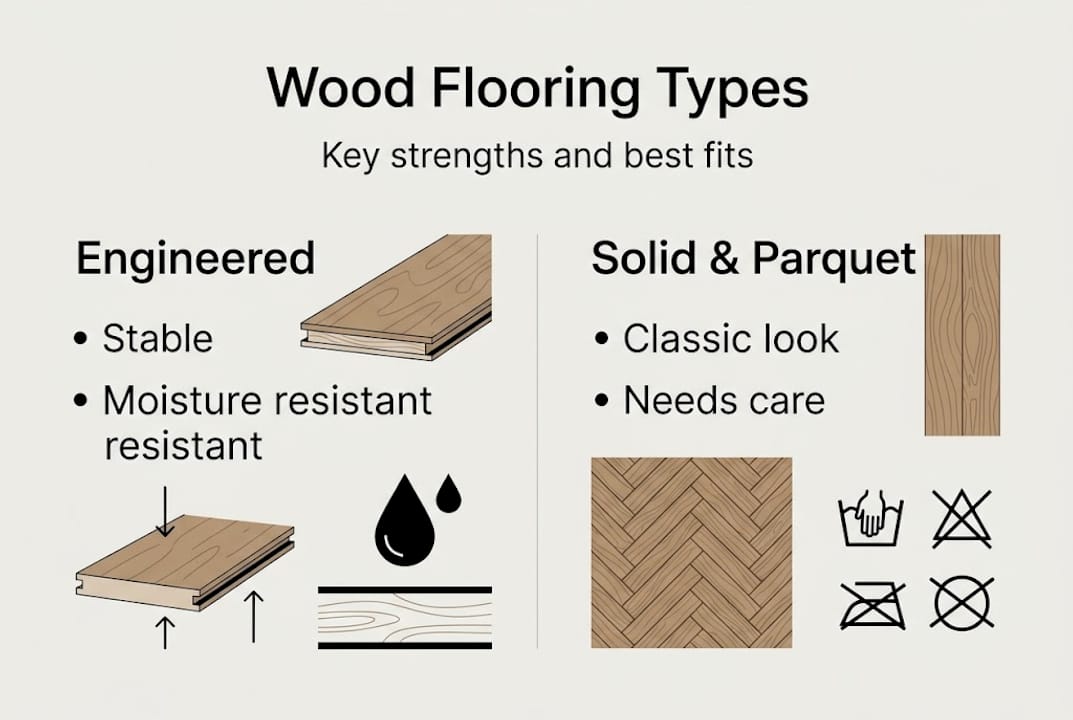
Solid wood has a timeless appeal and can be sanded and refinished multiple times across decades. However, solid timber floors are prone to warping and are harder and more expensive to install correctly. They are best reserved for ground floors in stable, dry conditions.
Parquet delivers real decorative character and works beautifully in reception rooms and hallways. It does require careful finishing to hold up in moisture-prone areas, and the installation demands precision.
European Oak engineered floors are optimal for Scottish homes, with a Janka hardness rating of 1360, strong stability under central and underfloor heating, and better performance than softer species such as walnut or pine. While some sources favour solid for living rooms in older properties, UK flooring specialists broadly recommend engineered for modern heating systems and rental properties alike. For nuanced guidance on the right choice, premium floor advice from a specialist makes a real difference.
| Type | Stability | Moisture resistance | Cost | Best fit |
|---|---|---|---|---|
| Engineered | High | Moderate to high | Mid | Most rooms, UFH |
| Solid | Low to moderate | Low | Higher | Dry, stable rooms |
| Parquet | Moderate | Moderate | Variable | Hallways, reception |
Pro Tip: Never choose solid wood for rooms with underfloor heating. The heat dries the boards and causes them to shrink, gap, and eventually warp.
Wood flooring considerations for Glasgow’s climate and heating
Beyond type and room use, Glasgow’s climate and heating systems also influence the best flooring decision.
Glasgow averages some of the highest rainfall in the UK, and older properties in particular can hold moisture within walls and subfloors. This matters enormously when choosing between solid and engineered options near entrance halls or ground-floor rooms.
Underfloor heating is increasingly common across Central Scotland. Engineered wood suits underfloor heating provided the surface temperature stays below 27°C. Solid wood risks warping under the same conditions. Tiles and LVT transfer heat more efficiently, but engineered wood offers a stylish middle ground that many homeowners prefer.
“Tiles and LVT offer superior heat transfer, but engineered wood is a stylish compromise that, when fitted correctly, performs reliably over time.”
Factors to assess before fitting wood floors in a Scottish home:
- Humidity: Older properties can have ambient humidity above 60%, which accelerates movement in solid boards
- Draughts: Cold air ingress at skirting level causes seasonal shrinkage
- Natural light: South-facing rooms fade lighter species faster
- Seasonal expansion: Scotland’s temperature swings between winter and summer are significant
For a wood flooring installation that lasts, understanding these factors before selecting your boards is essential. When browsing engineered floorboards for underfloor heating, always check the manufacturer’s maximum surface temperature rating.
Pro Tip: Ask your fitter to acclimatise boards in the room for at least 48 hours before installation. This simple step significantly reduces post-fit movement.
Design, lifestyle, and installation: getting the details right
With technical boxes ticked, the final step is customising your choice to suit your lifestyle and interiors.
North-facing rooms in Glasgow receive less direct light and can feel cold. Warm oak tones in a mid-to-honey finish counteract this beautifully. South-facing rooms offer more flexibility with cooler, greyer tones that stay true longer.
Room size directly affects which plank width works best. Wide planks add spaciousness in larger rooms, whilst narrower boards suit cosy bedrooms and smaller flats. In busy family homes, rustic grade boards with visible knots and natural character actually hide everyday wear and scratches better than smooth, select-grade options.
For renters, the installation method matters as much as the product. Engineered click-lock floating floors can be removed without causing subfloor damage, making them ideal for rented properties. Solid wood requires nailing or gluing, which is rarely appropriate in a tenancy.
Quick suitability checklist:
- Assess natural light direction and choose your tone accordingly
- Measure room dimensions to determine optimal plank width
- Confirm whether the installation is permanent or needs to be reversible
- Check whether underfloor heating is present and its surface temperature limit
- Consider household lifestyle: pets, children, and high footfall all favour durable, rustic grades
Pro Tip: Choose click-lock installation for flexibility in rented or multi-use rooms. It saves time, protects your deposit, and still looks just as good as a glued floor.
If you want to avoid costly errors during fitting, avoiding common installation errors is worth reading before you buy. And if you’re considering a patterned layout, review herringbone install tips to understand the precision involved.
Why one-size-fits-all advice falls short for Scottish homes
Most general UK flooring guides are written with the south of England in mind. They focus on underfloor heating compatibility and plank size, but they rarely account for the particular combination of Glasgow’s persistent dampness, its stock of pre-1960 tenement buildings, and the heating habits of Scottish households.
In our experience, engineered European Oak outperforms fancier, more expensive species in real Glasgow homes. It is not about prestige. It is about what actually holds up under the conditions that exist here. A skilled local fitter who understands acclimatisation, subfloor preparation, and Scotland’s seasonal patterns will deliver a floor that lasts decades. Local flooring expertise is not a luxury. For Scottish homes, it is the difference between a floor that performs and one that fails within five years.
Find the perfect wood floor for every room in Glasgow
Choosing the right wood floor comes down to matching the right product to the right room, with honest advice guiding every step.

At Acland Wood Flooring, we specialise solely in wood floors, which means every recommendation is built on genuine expertise rather than guesswork. Whether you want to browse engineered wood flooring suited to Glasgow’s climate or need guidance on humid climate wood floor choices, we are here to help. Get premium flooring advice from a team that knows Scottish homes inside out.
Frequently asked questions
Is wood flooring suitable for bathrooms in Scottish homes?
Wood flooring is not recommended for bathrooms due to the high risk of moisture damage, even with engineered boards. Waterproof alternatives are a far safer choice in wet rooms.
Can you install wood flooring over underfloor heating in Glasgow?
Engineered wood can be installed over underfloor heating provided the surface temperature stays below 27°C. Solid wood is not suitable and risks warping or splitting over time.
What is the best wood species for Scottish homes?
European Oak engineered flooring is optimal for Scottish homes thanks to its hardness rating of 1360 Janka and strong resistance to temperature and moisture fluctuations.
Can renters use wood flooring without damaging the property?
Yes. Engineered click-lock floating floors can be lifted and removed without causing subfloor damage, making them well suited to rented properties across Glasgow.