
When a Glasgow restaurant owner recently discovered that poorly chosen flooring had buckled within six months of opening, the cost of closure, repairs, and lost revenue ran well into five figures. That kind of outcome is not unusual when commercial flooring decisions are rushed or based on residential assumptions. The right wood floor transforms a business space, projecting confidence to clients and providing a durable, practical surface for your team. This guide walks you through every stage of the process, from assessing your requirements to maintaining your investment for years to come.
Key Takeaways
| Point | Details |
|---|---|
| Assess flooring needs | Understanding your business requirements is the first step to a successful flooring project. |
| Choose suitable wood | Engineered wood offers superior durability for Glasgow’s climate and footfall. |
| Professional installation | Expert fitting prevents common errors and extends your floor’s life. |
| Maintain for longevity | Regular cleaning and scheduled aftercare will keep commercial wood floors in top condition. |
| Invest for best value | Smart investments in quality and expertise reduce costly replacements and disruptions. |
Understand your commercial flooring needs
Before you compare samples or request quotes, you need a clear picture of what your business actually demands from its floor. Many property managers skip this step, choosing materials based on appearance alone, only to find the flooring fails under real-world conditions.
Start with foot traffic. A boutique hotel lobby experiences very different wear patterns compared to a busy retail outlet or a corporate office. Broadly, commercial spaces fall into three categories:
- Light commercial: Private offices, meeting rooms, small showrooms
- Medium commercial: Boutique retail, cafés, smaller hotels
- Heavy commercial: Large retail stores, gyms, restaurants, healthcare facilities
Each category demands progressively tougher materials and finishes. Beyond foot traffic, consider your maintenance capacity. Some finishes require specialist cleaning products; others can be maintained with minimal training. Legal requirements also matter. In Scotland, flooring in public-facing commercial spaces must meet slip-resistance standards, particularly in areas prone to moisture such as entrances and kitchens.
Glasgow’s climate adds another layer of complexity. As hardwood flooring for business guidance makes clear, different workplaces require different durability and maintenance solutions. Glasgow’s famously wet weather means moisture gets tracked in constantly, and the city’s older buildings often have subfloors that fluctuate with seasonal humidity.
| Factor | Questions to ask |
|---|---|
| Foot traffic | How many people use this space daily? |
| Business type | Is this client-facing or operational? |
| Moisture exposure | Are there wet areas or external entrances? |
| Maintenance budget | Do you have in-house cleaning staff? |
| Regulatory requirements | Does the space need specific slip ratings? |
Pro Tip: Bring a flooring specialist in during the planning stage, before you finalise layouts or sign off on budgets. An expert eye will identify subfloor issues, moisture risks, and traffic patterns that are easy to miss, and far more expensive to fix later.
Select the right wood flooring material
Once you’ve clarified your requirements, selecting the right wood material becomes a much more straightforward decision. The two primary options for commercial settings are solid wood and engineered wood, and each has a distinct role to play.
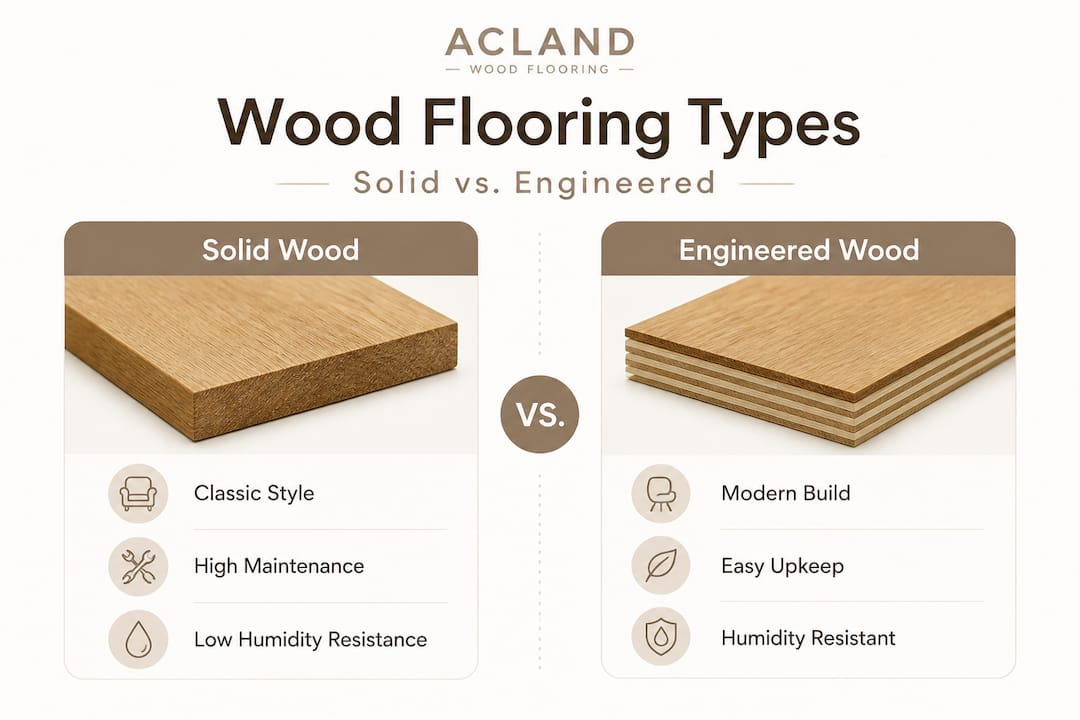
Solid wood is exactly what it sounds like: planks milled from a single piece of timber. It looks extraordinary and can be sanded and refinished multiple times over its lifetime. However, it expands and contracts with changes in moisture and temperature, making it vulnerable in humid or variable environments.
Engineered wood is constructed from a real wood veneer bonded over multiple layers of high-density board or ply. This cross-ply construction resists warping and movement, meaning it performs far better in conditions where humidity fluctuates. For wood flooring in humid conditions like those common in Glasgow, engineered wood copes better with regular footfall and humidity, making it the practical choice for most commercial settings.
| Material | Durability | Humidity resistance | Refinishing potential | Best use |
|---|---|---|---|---|
| Solid wood | Very high | Low | Multiple times | Low-traffic prestige spaces |
| Engineered wood | High | High | 2 to 3 times | Most commercial environments |
| Lacquered finish | High | Medium | Limited | High-traffic retail or offices |
| Oiled finish | Medium | Medium | Easy touch-ups | Spaces needing visual warmth |
Finish choices matter too. Lacquered floors are sealed with a hard protective coating, offering strong resistance to scratches and spills. Oiled floors penetrate the wood grain and offer a more natural look, though they require more frequent maintenance. For most Glasgow commercial properties, a lacquered engineered board strikes the best balance.
It is also worth considering eco-certifications if sustainability is part of your brand story. FSC or PEFC certified timbers demonstrate responsible sourcing, which increasingly matters to tenants, clients, and staff alike. Seeking expert advice for wooden flooring at this stage ensures you choose materials that align with both your operational needs and your values.
Installation: Step-by-step commercial wood flooring process
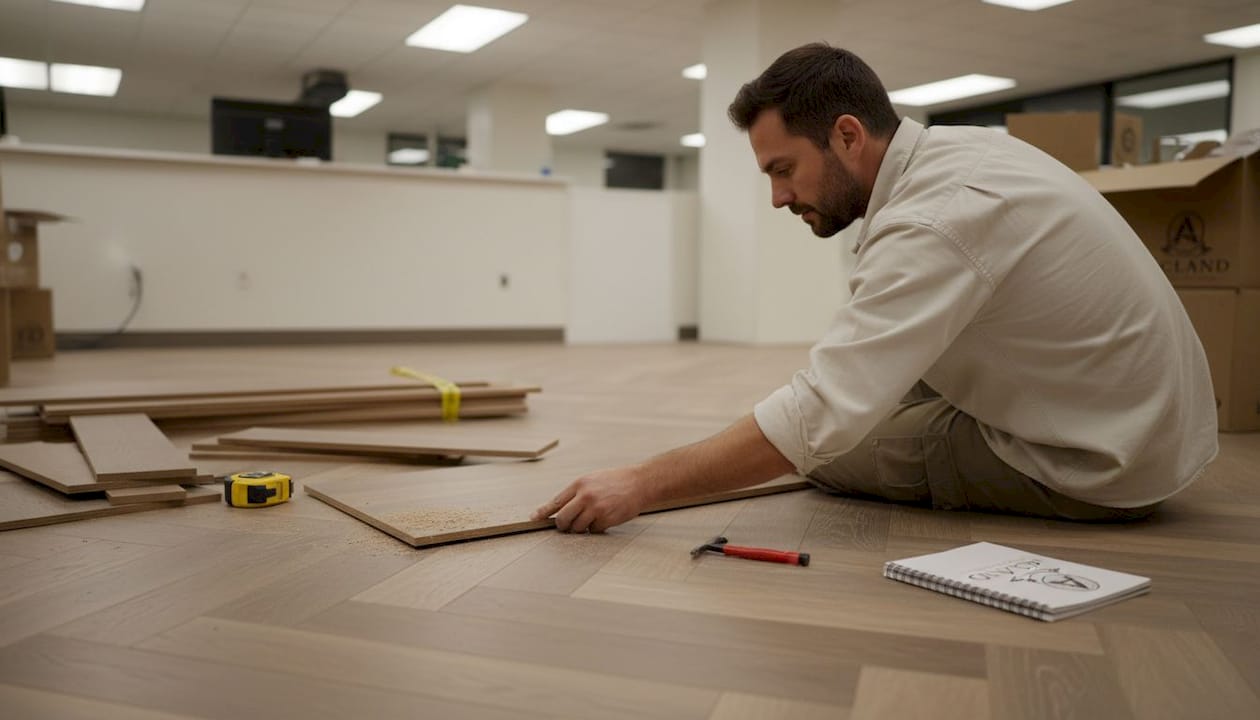
With your material chosen, professional installation is what separates a floor that lasts decades from one that fails within a year. Cutting corners here is one of the most common and costly mistakes in commercial fit-outs.
- Site assessment: A thorough inspection of the subfloor is essential. Any unevenness, damp patches, or structural issues must be addressed before the first board is laid. A difference of just a few millimetres across a surface can cause boards to creak, shift, or lift over time.
- Subfloor preparation: Depending on what is beneath your floor, this may involve levelling compounds, damp-proof membranes, or removing existing adhesives from previous flooring.
- Acclimatisation: Wood must be left on site, unopened in its packaging, for a minimum of 48 to 72 hours before installation. This allows the timber to adjust to the temperature and humidity of the building. Skipping this step is one of the most frequent common wood flooring errors that leads to warping and gapping after installation.
- Laying pattern selection: In commercial spaces, the laying pattern carries significant visual weight. Straight plank runs feel clean and modern; herringbone and chevron patterns add prestige and visual interest, particularly effective in reception areas and hospitality spaces. Following plank floor installation steps correctly ensures consistency across large floor areas.
- Post-installation testing: Once laid, the floor should be tested for moisture levels, surface levelness, and adhesion quality. Any issues identified at this stage are far simpler to resolve than those discovered months later.
“Following installation best practices avoids costly errors.” Professional installation with proper preparation is the single biggest factor in commercial flooring longevity.
Pro Tip: Always insist on a post-installation inspection before the space reopens. A good installer will walk through the completed floor with you, checking for any movement, gaps, or surface irregularities. This inspection also validates your warranty.
Aftercare and ongoing maintenance
After your flooring is installed, ongoing care is the key to keeping it beautiful and functional for years to come. A neglected wood floor in a commercial environment can deteriorate rapidly, particularly under heavy footfall or in spaces with wet entrances.
Here are the core maintenance practices to build into your operations:
- Daily cleaning: Sweep or vacuum to remove grit and debris, which act like sandpaper underfoot. Use a slightly damp mop with a pH-neutral cleaner designed for wood floors. Never use steam mops or excessive water.
- Entrance matting: Place high-quality matting at all external entrances to trap moisture and grit before it reaches your floor.
- Furniture protection: Fit felt pads to all chair and table legs. In high-traffic retail or office settings, consider anti-fatigue mats or area rugs in concentrated use zones.
- Periodic deep cleaning: Schedule a professional clean every six to twelve months, depending on footfall. This typically includes buffing the surface and reapplying a topcoat to lacquered floors.
- Refinishing: As scheduled maintenance extends the lifespan of wood flooring and reduces total cost of ownership, plan for a full refinish every five to ten years for heavily used commercial spaces.
Timely repairs matter too. A deep scratch left untreated can allow moisture to penetrate the board, leading to swelling, discolouration, and eventually board replacement. For expert installation for value, regular care preserves both the floor and your property’s overall worth.
Pro Tip: Keep a written maintenance log, recording cleaning routines, inspections, and any repair work. This serves as documentation for insurance purposes, supports lease compliance, and demonstrates diligence to future buyers or tenants.
Why shortcuts cost more: Our honest insight on commercial floors
After years of working with commercial clients across Glasgow, one pattern stands out clearly. The projects that go wrong almost always have the same origin: a decision made on price alone, without full consideration of what the space actually demands.
We regularly see the consequences of this approach. A flooring product purchased at a reduced rate because it lacked a proper moisture barrier. An installation carried out by a general contractor unfamiliar with wood movement. A busy café that skipped acclimatisation because the fit-out timeline was tight. In every case, the cost of fixing the resulting damage exceeded what investing correctly from the start would have cost.
The honest truth is that the value of expert advice is not an upsell. It is a risk management decision. An experienced wood flooring specialist identifies problems before they become failures. They know which products perform in Glasgow’s climate, which installation methods suit your subfloor, and which maintenance regimes keep commercial floors performing under pressure.
Clients who invest thoughtfully in their flooring at the outset almost never regret it. Those who cut corners frequently return to us, sometimes within a year, looking for solutions to problems that were entirely preventable.
Explore expert wood flooring solutions for your commercial space
If you’re ready to transform your commercial space, the right guidance and high-quality materials make all the difference. At Acland Wood Flooring, we work exclusively with wood floors, which means every recommendation we make is grounded in genuine expertise.

Whether you are fitting out a new premises or replacing a tired existing floor, our team will assess your space, advise on the most suitable products for your needs, and carry out precise, professional installation. Browse our full range of engineered wood flooring in Glasgow for options suited to commercial settings, or explore our complete wood flooring supply and installation service to understand how we support clients from first consultation through to aftercare. Get in touch today to discuss your project with a specialist who genuinely knows wood floors.
Frequently asked questions
What is the most durable wood flooring for commercial use in Glasgow?
Engineered wood is typically the best choice for durability and humidity resistance in Glasgow’s commercial environments, thanks to its cross-ply construction that resists warping.
How often does commercial wood flooring require maintenance?
Routine cleaning should be carried out daily, with scheduled professional maintenance and refinishing recommended every few years depending on the volume of foot traffic the space receives.
Can solid wood flooring be used in humid commercial settings?
Solid wood flooring is vulnerable to humidity fluctuations, so engineered alternatives are advised for most commercial use cases in Glasgow, where moisture is a consistent challenge.
What are the signs that commercial wood flooring requires replacement?
Look for deep scratches, excessive wear, moisture damage, or buckling. If repairs are no longer effective and the structural integrity of the boards is compromised, full replacement becomes necessary.