
Many Glasgow homeowners dismiss engineered wood flooring as a cheap imitation of the real thing, assuming it sits somewhere between solid hardwood and plastic laminate. That assumption costs them a genuinely excellent option. Engineered wood flooring features a real hardwood veneer bonded over a cross-laminated plywood or HDF core, making it structurally superior to solid wood in many practical situations. For Scottish homes dealing with damp winters, unpredictable humidity, and the demands of family life, it delivers something solid wood often cannot: consistent, long-lasting performance without compromise on appearance.
Key Takeaways
| Point | Details |
|---|---|
| Real hardwood top | Engineered wood flooring is built with a layer of genuine hardwood, delivering style and authenticity. |
| Superior moisture resistance | Its multi-layered construction makes it perfect for homes across Glasgow and Central Scotland. |
| Flexible for installation | Engineered boards suit a range of subfloors and underfloor heating, outpacing most solid wood options. |
| Easy maintenance | Simple cleaning and prompt spill management will keep floors beautiful for decades. |
| Cost-effective upgrade | It offers a balance of durability, style, and value for money—especially in challenging climates. |
Understanding the structure of engineered wood flooring
Now that you know this isn’t ordinary laminate, let’s look inside the engineered board itself.
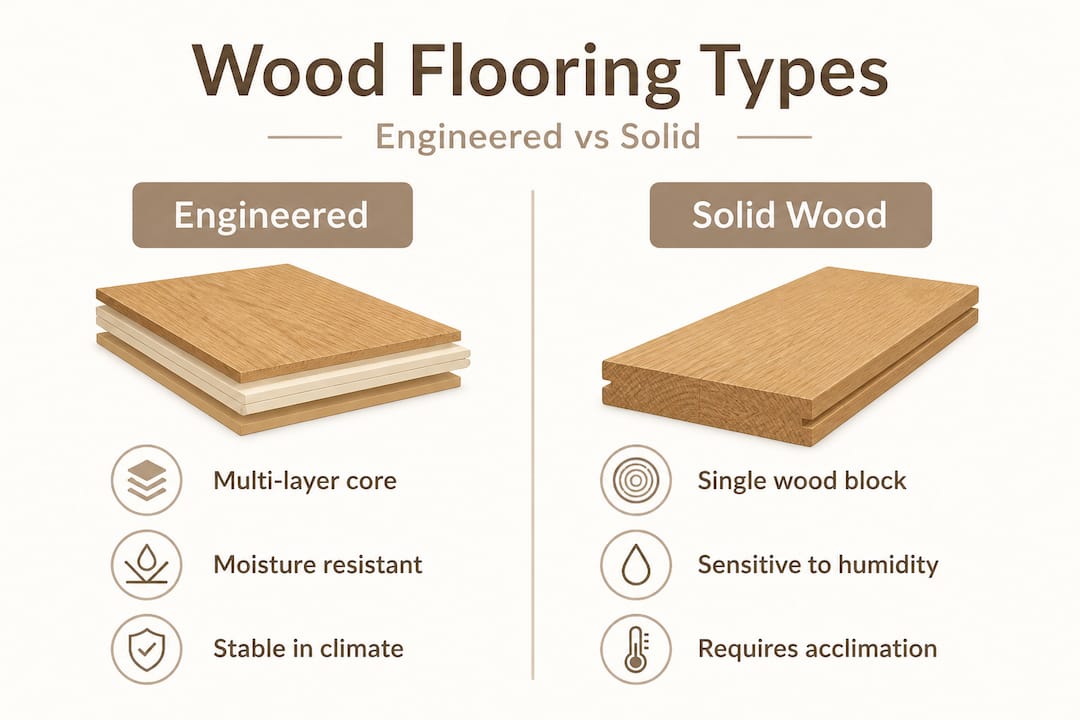
Every engineered wood plank is built in distinct layers, each serving a specific function. The top is a hardwood veneer layer of real timber, typically between 0.6mm and 6mm thick. Beneath that sits the core, made from cross-laminated plywood or HDF (high density fibreboard). Finally, a balancing backing layer on the underside keeps the plank flat and prevents warping.
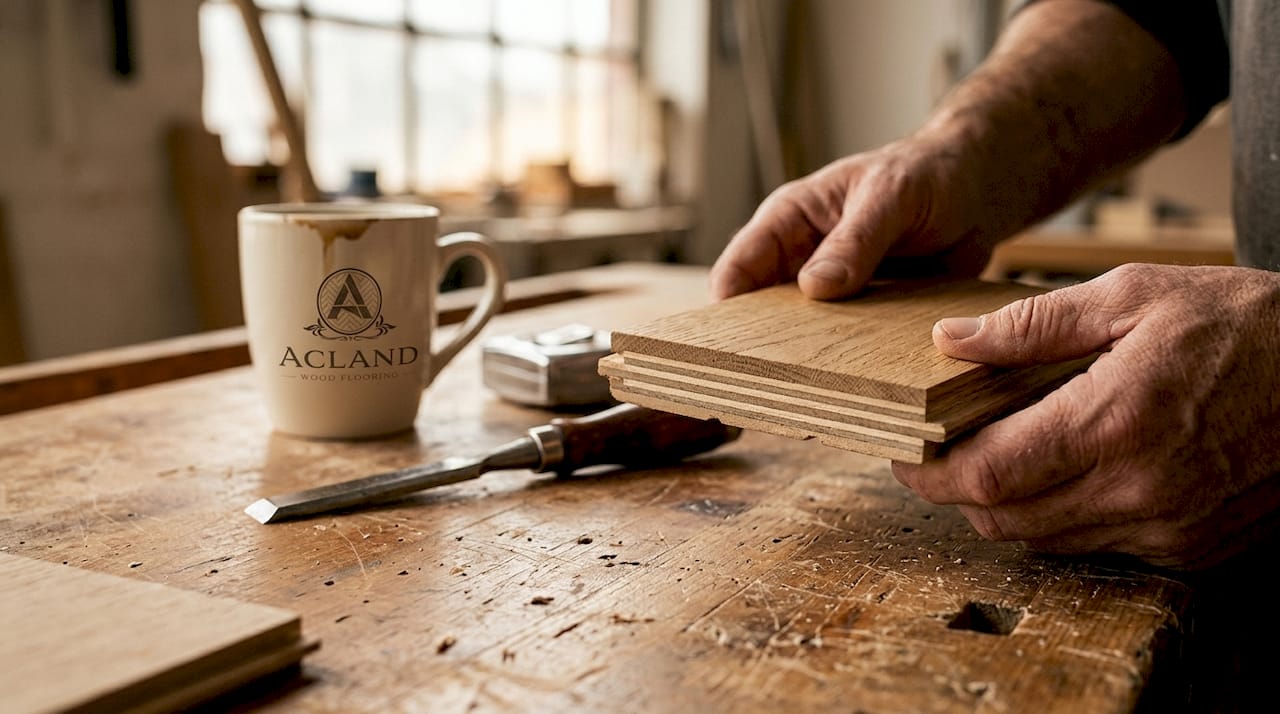
The genius of this construction is the cross-lamination. Adjacent layers run at opposing grain angles, which dramatically reduces the board’s tendency to expand or contract when humidity shifts. Solid wood expands and contracts along its grain. Engineered wood, by contrast, spreads any movement across multiple directions, keeping the board far more dimensionally stable. This is exactly why it performs so reliably in Glasgow’s variable climate.
The thickness of the veneer matters more than most people realise. Thicker veneers (3mm and above) allow light sanding and refinishing over time, giving the floor a second or third life. Thinner veneers, while perfectly durable for everyday wear, require a gentler approach: screen and recoat rather than full sanding.
| Component | Material | Function |
|---|---|---|
| Top veneer | Real hardwood (0.6mm to 6mm) | Appearance, wear surface |
| Core | Plywood or HDF layers | Structural stability |
| Backing layer | Plywood or stabilising material | Balance, prevents warping |
Pro Tip: Choose a board with more than three plywood layers in the core. Multi-ply construction outperforms three-layer designs in stability, making it a smarter long-term investment for Scottish homes where humidity fluctuates throughout the year.
Take a look at the full range of engineered wood flooring details to see how construction quality varies between grades and product lines.
Key benefits for Scottish homeowners
With the basic build in mind, why is it such a popular choice locally?
Engineered wood flooring excels in conditions that would challenge solid timber. Here in Glasgow and Central Scotland, temperatures and humidity levels shift noticeably between seasons. A solid wood floor in a ground-floor flat or kitchen diner can swell in winter, shrink in summer, and end up with gaps or creaking joints within a few years. Engineered wood, particularly multi-ply boards, handles these swings far more gracefully.
Here are the key advantages worth knowing:
- Moisture resistance: The layered core is far less reactive to humidity than a single solid plank, making it ideal for wood flooring in humid Glasgow homes where condensation and damp can be a real issue.
- Underfloor heating compatibility: Engineered wood sits flat and stable over heated subfloors, whereas solid wood can crack or warp when exposed to prolonged heat cycles.
- Design range: You’ll find engineered boards in everything from pale Scandinavian oak to rich smoked walnut, in widths and lengths that suit open-plan spaces or compact period rooms equally well.
- Quicker installation: Many engineered boards use a floating click system, meaning they can be laid directly over most existing subfloors without adhesive, saving both time and cost.
- Eco-friendly credentials: Because only the top layer is solid hardwood, each plank uses a fraction of the precious timber a solid board requires. That means more floors from fewer trees.
- Genuine warmth underfoot: The real wood surface feels and sounds the same as solid timber. You’re not sacrificing tactile quality for stability.
The engineered floor lifespan surprises many homeowners too. With proper maintenance, a quality board can serve a family well for 25 to 30 years, which puts it well within reach of solid wood’s durability in most domestic settings.
Engineered vs solid wood flooring: What’s the real difference?
Many homeowners wrestle with whether to invest in engineered or stick to traditional solid wood, so here’s a clear breakdown.
Both look beautiful. Both are real wood. But they behave quite differently in day-to-day life, and the distinction matters enormously for Scottish properties.
| Feature | Engineered wood | Solid wood |
|---|---|---|
| Moisture response | Stable, minimal movement | Prone to expansion and warping |
| Refinishing | One to two times (veneer dependent) | Multiple times over decades |
| Underfloor heating | Compatible with most systems | Limited compatibility |
| Installation options | Float, glue, or nail | Nail or glue only |
| Best suited for | Ground floors, kitchens, humid rooms | Upper floors, period properties |
| Resale value | Excellent in modern homes | Premium in historic properties |
Multi-ply construction offers significantly greater dimensional stability than three-layer boards, which is an important distinction when comparing product tiers within the engineered category itself.
A word of caution: if your engineered board has a veneer thinner than 2mm, avoid sanding altogether. The risk of cutting through to the core is real. A screen and recoat treatment will refresh the surface beautifully without that risk.
The solid wood flooring advantages are undeniable in the right context. If you’re restoring a Victorian tenement in the West End with original pine joists and you want to match period character, solid wood makes complete sense. But for most modern Glasgow homes, particularly ground floors, kitchens, and open-plan living spaces, engineered wood is the more practical, lower-risk choice.
It’s also worth exploring the broader range of Scottish flooring types if you’re still weighing your options between plank, herringbone, or chevron styles in either material.
Care, maintenance, and longevity: What you need to know
Once installed, knowing how to look after your floor is vital for longevity and appearance.
The good news is that engineered wood is not demanding. Follow a straightforward routine and your floor will stay looking sharp for decades. Here’s what that routine looks like in practice:
- Sweep or vacuum regularly using a soft brush attachment to remove grit before it scratches the surface.
- Mop lightly with a barely damp cloth or microfibre mop. Never saturate the boards.
- Wipe spills immediately. Standing water is the main cause of veneer delamination, where the top layer separates from the core.
- Use furniture pads under chair and table legs. Even small scratches accumulate over time and dull the surface finish.
- Avoid steam cleaners entirely. The combination of heat and moisture forces water into the joints and damages the core.
- Refresh with a screen and recoat every five to ten years depending on traffic levels. This lightly abrades the surface and applies a fresh coat of finish, restoring both appearance and protection without cutting into the veneer.
Pro Tip: The single biggest mistake people make with engineered wood is over-wetting it during cleaning. Excess moisture is far more damaging than foot traffic. A wrung-out cloth is all you need; anything wetter than that is working against your floor.
Checking out a guide on wood floor care mistakes can help you sidestep the most common errors that shorten a floor’s life prematurely.
Our perspective: Why engineered wood flooring is a game-changer for Scotland
Here’s our hard-won perspective after years fitting floors across Central Scotland.
The perception that engineered wood is somehow a lesser option has genuinely cost homeowners money. We’ve seen clients install solid hardwood on ground floors out of loyalty to tradition, only to call us back two winters later with gapping, lifting, and surface checking caused by moisture movement. The same rooms fitted with a quality multi-ply engineered board would have sailed through those winters without a single issue.
What most guides miss is that performance in a Scottish climate isn’t just about material strength. It’s about dimensional stability under real-world conditions. Damp Glasgow winters followed by centrally heated interiors create significant swings in relative humidity inside a home. Engineered wood handles this cycle repeatedly, year after year, without complaint.
The floating installation method adds another layer of practicality. Boards that float over an existing subfloor can be removed and relaid if a pipe bursts or a section gets badly damaged, something you simply cannot do with glued solid wood. That flexibility has genuine monetary value over the life of a home.
Our honest advice: don’t judge a board by thickness alone. A 14mm engineered board with a 3mm veneer and a nine-ply core will outperform a cheap 20mm solid board in most Scottish homes. Understanding the specification, not just the headline number, is what separates a smart purchase from a regretful one.
If you’re still uncertain about humidity and your specific room conditions, revisit the guidance on best flooring for humidity before making a final decision.
Explore engineered wood flooring solutions for your home
Ready to see what’s possible in your own home?
At Acland Wood Flooring, we supply and install engineered wood flooring across Glasgow and Central Scotland, sourcing boards from trusted manufacturers and fitting them to a standard we’d be happy to stake our reputation on. We work with homeowners to find the right species, finish, and board format for their space, lifestyle, and budget.

Whether you’re drawn to the natural warmth of European oak, the drama of smoked ash, or the cool elegance of light maple, we’ll help you find the right match. We also provide ongoing advice on care and maintenance so your investment lasts. For a better idea of what to expect over time, read our guide on the lifespan of engineered floors and get in touch to discuss your project.
Frequently asked questions
Is engineered wood flooring real wood?
Yes, engineered wood flooring uses a real hardwood veneer on top of layered plywood or HDF, making it authentic wood with added structural stability beneath the surface.
Can engineered wood flooring be sanded and refinished?
Most engineered floors can be re-coated or lightly sanded once or twice, but thinner veneers require only screen and recoat rather than full sanding, which risks cutting through to the core.
Is engineered wood flooring suitable for kitchens or humid rooms?
Yes, the layered core resists moisture-related movement far better than solid wood, making engineered boards well suited to kitchens and other rooms where humidity levels change regularly.
How does engineered wood compare to laminate flooring?
Unlike laminate, which uses a printed photographic image over fibreboard, engineered wood has a genuine hardwood surface that looks, feels, and ages like real timber.