
Walk into almost any well-appointed Glasgow home and there is a good chance you will find oak underfoot. Yet many homeowners still treat wood flooring as a single category, assuming one type performs much like another. That is a costly misconception. Oak flooring is a world of its own, offering a combination of longevity, visual warmth, and practical resilience that most alternatives simply cannot match. This guide breaks down everything you need to know, from the differences between solid and engineered oak to the care routines that will keep your floor looking exceptional for decades.
Key Takeaways
| Point | Details |
|---|---|
| Oak flooring defined | Oak flooring includes both solid and engineered varieties, prized for their strength and appeal. |
| Best fit for Scottish homes | Engineered oak offers outstanding stability, making it ideal for areas with changing humidity such as Glasgow. |
| Exceptional durability | With correct care and installation, oak flooring can last for decades in high-traffic living spaces. |
| Easy maintenance tips | Simple regular cleaning and prompt attention to spills help preserve oak’s beauty and longevity. |
What is oak flooring?
Oak flooring refers to floor boards made predominantly from oak timber, one of Europe’s most prized hardwoods. The grain is distinctive, the colour ranges from pale cream to rich amber, and the density of the wood makes it exceptionally resistant to denting and daily wear. It is not simply a fashionable choice; it is a considered investment in the fabric of your home.
You can explore the top wood flooring types available to Scottish homeowners, but oak consistently sits at the top of the list for good reason. Solid oak and engineered oak are the two primary types used in UK homes, and understanding the distinction between them is the first step towards making the right choice for your space.
Here is what makes oak flooring stand apart:
- Hardness: Oak scores high on the Janka hardness scale, meaning it resists scratches and dents far better than softer species like pine.
- Grain variation: Each board carries a unique grain pattern, giving your floor genuine character that manufactured alternatives cannot replicate.
- Finishing options: Oak accepts stains, oils, and lacquers beautifully, allowing you to achieve anything from a pale Scandi look to a deep, traditional tone.
- Refinishing potential: Unlike vinyl or laminate, oak can be sanded back and refinished, effectively resetting its appearance over time.
“A well-chosen oak floor is not just a surface to walk on. It is a long-term feature of your home that grows in beauty with age and care.”
Types of oak flooring: solid vs engineered
Solid oak boards are exactly what the name suggests: a single, thick piece of oak timber milled to a consistent width and thickness. Because the entire board is solid wood, it can be sanded and refinished multiple times over its lifetime. This makes solid wood flooring a brilliant long-term investment in the right setting. However, solid oak is sensitive to moisture and temperature swings. In a home without a stable indoor climate, boards can expand and contract, causing gaps or cupping.
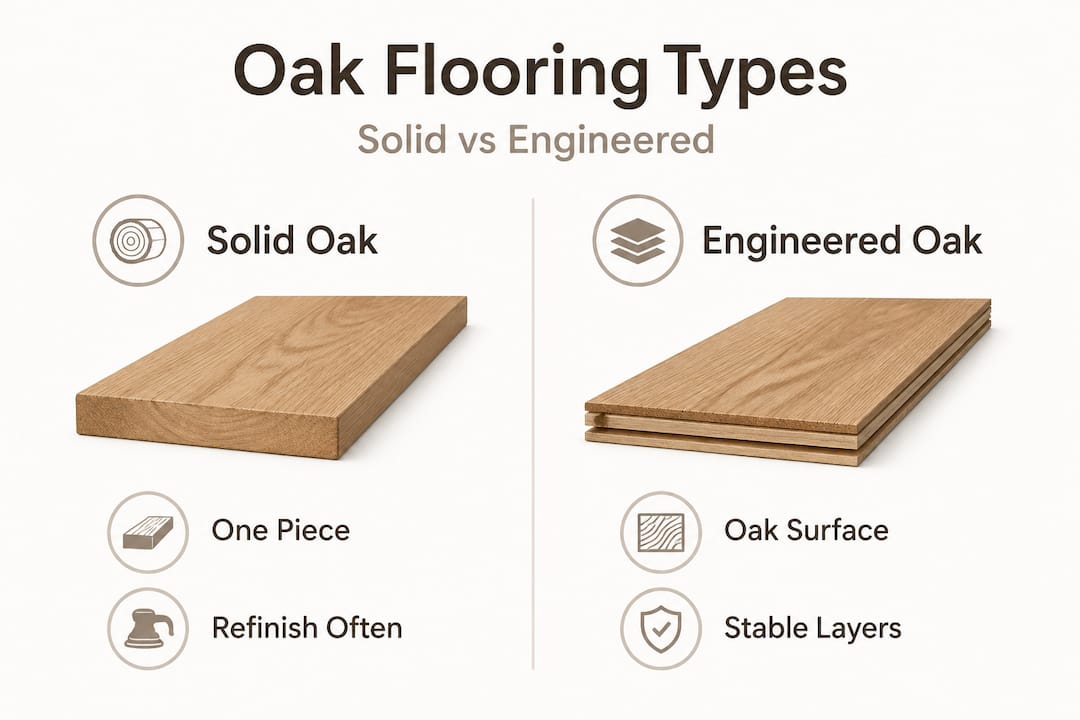
Engineered oak takes a different approach. A real oak veneer sits on top of layers of high-density fibreboard or plywood. This layered construction makes it dimensionally stable, meaning it moves far less in response to humidity changes. Engineered oak offers increased stability, making it ideal for areas with changing humidity levels, such as Glasgow. To learn more about performance over time, it helps to understand engineered wood floors longevity before committing to a purchase.
| Feature | Solid oak | Engineered oak |
|---|---|---|
| Construction | Single piece of timber | Oak veneer over plywood/HDF layers |
| Humidity resistance | Lower | Higher |
| Refinishing potential | Many times | 2 to 4 times depending on veneer thickness |
| Compatible with underfloor heating | Limited | Yes |
| Cost | Generally higher | More accessible price points |
| Best suited for | Stable, dryer rooms | Any room including kitchens and open-plan areas |
Pro Tip: If you are installing on a ground floor or in a room with underfloor heating, engineered oak is almost always the wiser choice in Scottish homes. The climate here simply demands that flexibility.
Key benefits of oak flooring for Scottish homes
Once you recognise the differences between solid and engineered oak, the reasons to choose oak over alternatives become very clear. Glasgow homeowners in particular benefit from oak’s specific combination of properties.
Here are the four main advantages to keep in mind:
-
Exceptional longevity: Oak floors are valued for their durability, lasting decades with proper care. A well-installed floor can outlast multiple kitchen renovations, several sets of furniture, and even the next generation of homeowners. That is genuinely rare in flooring.
-
Timeless aesthetic appeal: Oak does not date. Whether your interior leans towards modern minimalism or traditional period style, there is an oak finish, grade, and plank width to suit it. Herringbone and chevron patterns in particular have seen a significant resurgence in Glasgow homes and bring an architectural quality to any room.
-
Easy to refinish and repair: Scratches and scuffs accumulate in any active household. The great advantage of oak, especially solid oak, is that a professional can sand back the surface and apply a fresh finish, making the floor look brand new without replacing a single board. This is something laminate and vinyl cannot offer.
-
Climate resilience: Scotland’s weather creates indoor humidity fluctuations that punish less stable flooring materials. Oak, particularly engineered oak, handles these changes far better than most. Avoiding early common flooring mistakes during installation ensures your floor performs as promised from day one.
Worth noting: Oak flooring also adds measurable value to a property. Estate agents consistently report that homes with quality hardwood flooring command higher asking prices and sell faster than equivalent properties without. For Glasgow homeowners considering any renovation, that is a compelling return on investment.
Choosing and caring for oak flooring: practical tips
Having considered the benefits, it is important to choose wisely and avoid common pitfalls in care and installation. The right floor chosen poorly is still the wrong floor.
When selecting your oak flooring, consider the following:
- Grade: Oak is graded by the amount of character markings, knots, and colour variation in the boards. Prime grade is clean and uniform; rustic grade includes knots and more variation. Neither is better, but they create very different atmospheres.
- Width and length: Wider, longer boards feel more expansive and contemporary. Narrower boards suit period properties and traditional interiors. Think about the proportions of your room before deciding.
- Finish: Oiled finishes give a natural, matte look and are easy to spot-repair. Lacquered finishes are harder-wearing and easier to clean but require full refinishing when they eventually wear.
- Pattern: Straight plank is the most common. Herringbone and chevron add a layer of craftsmanship and visual interest but require more precise installation.
For ongoing maintenance, keep these habits in mind:
- Sweep or vacuum regularly to remove grit, which acts like sandpaper underfoot.
- Use a well-wrung, barely damp mop rather than soaking the surface with water.
- Apply a refresher oil or maintenance coat every one to two years, depending on foot traffic.
- Place felt pads under furniture legs and use mats at exterior doorways to trap dirt before it reaches the floor.
Proper installation and regular care are the single biggest factors in how long your floor lasts and how good it looks at the ten-year mark.
Pro Tip: Before any boards go down, have your subfloor checked for moisture levels and flatness. More floors fail because of subfloor problems than because of poor-quality timber. It is the step most people skip and the one that matters most.
Expert perspective: what most guides miss about oak flooring
Most articles about oak flooring focus on the finish and the price. Both matter, but they are not where installations succeed or fail. In our experience working with Glasgow and Central Scotland homeowners, the real difference between a floor that looks incredible after ten years and one that causes problems within eighteen months comes down to what happens before the first board is laid.
Subfloor preparation is unglamorous but critical. A floor that is not level to within the manufacturer’s tolerance will move, creak, and eventually fail at the joints. Moisture readings taken on the day of installation are not enough; the subfloor needs to be assessed over time, especially in older Glasgow tenements or newer builds where concrete screeds are still drying out. These are the details that separate experienced specialist fitters from general contractors.
We also see homeowners underestimate acclimatisation. Oak needs time to adjust to the conditions of its new environment before installation. Skipping this step because of impatience or a tight schedule is one of the most common installation mistakes we come across.
The reward for getting these details right is significant. A properly installed, well-maintained oak floor genuinely improves with age. The wood deepens in colour, the patina builds character, and the floor becomes part of the home’s story. That is not something you can say about many building materials.
Upgrade your home with professional oak flooring support
Choosing oak flooring is one of the best decisions you can make for your Glasgow home, but realising its full potential depends on the quality of advice and installation behind it.

At Acland Wood Flooring, we specialise solely in wood floors, which means every recommendation we make is grounded in deep, practical knowledge of how oak performs in Scottish homes. Whether you are weighing up your oak flooring options, looking for professional wood floor fitting across Glasgow and Central Scotland, or simply browsing for flooring inspiration before committing to a style, we are here to help you make the right call without the pressure or guesswork.
Frequently asked questions
Is oak flooring suitable for kitchens and bathrooms?
Engineered oak is better suited to moisture-prone areas, making it a practical choice for kitchens, though bathrooms require extra caution and specialist advice before installation.
How long will oak flooring last in a busy home?
Oak floors last decades with proper care, even in high-traffic family homes, provided the installation and ongoing maintenance are carried out correctly.
Can oak flooring be laid over underfloor heating?
Yes, engineered oak is compatible with underfloor heating systems when installed using recommended methods and kept within the temperature range specified by the manufacturer.
Is solid oak better than engineered oak?
Solid oak and engineered oak each suit different situations; solid offers more refinishing potential, while engineered performs better in rooms with variable humidity or underfloor heating.