
Reclaimed wood flooring is one of those subjects that sounds straightforward until you start looking closely. Most people assume it is simply old wood pulled from a skip and relaid. The reality is far more interesting. With reclaimed wood flooring explained properly, you discover a material with genuine history, structural advantages that new wood often cannot match, and an environmental story worth caring about. This article covers everything you need to know before buying, from sourcing authenticity and species selection to installation nuances and long-term maintenance.
Key takeaways
| Point | Details |
|---|---|
| More than just old wood | Reclaimed timber comes from specific structures and carries verifiable provenance that affects quality and character. |
| Harder than modern equivalents | Old-growth timber is denser than new wood, making reclaimed floors genuinely tougher underfoot. |
| Sustainability credentials matter | Reclaimed flooring reduces demand for virgin timber and diverts material from landfill, supporting a circular economy. |
| Moisture control is non-negotiable | Boards must reach the correct moisture content before installation to prevent warping and gaps. |
| Preserve the patina | Over-sanding or aggressive refinishing removes the historic character marks that make reclaimed wood worth choosing. |
What is reclaimed wood flooring, really?
The industry term you will encounter is salvaged timber flooring, though reclaimed wood flooring is the widely accepted everyday name. It refers to lumber recovered from decommissioned barns, factories, and ships, typically structures built during the 1800s and early 1900s, then cleaned, de-nailed, re-milled, and graded for use as flooring.
What makes it distinct from new wood is not age alone. The natural patina you see on reclaimed boards develops through decades of oxidation, resin movement, and physical wear. That surface tells a story no factory finish can reproduce. You will also notice grain variation, knots, nail holes, and tool marks. These are not flaws. They are the authenticating features buyers specifically pay for.
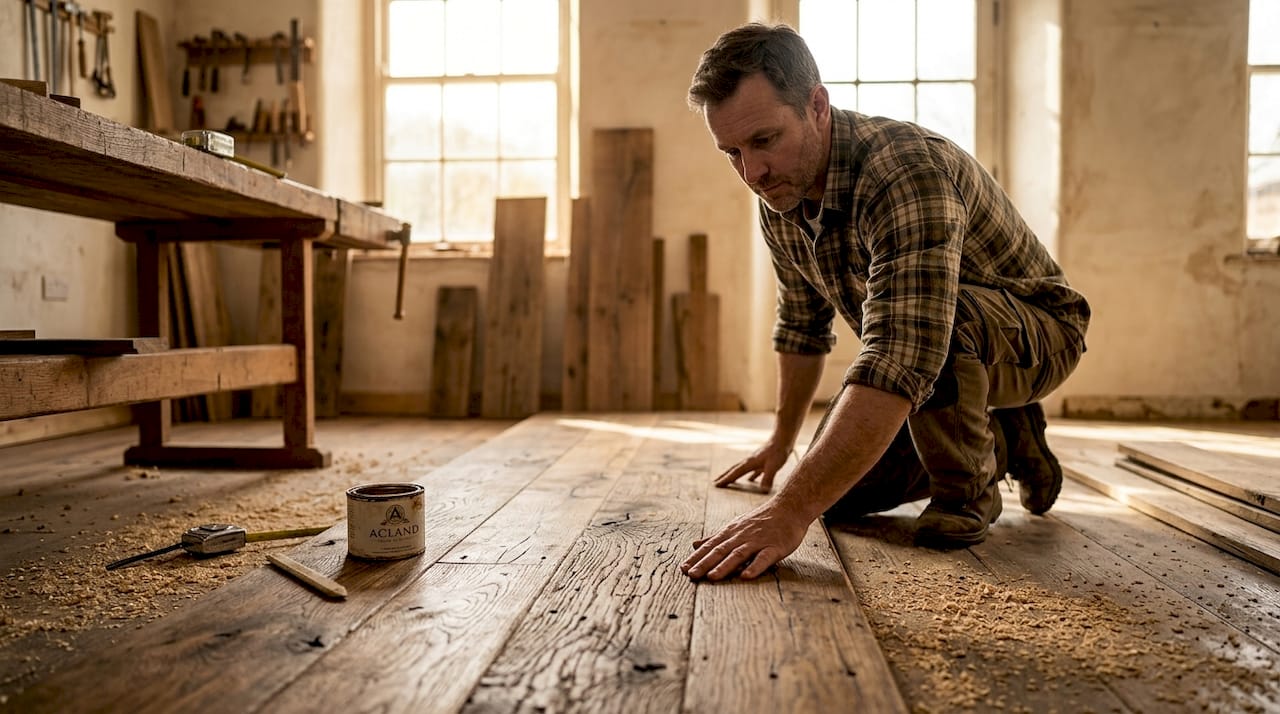
There is also a structural argument. Old-growth forests grew slowly and produced timber with tight, dense grain rings. Modern plantation wood grows faster and is less dense by comparison. This density difference has a direct effect on hardness and longevity underfoot.
Here is a quick summary of the defining characteristics:
- Provenance. Sourced from identifiable structures with documented history.
- Visual marks. Knots, nail holes, saw marks, and weathering that cannot be replicated.
- Dense grain. Tight annual rings from slow old-growth timber.
- Natural patina. Surface colour and texture shaped by the wood’s original environment.
Pro Tip: Ask your supplier for the specific origin of the timber. A reputable source should be able to tell you whether boards came from a barn in Yorkshire or a Victorian mill in Lancashire. Vague answers are a warning sign.
Benefits of reclaimed wood flooring
The benefits of reclaimed wood go well beyond aesthetics. Start with durability. Because old-growth timber is denser, reclaimed oak or heart pine often scores higher on the Janka hardness scale than its new-wood equivalent. That translates to a floor that handles heavy foot traffic and furniture movement better over time.
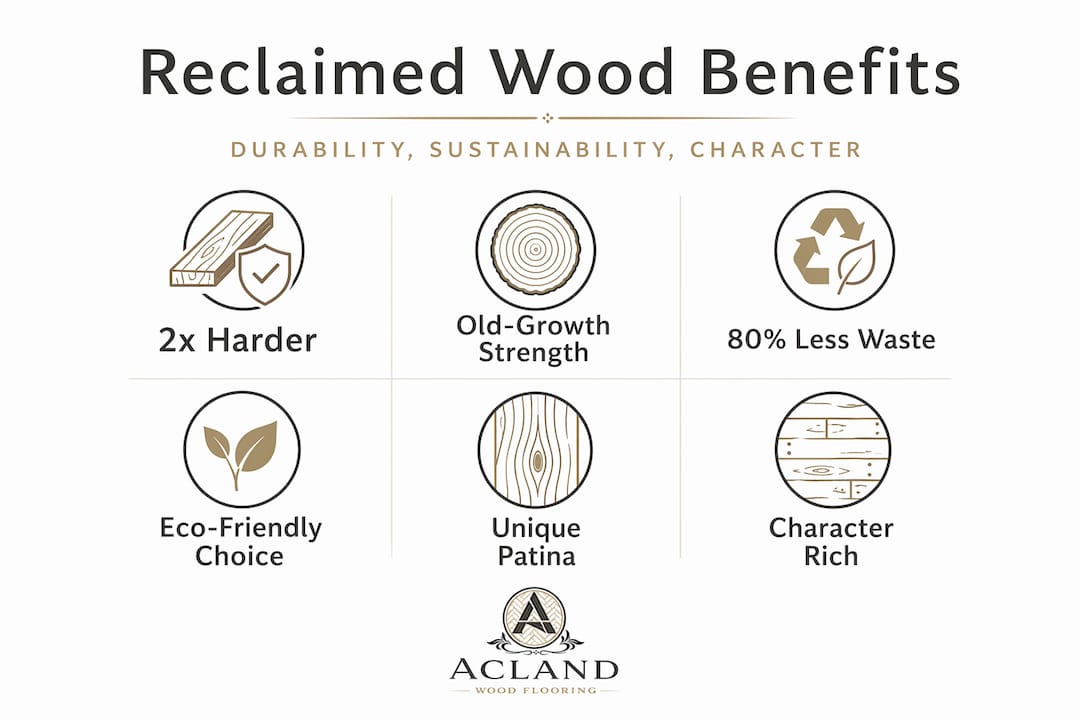
On the sustainability side, reclaimed flooring reduces landfill waste and lowers demand for freshly cut timber, which directly supports circular economy principles. The UK generates roughly 22 million pieces of furniture waste every year, so every reclaimed board laid is material diverted from that stream. If eco-friendly flooring options are on your renovation checklist, this is one of the few choices that genuinely delivers.
The aesthetic range is broader than most homeowners expect. Reclaimed wood suits rustic farmhouse interiors, raw industrial lofts, and contemporary minimalist spaces in equal measure. Wide-plank reclaimed oak paired with clean white walls reads as very modern, while the same boards in a cottage setting feel timeless.
The one honest caveat is cost. Reclaimed wood flooring materials typically run from £8 to over £20 per square foot, with the premium reflecting the labour-intensive process of sourcing, de-nailing, drying, and grading each board. You are not just paying for wood. You are paying for processed history.
Sourcing and selecting reclaimed wood
Choosing the right reclaimed boards is where many homeowners get tripped up. The common reclaimed species include oak, chestnut, heart pine, maple, and red oak. Each brings different hardness, colour tones, and grain patterns to a room, so the species decision should come before anything else.
Here is a useful comparison to guide your thinking:
| Species | Hardness | Typical character | Best suited for |
|---|---|---|---|
| Oak | High | Broad grain, warm tones | Most residential rooms |
| Heart pine | Very high | Tight grain, amber colour | High-traffic areas |
| Chestnut | Medium | Distinctive dark streaks | Rustic or period interiors |
| Maple | High | Fine, pale grain | Contemporary spaces |
Provenance matters for more than just character. Certified timber with a traceable origin confirms species authenticity and rules out contamination from industrial sites where boards may have absorbed chemicals or heavy metals. For clarity on whether reclaimed wood flooring is safe, always request documentation. Reputable suppliers kiln-dry their boards to 6 to 9 percent moisture content, which both stabilises the wood and reduces any biological concerns.
Also check board condition carefully. Look for excessive splitting, deep structural cracks, or signs of rot at the ends. A few nail holes and surface weathering are desirable. Crumbling grain or soft patches are not.
Pro Tip: Before buying a full batch, request a sample pack. Lay a few boards on your subfloor in natural light to see how the patina reads in your actual space. What looks warm in a showroom can read very differently in a north-facing room in Glasgow.
Installation essentials for reclaimed wood
How to install reclaimed flooring successfully comes down to one factor above everything else: moisture. Subfloor moisture should sit below 12%, and your reclaimed planks should be within 2 to 4 percent of that reading before you begin laying. Skipping this step is the single biggest cause of gaps, cupping, and warping after installation.
Follow this preparation sequence for the best result:
- Test the subfloor moisture with a calibrated meter, not a visual inspection.
- Allow boards to acclimatise in the room for at least 3 to 10 days, depending on ambient humidity.
- Sort boards by width, length, and character before laying to plan an efficient layout.
- Sweep the boards with a metal detector to locate any hidden fasteners before cutting.
- Choose your fixing method: nail-down for solid boards, glue-down on concrete, or floating for engineered reclaimed products.
The dimensional variation in reclaimed boards is a real challenge. Unlike new flooring, widths and thicknesses may vary slightly across a batch. Good layout planning, detailed in guides like the herringbone layout workflow, helps you use character boards to maximum effect while minimising off-cuts. A full installation guide will also help you prepare your subfloor properly before you start.
Pro Tip: Lay out all your boards dry across the full room before fixing a single one. This lets you distribute knots and nail holes evenly rather than clustering all the character in one corner.
Maintaining your reclaimed floor
Reclaimed wood flooring maintenance does not have to be complicated, but it does require a light touch. The goal is to preserve the patina and character marks rather than sand them away.
- Daily care. Use a soft-bristle broom or a dry microfibre mop. Wet mopping is the fastest way to damage a wood floor over time.
- Sealing. Apply a low-VOC oil or hardwax finish rather than a thick polyurethane coating, which can obscure the surface texture and age the floor artificially.
- Refinishing. When the time comes, avoid over-sanding. Removing too much surface depth erases the marks that define reclaimed wood’s character. A light screen and re-oil is usually sufficient.
- Repairs. If a board is damaged, source a matching reclaimed piece rather than substituting new wood. The patina difference will be obvious.
With correct care, reclaimed wood floors can last 50 to 100 years or more. That longevity makes the initial cost far more reasonable when spread across a floor’s lifespan. You can also explore floor refinishing options to understand when and how to refresh the surface without losing authenticity.
My honest take on reclaimed wood flooring
I have seen homeowners make the same mistakes repeatedly, and almost all of them stem from impatience. They rush the acclimation period, skip proper moisture testing, or let an overzealous sander remove the patina they paid a premium to get. The result is a floor that looks like expensive new wood rather than something genuinely historic.
The other thing I notice is that people focus too much on appearance in the supplier’s warehouse and not enough on provenance documentation. A board that looks beautiful but has an unknown origin may have come from an industrial site with contamination concerns. Genuine traceability is not bureaucratic box-ticking. It is how you confirm you are getting what you paid for.
My view is that reclaimed flooring rewards a stewardship mindset. You are not installing a product. You are continuing the life of a material that has already served a century or more. Balancing that historic character with modern performance is the real craft, and it is worth taking seriously. When it is done well, no other flooring option comes close.
— John
Ready to install reclaimed wood flooring?
If this article has clarified what reclaimed wood flooring involves, the next step is getting the practical side right. Aclandwoodflooring works with homeowners across Glasgow who want the character of reclaimed timber without the installation headaches that come from inexperience. Whether you are considering solid planks or engineered reclaimed options, the approach to preparation and fixing method matters enormously.

Explore Aclandwoodflooring’s wood floor layering guide for practical guidance on fixing methods suited to reclaimed boards, or browse the species overview for Glasgow homeowners to narrow down which timber type fits your renovation. When you are ready, the Aclandwoodflooring team can advise on sourcing, preparation, and installation to give your reclaimed floor the finish it deserves.
FAQ
What is reclaimed wood flooring?
Reclaimed wood flooring is timber salvaged from old structures such as barns, factories, and ships, then re-milled and graded for use as flooring. It retains original character marks like nail holes, knots, and natural patina that new wood cannot replicate.
Is reclaimed wood flooring safe to use at home?
Yes, provided it comes from a reputable supplier who documents provenance and kiln-dries boards to a stable moisture content of 6 to 9 percent. Always request certification if the timber’s origin is unclear, particularly if sourced from industrial buildings.
How does reclaimed wood compare to new wood?
Reclaimed wood is typically denser and harder than modern plantation timber because it comes from slow-growing old-growth trees. It also carries unique visual character, though it requires more careful preparation and costs more per square foot than new hardwood.
How long does reclaimed wood flooring last?
With correct installation and routine maintenance, reclaimed wood floors can last 50 to 100 years or more. Periodic sealing with a low-VOC finish and careful refinishing that preserves the patina are the keys to that longevity.
How do I maintain reclaimed wood flooring day to day?
Use a dry microfibre mop or soft-bristle broom for routine cleaning, and avoid wet mopping. Reseal the surface with an oil or hardwax finish as needed, and avoid aggressive sanding during refinishing to preserve the historic character of the boards.