
Choosing a herringbone floor pattern for a Glasgow or Central Scotland home is genuinely exciting, but it can also feel overwhelming. Period tenements, modern flats, and open-plan new builds all call for different approaches, and the wrong choice can leave a beautiful room feeling off-balance. Whether you’re renovating a Victorian hallway or refreshing a contemporary living space, herringbone flooring offers a range of styles that go far beyond the single pattern most people picture. This guide walks you through real-world inspiration and practical advice to help you make a confident, well-informed decision.
Key Takeaways
| Point | Details |
|---|---|
| Versatile design | Herringbone patterns complement both traditional and modern homes. |
| Pattern impacts perception | The size and type of herringbone influence how spacious and stylish a room feels. |
| Careful installation needed | Professional fitting and floor preparation ensure lasting results and easy upkeep. |
| Variety of options | From classic to chevron, there are patterns to suit every taste and budget. |
How to evaluate herringbone patterns for your home
With the design challenge in mind, let’s start with how to systematically evaluate your options. The first step is understanding your home’s architectural character. A Victorian or Edwardian property in the West End of Glasgow has very different bones from a 1970s semi-detached or a modern flat in the city centre, and your flooring should complement that character rather than fight it.
Room proportions matter enormously. Different herringbone layouts can visually expand or centre a room, so a narrow hallway benefits from a different scale of pattern than a wide open-plan kitchen. Smaller planks tend to suit compact rooms, while larger formats open up bigger spaces.
Here are the key factors to weigh before you commit:
- Architectural era: Victorian, Edwardian, or modern new build
- Room size and proportion: Small rooms need smaller plank scales
- Colour and finish: Light timbers brighten; darker stains add warmth
- Foot traffic and durability: Busy families need harder-wearing species
- Subfloor condition: Uneven floors can complicate installation significantly
Pro Tip: Order sample boards and lay them on the actual floor in natural daylight before committing. Artificial lighting changes how wood tones and pattern angles appear dramatically.
Classic European herringbone: Timeless elegance
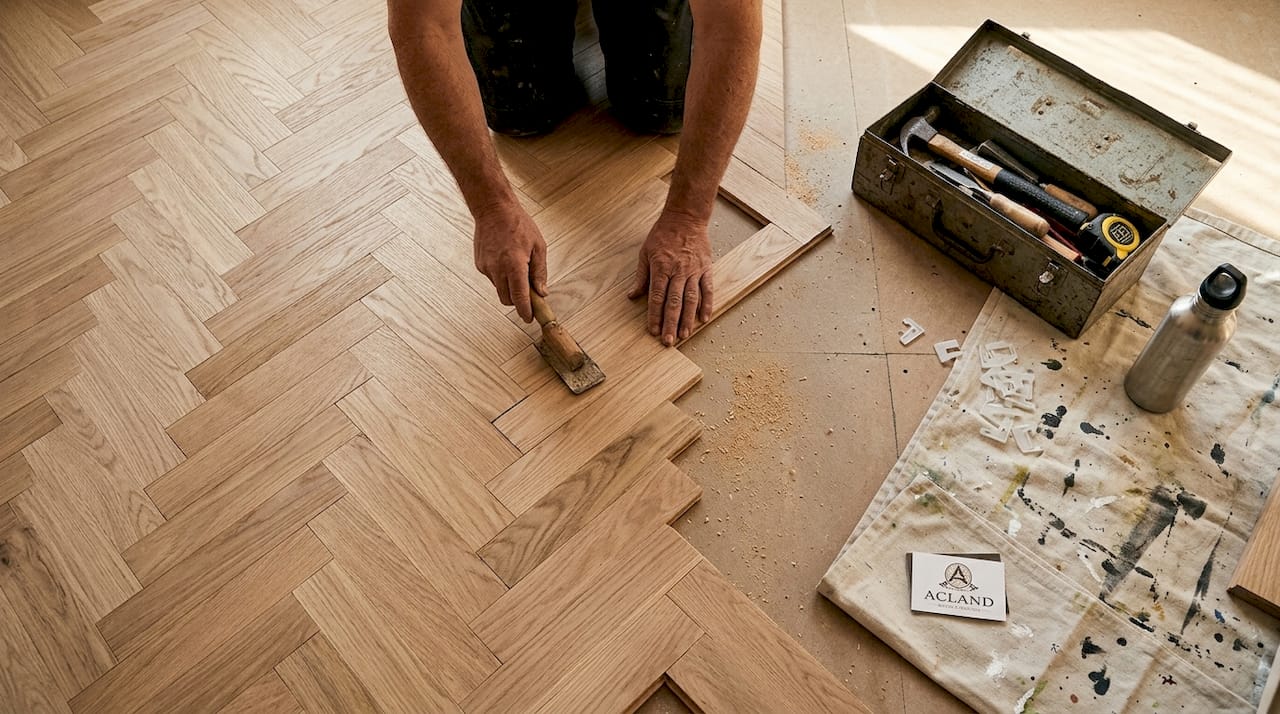
Now that you know how to evaluate, let’s explore the most enduring pattern variety. The classic European herringbone uses narrow, uniform rectangular planks arranged in a traditional zigzag. It’s the pattern you’ll find in grand Parisian apartments and Georgian townhouses alike, and it translates beautifully into Glasgow’s Victorian and Edwardian tenements.
As what is herringbone flooring confirms, traditional herringbone is favoured in period properties for its historic association, lending an authentic feel that modern alternatives simply can’t replicate.
“The classic herringbone pattern carries centuries of design heritage. In a period property, it doesn’t just look right, it feels right.”
Oak is the most popular timber choice for this style, particularly in medium to dark stains that complement original cornicing, skirting boards, and fireplaces. Smoked or wire-brushed finishes add texture without looking overdone.
This pattern works especially well in:
- Hallways and reception rooms in tenement flats
- Sitting rooms with traditional furniture and mouldings
- Dining rooms where a formal, structured look is desired
- Kitchens in older properties with shaker-style cabinetry
The narrow plank width, typically 60mm to 90mm, creates a fine, detailed texture that rewards close inspection. It’s a pattern that ages gracefully and gains character over time.
Contemporary large-format herringbone: Modern flair
For homeowners desiring a fresh, light aesthetic, modern herringbone styles are gaining ground. Large-format herringbone uses wider and longer planks, often 120mm to 150mm or more, to create a bolder, more graphic effect that suits open-plan living spaces and new builds perfectly.
Larger herringbone planks can make a statement while simplifying installation, as fewer individual pieces are required to cover the same area. The result is a cleaner, less busy look that pairs naturally with minimalist interiors and Scandinavian-inspired design.
Pale timbers like ash, light oak, and whitened finishes are the go-to choices here. They reflect light well, making rooms feel larger and airier, which is a real advantage in Glasgow’s often overcast climate.
Key benefits of large-format herringbone:
- Easier to clean: Fewer joints mean less dirt trapping
- Visually calming: Less intricate than narrow-plank versions
- Versatile: Works in kitchens, living rooms, and bedrooms
- Contemporary feel: Suits new builds and refurbished flats
Pro Tip: Large-format herringbone pairs exceptionally well with underfloor heating. Engineered wood is the recommended choice here, as it handles temperature fluctuations far better than solid timber.
Chevron and double herringbone: Eye-catching alternatives
Beyond classic styles, some homeowners opt for more distinctive patterns for real impact. The chevron pattern is often confused with herringbone, but the key difference lies in the plank cut. Chevron and double herringbone patterns offer distinctive looks that differ from the classic form, with chevron planks cut at a precise angle so the ends meet in a seamless, unbroken ‘V’ shape.
Double herringbone, on the other hand, lays two planks side by side in each arm of the zigzag, creating a richer, more intricate texture. It’s a luxurious choice that suits statement entrance halls and formal reception rooms.
| Pattern | Best rooms | Key visual feature | Installation difficulty |
|---|---|---|---|
| Chevron | Hallways, bedrooms | Seamless ‘V’ point | High |
| Double herringbone | Entrance halls, lounges | Rich, layered texture | Very high |
Both patterns work brilliantly as feature floors in a single room rather than throughout an entire property. Used selectively, they create a focal point that guests immediately notice. Darker timbers tend to emphasise the geometry of both patterns more dramatically than pale woods.
Side-by-side comparison: Choosing the right herringbone for your space
To make pattern choice even clearer, here’s a summary comparing all the main options. As pattern, plank size, and installation method all affect the final cost and look, it’s worth reviewing these differences before speaking to an installer.
| Pattern | Ideal rooms | Key visual feature | Difficulty | Indicative cost |
|---|---|---|---|---|
| Traditional herringbone | Hallways, sitting rooms | Fine, detailed zigzag | Medium | £££ |
| Large-format herringbone | Open-plan living, bedrooms | Bold, graphic statement | Medium | £££ |
| Chevron | Hallways, bedrooms | Seamless ‘V’ arrow | High | ££££ |
| Double herringbone | Entrance halls, lounges | Layered luxury texture | Very high | ££££ |
Traditional herringbone remains the most versatile option for Glasgow’s mix of housing stock. Large-format suits modern builds and open spaces. Chevron and double herringbone are best reserved for rooms where you want the floor to be the defining feature. Budget, subfloor condition, and room use should all feed into your final decision.
Our take: What most homeowners overlook with herringbone patterns
Here’s the part most articles skip entirely. The pattern you choose matters far less than the preparation beneath it. We’ve seen beautiful herringbone installations ruined within months because the subfloor wasn’t properly levelled or dried before laying began. Scotland’s climate means moisture management is particularly critical, and this is where cutting corners costs the most.
Natural light direction also changes how a herringbone pattern reads in a room. A pattern running towards a window looks entirely different from one running parallel to it. Furniture placement further alters the perception. These are things you simply can’t judge from a catalogue image alone. Our honest recommendation is always to consult a specialist before purchasing, not after.
Get expert help with your herringbone floor in Glasgow
If you’re inspired to transform your home with herringbone, the right partner matters. At Acland Wood Flooring Glasgow, we specialise exclusively in wood flooring, which means every recommendation we make is grounded in genuine expertise rather than general contracting knowledge.

We work with homeowners across Glasgow and Central Scotland to select the right pattern, timber, and installation method for their specific property. From initial consultation through to final fit, our team handles every detail with precision. Get in touch to arrange a consultation and see our range of herringbone and chevron options in person.
Frequently asked questions
What is the main difference between herringbone and chevron patterns?
Herringbone uses staggered, rectangular planks while chevron planks are cut at an angle, creating a seamless ‘V’ shape. The distinct plank shapes also mean the two patterns require different installation methods.
Are herringbone floors more expensive to install?
Yes, herringbone installation tends to cost more due to the precision and complexity involved. Higher installation costs compared to straight plank laying are standard across the industry.
Can herringbone flooring work in modern flats as well as period properties?
Absolutely. Both classic and contemporary herringbone patterns suit a wide range of properties when the right plank size, timber, and layout are chosen. Herringbone flooring styles are suitable for both period and modern homes.
Do herringbone floors need special cleaning or maintenance?
Regular sweeping and occasional damp mopping are generally sufficient for day-to-day care. Paying attention to finish type and joint condition ensures herringbone flooring’s appearance and longevity are properly maintained over time.