
Brushed wood flooring is a hardwood surface finish created by mechanically removing the softer fibres from timber, exposing the natural grain and producing a tactile, textured effect that smooth floors cannot replicate. The process uses rotating wire brushes to strip away springwood, raising the harder summer grain for a finish that is both visually striking and practically resilient. The industry term you will encounter most often is “wire-brushed” or “mechanically brushed” flooring, and understanding that distinction matters when you are comparing products and finishes for your home.
What is brushed wood flooring and how is it made?
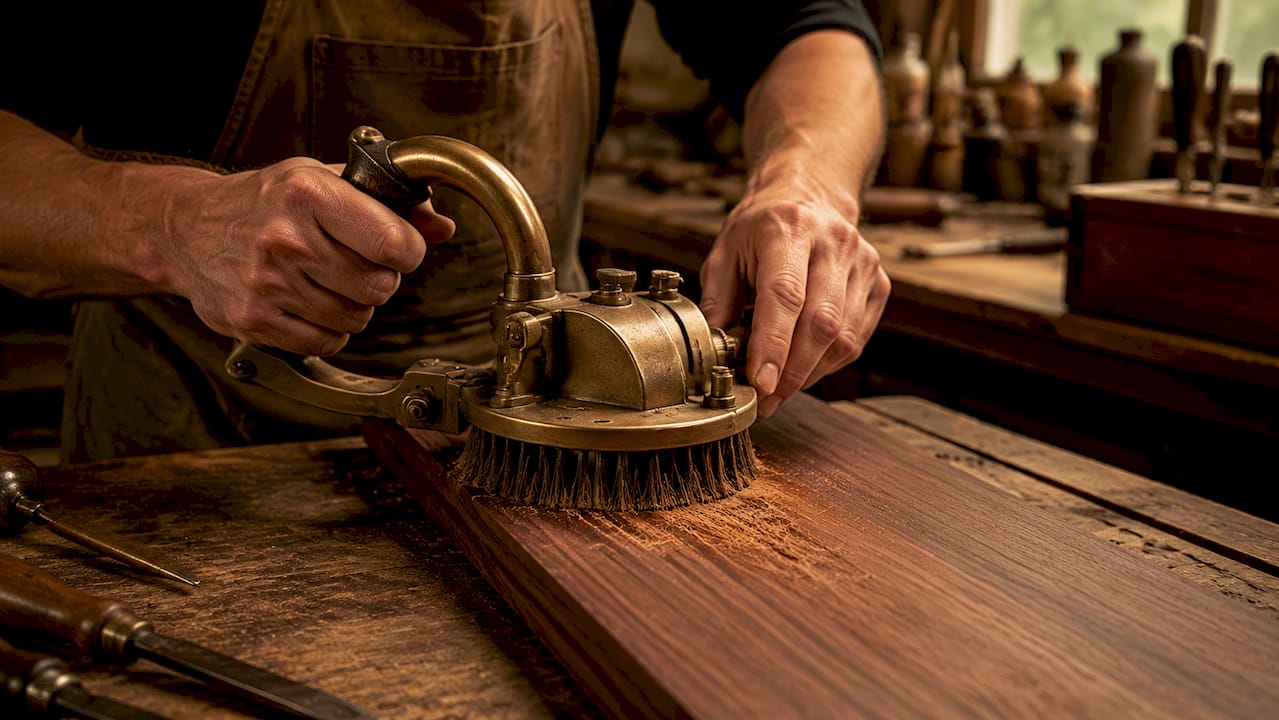
The brushing process passes timber planks through rotating steel or brass wire brushes, which abrade the surface and remove the softer springwood fibres between the grain lines. What remains is a raised, tactile texture that follows the wood’s natural growth pattern. Industrial brushing offers precise and consistent texture control that manual methods simply cannot match, which is why factory-produced brushed floors are far more uniform than anything achieved by hand.
Brushing intensity falls into three broad categories: light, medium, and heavy. A light brush produces a subtle sheen with gentle texture, while a heavy brush creates deep, pronounced grain lines that feel almost sculptural underfoot. The choice of intensity shapes the entire character of the finished floor, from understated elegance to bold, rustic drama.
Which wood species work best?
Open-grain woods like oak, ash, and walnut are ideal for brushing because their grain structure responds well to the process. Closed-grain species such as maple and birch are unsuitable. The grain difference is what creates the textural effect, so without it, brushing produces little more than surface scratching.
Oak is the most popular choice in the UK market, and for good reason. It has a pronounced open grain, takes oils and lacquers beautifully, and is widely available in engineered wood flooring constructions that suit Scotland’s variable climate.
Finishing options for brushed surfaces
Finish choice determines both the look and the long-term maintenance of your floor. Penetrating oils best preserve the raw tactile feel of a brushed surface, soaking into the wood rather than sitting on top of it. Lacquers, by contrast, form a protective film that can slightly fill the texture and reduce the tactile effect, though they improve ease of cleaning. UV-cured oils offer a middle ground, enhancing durability while preserving the texture that makes brushed flooring distinctive.
Pro Tip: If you want to keep the raw, natural feel of a brushed floor, choose a penetrating oil finish rather than a lacquer. You will need to re-oil periodically, but the tactile result is worth it.
What practical benefits does brushed wood flooring offer?
Brushed wood flooring provides better traction than smooth floors, which directly improves safety in family homes. That textured surface gives feet and soles something to grip, reducing slip risk in areas like hallways and open-plan kitchens where foot traffic is constant. For households with young children or elderly residents, this is a genuine functional advantage rather than a cosmetic one.
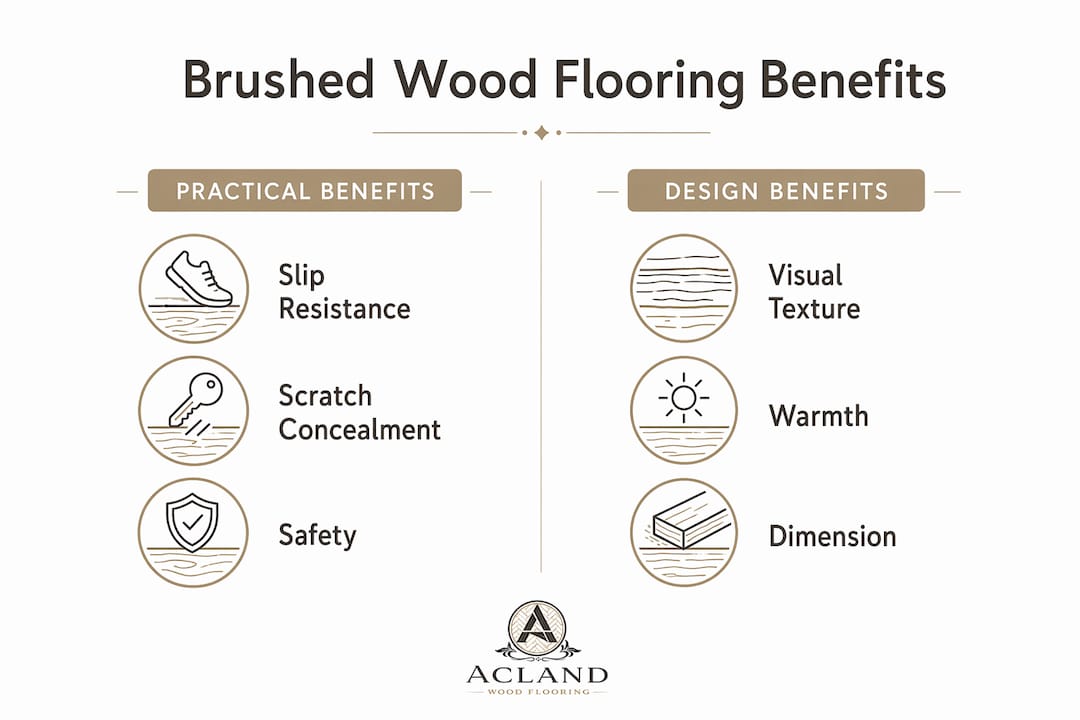
The texture also works in your favour when it comes to everyday wear. Minor scratches and dents, which are inevitable in any busy home, are far less visible on a brushed surface than on a high-gloss smooth floor. The raised grain lines break up the visual field, so small marks simply blend in rather than catching the light and drawing the eye.
Here is a clear comparison of how brushed and smooth finishes perform in residential settings:
| Feature | Brushed finish | Smooth finish |
|---|---|---|
| Slip resistance | Higher due to texture | Lower on polished surfaces |
| Scratch visibility | Low, grain conceals marks | High, marks catch light |
| Maintenance frequency | Moderate | Higher for gloss floors |
| Visual warmth | Strong, natural character | Cooler, more formal |
| Suitability for families | Excellent | Moderate |
One point that surprises many homeowners: brushing does not alter wood’s hardness. Durability depends on the wood species, the wear layer thickness, and the quality of the finish applied. A brushed oak floor is no softer than a smooth oak floor of the same specification. The process affects only the surface fibres, not the structural integrity of the timber beneath.
How does brushed wood flooring enhance home design?
Brushed wood finishes interact dynamically with natural and artificial light, creating visual depth that flat, smooth surfaces cannot produce. The raised grain catches light at different angles throughout the day, giving the floor a living quality that shifts subtly as the light changes. This is particularly effective in open-plan living areas, where the floor functions as a major design element rather than a background detail.
The finish supports biophilic design principles, which prioritise natural materials and organic textures to create spaces that feel grounded and calm. Interior designers working with purposeful natural interiors consistently reach for brushed timber because it delivers warmth and authenticity without overpowering a room. It works equally well in minimalist Scandinavian schemes, relaxed coastal interiors, and more formal traditional settings.
“Brushed wood flooring is a tactical design choice that highlights wood’s authenticity and adds warmth to spaces.” Bjelin
The warm and sophisticated appearance of brushed timber adds dimension and visual interest quietly, without demanding attention. That restraint is precisely what makes it so versatile. You can pair it with bold furniture and artwork, or let it anchor a pared-back room where the floor itself becomes the statement. For rooms like open-plan kitchens, dining areas, and living spaces, brushed finishes are particularly well suited because they handle both heavy use and aesthetic scrutiny with equal confidence.
Explore wood floor styles to see how brushed finishes sit within the broader range of modern flooring options for residential projects.
How to care for brushed wood flooring
Caring for a brushed floor is straightforward, but the textured surface does require slightly different habits compared to a smooth floor. The raised grain can trap fine dust and grit, so regular dry sweeping or vacuuming with a soft brush attachment is the most important daily habit. Avoid stiff bristle brushes, which can catch on the texture and cause unnecessary wear.
Follow these steps to keep your brushed floor in good condition long term:
- Sweep or vacuum daily in high-traffic areas using a soft attachment.
- Damp-mop weekly with a well-wrung cloth and a pH-neutral wood floor cleaner. Never use excess water.
- Avoid abrasive cleaning agents, steam mops, or anything containing bleach or ammonia, which strip the finish.
- Re-oil oiled floors every one to two years depending on traffic, using the same oil product originally applied.
- Place felt pads under furniture legs and use entrance mats at external doors to reduce grit ingress.
The difference in care between oiled and lacquered brushed floors is worth understanding. Finish choice impacts both look and maintenance: oiled floors need periodic re-oiling but allow spot repairs, while lacquered floors are easier to clean day-to-day but require full refinishing if the surface is damaged. For kitchens and hallways where moisture is a risk, place mats at entry points and wipe up spills immediately.
Pro Tip: For oiled brushed floors, apply a maintenance oil every 12 months in high-traffic zones even if the floor looks fine. Prevention is far less disruptive than a full re-oiling job.
Key takeaways
Brushed wood flooring combines natural authenticity, practical durability, and design versatility, making it one of the most well-rounded flooring choices for residential homes.
| Point | Details |
|---|---|
| Surface treatment, not structural change | Brushing removes soft fibres to expose grain but does not reduce wood hardness. |
| Best species for brushing | Oak, ash, and walnut respond well; closed-grain woods like maple are unsuitable. |
| Practical safety advantage | Textured surface improves traction and conceals everyday scratches better than smooth floors. |
| Finish choice matters | Penetrating oils preserve tactile feel; lacquers ease cleaning but reduce texture slightly. |
| Design versatility | Works across minimalist, biophilic, and traditional interiors without overpowering the space. |
Why I think brushed wood flooring is underrated by most homeowners
Most people come to us at Aclandwoodflooring asking about colour and plank width. Very few ask about surface texture, and that is a missed opportunity. In my experience, the finish treatment has more impact on how a floor performs and feels over ten years than almost any other specification decision.
The misconception I encounter most often is that brushed floors are purely a rustic or farmhouse choice. They are not. A lightly brushed, pale oak floor in a wide plank format looks genuinely contemporary. The texture reads as refined rather than rough, particularly when paired with a quality oil finish. I have seen it work beautifully in new-build Glasgow flats and in Victorian tenement renovations alike.
The other thing I would tell any homeowner is this: do not underestimate how forgiving a brushed floor is to live with. Smooth gloss floors show every footprint and fine scratch within weeks of installation. A brushed floor in a family home with dogs and children still looks presentable after years of hard use. That long-term resilience is what brushed flooring’s craftsmanship and durability actually delivers in practice, not just in product descriptions.
— John
Find your ideal brushed wood floor with Aclandwoodflooring

Aclandwoodflooring supplies and installs premium brushed wood floors across Glasgow and the surrounding area, working with homeowners to match the right species, construction, and finish to each room’s demands. Whether you are drawn to a lightly brushed engineered oak for an open-plan kitchen or a heavily textured walnut for a statement hallway, the team provides honest, expert guidance from first enquiry through to final installation.
Browse the wood floor layering guide to understand how brushed finishes work across solid and engineered constructions, or explore the species overview for Glasgow homeowners to identify the best timber for your project. Contact Aclandwoodflooring directly for a personalised recommendation and installation quote.
FAQ
What is the difference between brushed and smooth wood flooring?
Brushed wood flooring has a raised, textured surface created by removing soft wood fibres, while smooth flooring is sanded flat. Brushed floors offer better traction, conceal scratches more effectively, and create greater visual depth.
Is brushed wood flooring more durable than smooth?
Brushing does not change the hardness of the wood. Durability depends on the species, wear layer thickness, and finish quality, so a brushed oak floor and a smooth oak floor of the same specification perform equally in structural terms.
Which rooms suit brushed wood flooring best?
Brushed finishes work particularly well in open-plan living areas, hallways, kitchens, and dining rooms where foot traffic is high and visual warmth is desirable. The texture handles wear well and suits both family and formal settings.
Can brushed wood flooring be used with underfloor heating?
Yes, provided the floor is specified correctly. Engineered wood flooring in a brushed finish is the most suitable option for underfloor heating because its layered construction is more dimensionally stable than solid wood in response to temperature changes.
How often does a brushed wood floor need re-oiling?
Oiled brushed floors typically need re-oiling every one to two years in high-traffic areas, and every two to three years in lighter-use rooms. The frequency depends on the original oil product, foot traffic, and cleaning habits.