Floor finishing is the application of protective and decorative surface coatings over a floor to enhance its durability, appearance, and resistance to everyday wear. For wood floors specifically, surface coatings include polyurethane, natural oils, wax, varnish, and sealers, each chosen for different levels of scratch, moisture, and UV resistance. Whether you own a Victorian terrace in Glasgow or manage a busy commercial space, understanding your finishing options is the difference between a floor that lasts a decade and one that needs replacing in three years.
What is floor finishing and why does it matter?
Floor finishing is defined as the final set of surface coatings applied over base flooring to protect, improve durability, and affect appearance. The industry term you will encounter most often is “floor coating” or “floor treatment,” though “floor finishing” is the widely accepted phrase among homeowners and tradespeople alike.
The purpose of finishing goes well beyond looks. A properly finished wood floor resists scratches from furniture, repels moisture that causes warping, and blocks UV rays that fade timber over time. Floor finishes also improve slip resistance and ease of cleaning, making them as functional as they are attractive. For property managers overseeing multiple units, a well-chosen finish reduces the frequency and cost of floor repairs significantly.
What are the main types of floor finishing?
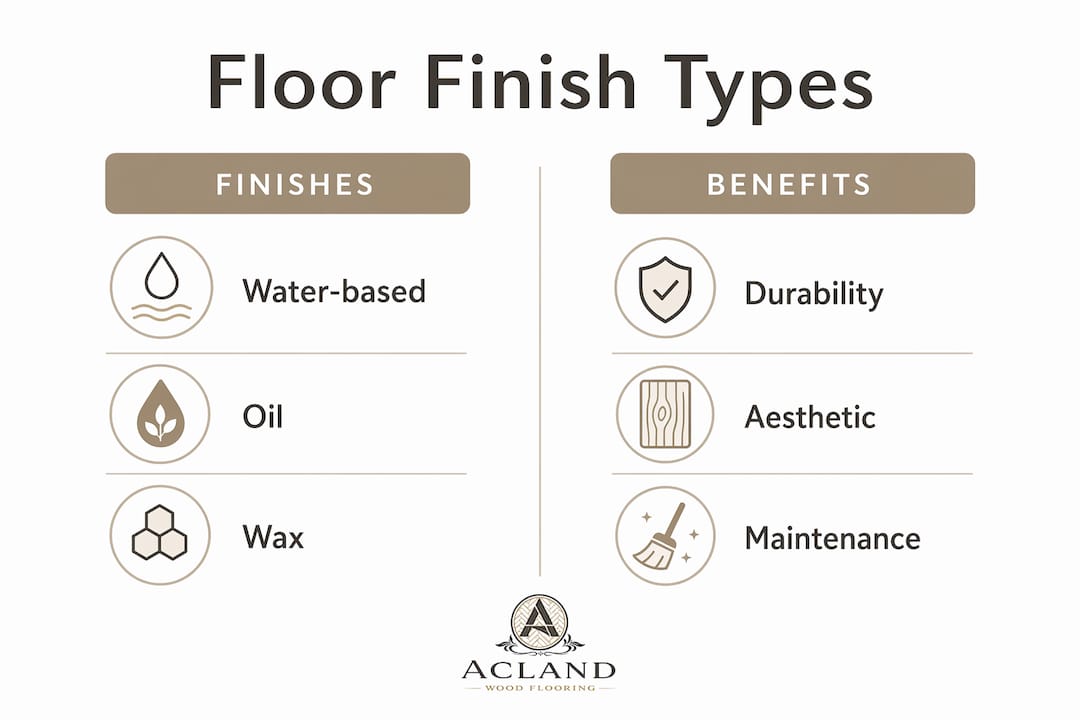
Understanding the types of floor finishing available helps you match the right product to your specific project. Each finish has a distinct set of properties, maintenance demands, and visual outcomes.
Polyurethane is the most widely used finish for wood floors. Water-based polyurethane dries in 2 to 3 hours between coats, produces a clear, low-odour result, and lasts 7 to 10 years under residential conditions. Solvent-based polyurethane takes longer to dry but produces a warmer, amber tone that suits traditional timber aesthetics.
Oil finishes, including modified and natural variants, penetrate the wood grain rather than sitting on top. They offer good moisture resistance and a natural, matte appearance, though they require more frequent reapplication than polyurethane.
Wax finishes provide a soft sheen and are easy to spot-repair, but they offer less protection against heavy foot traffic and moisture. They suit period properties where authenticity matters more than durability.
Stains, varnishes, and sealers round out the options. Stains alter colour without adding much protection, varnishes form a hard surface film, and sealers prepare porous surfaces for subsequent finish coats.
| Finish type | Key features | Best use |
|---|---|---|
| Water-based polyurethane | Fast drying, clear, low odour | Residential and light commercial |
| Solvent-based polyurethane | Amber tone, slower drying, durable | Traditional timber, period homes |
| Oil finish | Penetrating, natural look, repairable | Low-traffic residential rooms |
| Wax | Soft sheen, easy spot repair | Heritage or period properties |
| Sealer | Prepares surface, improves adhesion | Pre-coat on porous or older floors |
Pro Tip: If you are finishing a floor in a room with strong natural light, choose a water-based polyurethane. It will not yellow over time the way solvent-based products can, keeping the timber’s natural colour intact for longer.
What are the benefits of floor finishing for wood flooring?
The benefits of floor finishing extend across protection, aesthetics, and long-term cost savings. A quality finish is not an optional extra; it is the primary reason a wood floor survives daily life.
The core protective benefits include:
- Scratch resistance: Polyurethane and varnish coatings absorb surface abrasion before it reaches the timber.
- Moisture protection: Sealed floors resist spills and humidity, which is particularly relevant in Scotland’s damp climate.
- UV resistance: Finishes slow the fading and greying of timber exposed to sunlight.
- Slip resistance: Many modern finishes include additives that reduce slip risk on smooth wood surfaces.
- Ease of cleaning: A sealed surface prevents dirt from embedding in the grain, making routine maintenance far simpler.
From an environmental standpoint, the market is shifting. Green Seal’s PFAS prohibition on floor care products, which came into effect in March 2025, reflects growing demand for safer, lower-emission finishes. Choosing a Green Seal GS-40 certified product means you get durability with lower emissions and fewer harmful chemicals, which matters if you have children or pets at home.
Pro Tip: Place felt pads under all furniture legs before the finish fully cures. The first 72 hours after application are when the coating is most vulnerable to indentation and scratching.
How to choose the right floor finishing for your project
Choosing the right finish depends on four practical factors: traffic level, maintenance capacity, solids content, and environmental priorities.
Assess your traffic level. A busy hallway or commercial reception area needs a high-durability finish such as water-based polyurethane with a high solids content. A bedroom or study can tolerate a softer oil or wax finish. For commercial settings, read the commercial wood flooring guide to understand how traffic intensity shapes finish selection.
Consider your maintenance capacity. Burnishable finishes allow trained staff to restore gloss using high-speed equipment, making them ideal for facilities with maintenance teams. Burnish-free finishes suit homeowners or property managers who want a simpler cleaning routine without specialist equipment.
Check the solids content. High solids finishes, typically 22% to 25%, build a thicker protective film per coat and reach full durability faster. Low solids finishes at 18% to 20% are easier to apply evenly but require more coats to achieve the same protection. For most residential projects, a high solids water-based polyurethane is the most efficient choice.
Factor in environmental certifications. If sustainability matters to you, look for Green Seal GS-40 certified products. These meet durability standards while reducing volatile organic compound emissions, which improves indoor air quality.
Consult a professional for complex projects. Older floors, heavily stained timber, or large commercial spaces benefit from a professional assessment before any product is applied.
Pro Tip: Ask your supplier for the technical data sheet before purchasing any finish. The solids percentage and recommended spread rate tell you exactly how many coats you will need and how much product to buy.
What are the essential floor finishing techniques?
Proper application is as important as product selection. Even the best finish will fail if the preparation and application steps are rushed.
Preparation is non-negotiable. Sand the floor to remove old coatings, level the surface, and open the grain. Vacuum thoroughly and wipe with a tack cloth to remove all dust. Applying a sealant before the finish coat improves adhesion and creates a uniform base, particularly on older or porous floors.
Application for water-based polyurethane follows a clear sequence. Apply the first coat with a synthetic applicator pad, working with the grain. Allow 2 to 3 hours drying time, then lightly sand between coats using 220-grit paper to remove grain raise and micro-bubbles. Repeat for 3 to 4 coats total. Do not walk on the floor for 24 hours and wait 72 hours before moving furniture back.
Maintenance determines how long the finish performs. Do use a soft-bristle broom and pH-neutral floor cleaner. Do not use vinegar, Murphy Oil Soap, or steam mops. These products damage finishes over time by breaking down the protective film. Recoat every 7 to 10 years under normal residential use, or sooner if the finish shows visible wear.
For a detailed walkthrough of application methods, the guide on wood floor layering methods covers the full process from preparation to final coat. To avoid the most common application errors, the resource on avoiding wood flooring errors is worth reading before you start.
Key takeaways
The right floor finish, correctly applied and maintained, is the single most important factor in how long a wood floor lasts and how good it looks.
| Point | Details |
|---|---|
| Define your finish type | Match polyurethane, oil, or wax to your traffic level and maintenance routine. |
| Prioritise solids content | High solids finishes (22%–25%) build durability faster with fewer coats. |
| Prepare the surface properly | Sand, seal, and clean before applying any finish to guarantee adhesion. |
| Maintain with the right products | Use pH-neutral cleaners and avoid vinegar or steam mops to protect the coating. |
| Consider environmental standards | Green Seal GS-40 certified finishes meet durability standards with lower emissions. |
What I have learned about floor finishing after years in the trade
Most homeowners focus almost entirely on the timber species or the plank width when planning a wood floor project. The finish gets chosen in the last five minutes. That is the wrong order of priorities.
I have seen beautiful oak floors ruined within two years because the owner chose a wax finish for a kitchen, or applied a solvent-based product in a poorly ventilated flat and rushed the drying time. The finish is not a cosmetic afterthought. It is the floor’s immune system.
The shift toward PFAS-free, low-emission finishes is not just a regulatory trend. It reflects a genuine improvement in product chemistry. The newer water-based polyurethanes I have worked with in 2025 and 2026 are harder, clearer, and faster-drying than anything available a decade ago. There is no longer a meaningful performance trade-off between choosing an environmentally responsible finish and choosing a durable one.
My honest advice: do not let a tight budget push you toward a low solids finish on a high-traffic floor. You will spend more on recoating within three years than you would have saved on the product. Spend the money on the right finish the first time, prepare the surface properly, and the floor will look after itself for a decade.
— John
Expert wood flooring finishing services from Aclandwoodflooring
If you are ready to move from understanding floor finishing to actually getting it done, Aclandwoodflooring brings specialist knowledge to every project across Glasgow and the surrounding areas.

Whether you are finishing a new installation or refreshing an existing floor, the team at Aclandwoodflooring provides tailored advice on finish selection, preparation, and application for both residential and commercial projects. Every recommendation is based on the specific timber, the room’s use, and Scotland’s climate conditions. Start with the practical layering guide to understand the full finishing process, or get in touch directly for a professional assessment of your project.
FAQ
What is floor finishing in simple terms?
Floor finishing is the process of applying protective coatings such as polyurethane, oil, or wax to a wood floor to protect it from wear, moisture, and scratches while improving its appearance.
How many coats of finish does a wood floor need?
Water-based polyurethane typically requires 3 to 4 coats, with light sanding between each coat to remove grain raise and improve bonding between layers.
How long does a floor finish last?
Under normal residential conditions, water-based polyurethane lasts 7 to 10 years before recoating is needed. Heavy foot traffic or improper maintenance will shorten that lifespan.
What should I avoid when maintaining a finished floor?
Avoid vinegar, Murphy Oil Soap, and steam mops. These products break down the finish film over time. Use a pH-neutral cleaner and a soft-bristle broom instead.
Is a professional finish better than a DIY application?
For large areas, older floors, or commercial spaces, professional application produces more consistent results. DIY is viable for small rooms if the surface preparation is thorough and the correct applicator tools are used.