
Wood floor underlay is defined as the thin material layer installed between your subfloor and finished wood flooring, providing moisture resistance, sound absorption, and cushioning in a single installation step. Products like DRICORE Certiguard and Forbo Underlayment Plus show how far underlay technology has advanced, combining vapour barriers with acoustic ratings in one sheet. Whether you are laying engineered boards in a Glasgow tenement or solid oak planks over a concrete slab, underlay selection determines how well your floor performs for decades.
What is wood floor underlay and what does it actually do?
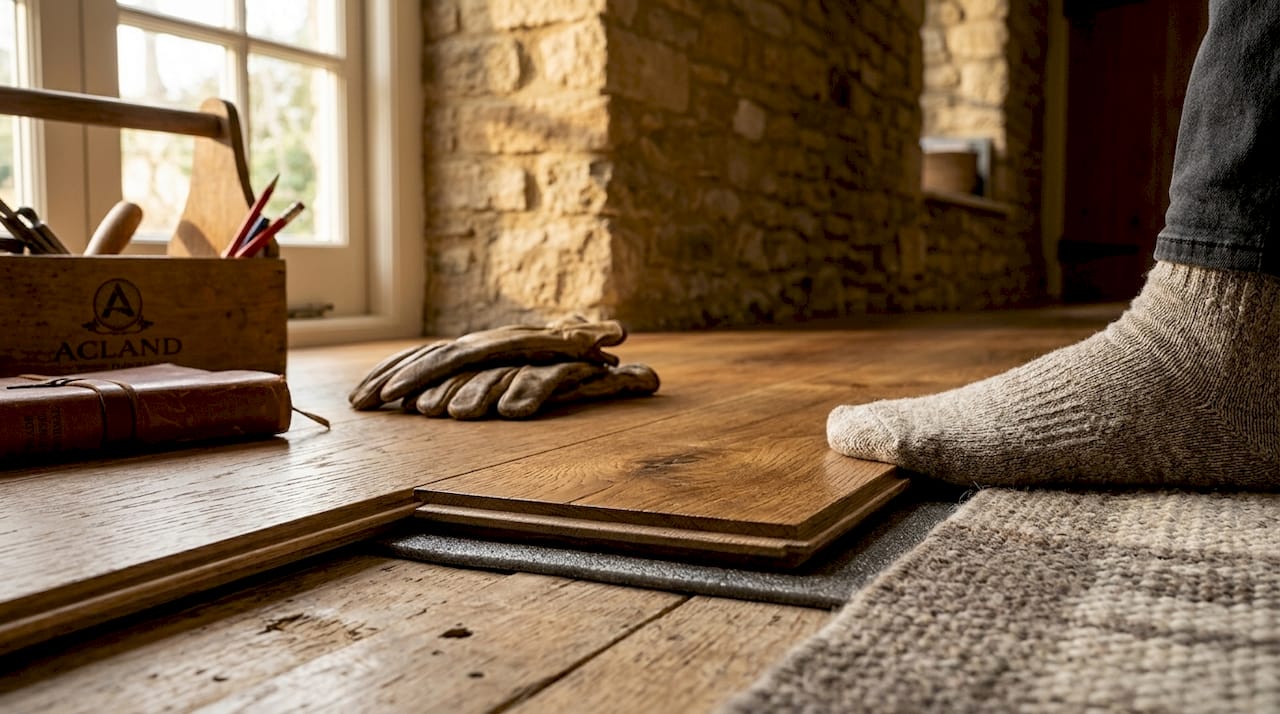
Wood floor underlay is a thin material layer between the subfloor and finished wood flooring that absorbs sound, cushions the surface, smooths minor subfloor imperfections, and can reduce moisture migration. Those four functions are not decorative extras. They protect the structural integrity of your floor from the moment installation is complete. Common materials include cork, rubber, foam, and fibreboard, each suited to different floor types and subfloor conditions.
The role of underlay in wood flooring goes beyond comfort underfoot. Without it, floating floors flex against hard subfloors, placing strain on locking joints with every footstep. For click-lock and floating installations, underlay cushions locking joints and smooths subfloor irregularities, directly protecting floor integrity over time. Think of it as the foundation that makes everything above it last.
How does underlay protect your floor from moisture damage?
Moisture is the single greatest threat to wood floors laid over concrete. Concrete slabs release vapour upward continuously, and without a barrier, that moisture reaches the wood and causes swelling, warping, or mould. This process is called vapour migration, and it does not stop after the floor is installed.
Built-in moisture barriers within underlay products address this directly. Forbo Underlayment Plus carries a perm rating of 0.06, which indicates extremely low vapour transmission. The lower the perm value, the less moisture passes through. For particularly wet subfloor conditions, a dedicated underslab membrane such as PERMINATOR meets ASTM E1745 Class A with permeance as low as 0.0052 perms after wetting tests. That level of protection is relevant when laying floors in basements or ground-floor rooms with no damp-proof membrane beneath the slab.
Perm ratings give you an objective way to compare products rather than relying on vague marketing claims. When a supplier says an underlay is “moisture resistant,” ask for the perm value. A number below 0.1 perms indicates genuine vapour protection.
Pro Tip: If you are laying wood flooring over concrete in Scotland, always test the subfloor moisture content before installation. Readings above 75% relative humidity typically require a dedicated vapour barrier beneath or within the underlay.
What types of wood floor underlay are there?
The main underlay materials each serve a distinct purpose, and choosing the wrong one affects both performance and warranty validity.
| Material | Typical thickness | Best suited for | Vapour barrier included? |
|---|---|---|---|
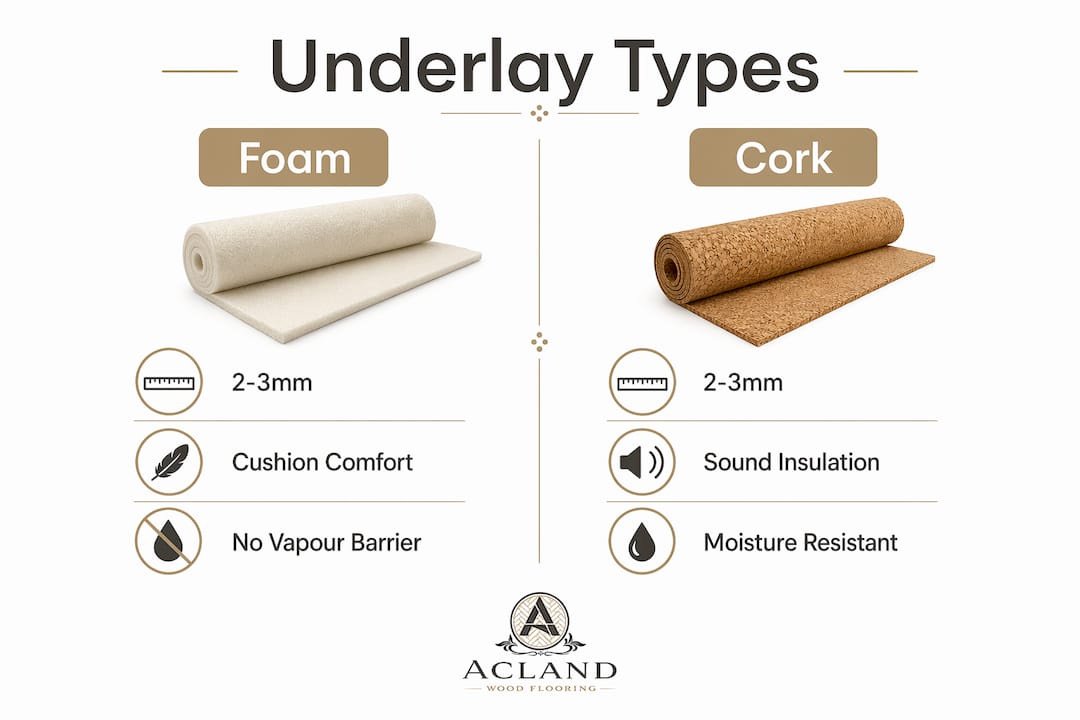
| Foam | 2–3mm | Laminate, floating floors | Sometimes (all-in-one versions) |
| Cork | 2–3mm | Floating hardwood, engineered | Rarely; add separately |
| Rubber | 3–5mm | High-traffic, multi-storey | Sometimes |
| Fibreboard | 4–6mm | Nail-down solid wood | No |
Cork and rubber are the strongest performers for floating hardwood floors because both materials compress and recover under load, absorbing impact energy rather than transmitting it. Foam underlay suits laminate well due to its light weight and ease of installation, though it compresses permanently over time under heavy furniture.
The installation method also dictates your options:
- Floating floors benefit most from cork, rubber, or foam underlay with an integrated vapour barrier.
- Nail-down solid wood typically uses fibreboard or rosin paper; foam and cork are too compressible for nailing.
- Glue-down hardwood floors usually require no underlay at all, as the adhesive layer provides moisture control and bonding directly to the subfloor.
Pro Tip: Cork underlay rated at 2–3mm suits most floating hardwood and engineered wood floors and is compatible with most manufacturer warranties. Always confirm compatibility before purchase.
How does underlay improve sound insulation in your home?
Impact noise is the thud of footsteps travelling through a floor assembly into the room below. Underlay reduces this by adding a resilient layer that absorbs impact energy before it converts into sound waves. This matters most in flats, tenements, and two-storey homes where noise transmission between floors affects daily living.
Acoustic performance is measured using two ratings:
- IIC (Impact Insulation Class): measures resistance to impact noise such as footsteps. Higher scores mean better performance.
- STC (Sound Transmission Class): measures resistance to airborne noise such as voices and music.
DRICORE Certiguard achieves an IIC rating of 73 over concrete subfloors, which represents strong impact noise reduction for a residential floor assembly. Forbo Underlayment Plus delivers IIC 70 and STC 62, making it a capable all-in-one solution for both impact and airborne noise control.
Acoustic underlay performance depends on resilient layer engineering and measured ratings, not thickness alone. A 3mm cork underlay with a tested IIC rating outperforms a 6mm foam product with no acoustic certification every time.
The difference between a floor with IIC 50 and one with IIC 73 is audible. If you live in a tenement flat in Glasgow or Edinburgh, specifying underlay by acoustic rating rather than price per square metre is the single most impactful decision you can make for your neighbours and your own comfort.
What should you check before buying and installing underlay?
Selecting the right underlay requires matching it to your specific floor, subfloor, and building conditions. Getting this wrong can void your flooring warranty or leave you with a floor that squeaks, flexes, or traps moisture.
- Check your flooring manufacturer’s warranty documentation. Many specify approved underlay thicknesses and materials, and using multiple underlay layers can void certification entirely.
- Identify your subfloor type. Plywood subfloors over timber joists behave differently from concrete slabs. Concrete requires vapour protection; plywood typically does not.
- Confirm whether your chosen underlay is an all-in-one system or requires a separate poly sheet. All-in-one products like DRICORE Certiguard are designed as complete systems and should not have additional layers added beneath them.
- Do not assume thicker means better. Excessive underlay thickness places strain on click-lock joints and can cause the floor to feel spongy underfoot.
- Incomplete underlay coverage or subfloor movement causes squeaks. Lay underlay with staggered joints, tape seams, and cover the full floor area without gaps.
If you are unsure about moisture levels in your subfloor, a professional moisture test costs very little relative to the cost of replacing a warped floor. For multi-storey flats with strict acoustic requirements, a specialist acoustic assessment before installation is worth considering.
Key takeaways
Wood floor underlay is the layer that determines moisture protection, acoustic performance, and floor longevity, and selecting it by material, perm rating, and IIC score delivers measurably better results than choosing by price alone.
| Point | Details |
|---|---|
| Underlay definition | A thin layer between subfloor and wood flooring providing cushioning, moisture control, and sound absorption. |
| Moisture protection | Choose underlay with a low perm rating (below 0.1) for concrete subfloors; add a dedicated barrier for wet conditions. |
| Acoustic performance | Specify by IIC and STC ratings, not thickness. IIC 70 or above suits most residential multi-storey installations. |
| Material selection | Cork and rubber suit floating hardwood; foam suits laminate; fibreboard suits nail-down solid wood. |
| Installation caution | Never layer multiple underlays. Check manufacturer warranty requirements before purchasing any product. |
Why underlay is the part most homeowners get wrong
The most common mistake I see is treating underlay as an afterthought. Someone spends weeks choosing the right oak board, then buys the cheapest foam roll at the checkout. The floor feels hollow within a year, and the locking joints start to show wear.
The second misconception is that thicker underlay is always better. It is not. A 6mm foam layer under a click-lock engineered floor puts the joints under constant lateral stress. The floor manufacturers who specify 2–3mm cork are not being conservative. They have tested it.
What I have found genuinely works is starting your underlay selection from the subfloor up, not the flooring down. Identify your subfloor material, test for moisture if there is any doubt, then match the underlay to both the subfloor conditions and the flooring system. Spend proportionally. If you are investing in quality engineered boards, a quality underlay with a tested IIC rating and a credible perm value is not an upgrade. It is part of the same decision.
The floors I have seen last longest in Scottish homes, particularly in older tenement buildings with stone or concrete subfloors, are the ones where the underlay was chosen with the same care as the wood itself.
— John
Get expert guidance on wood floor installation

Choosing the right underlay is straightforward when you know what to look for, but the full picture includes how your floor is constructed from the subfloor up. Aclandwoodflooring has put together a detailed wood floor layering guide covering installation methods, underlay compatibility, and moisture control for every common subfloor type. If you are planning a floating floor installation, the floating floors guide walks through underlay selection as part of the full installation process. For homeowners in Glasgow and across Scotland, Aclandwoodflooring offers expert advice tailored to local building conditions and climate.
FAQ
What is the purpose of underlay under wood flooring?
Wood floor underlay absorbs impact noise, cushions the floor surface, smooths minor subfloor imperfections, and provides moisture resistance between the subfloor and finished wood. Its role varies by installation method and subfloor type.
Do all wood floors need underlay?
No. Glue-down hardwood floors typically do not require underlay, as the adhesive provides direct bonding and moisture control. Floating and click-lock floors benefit most from underlay for cushioning and sound insulation.
How do I know if my underlay has enough moisture protection?
Check the perm rating. A value below 0.1 perms indicates strong vapour protection. Products like Forbo Underlayment Plus carry a perm rating of 0.06, making them suitable for use over concrete subfloors.
Can I use two layers of underlay for better sound insulation?
No. Layering multiple underlays can void your flooring warranty and degrade both acoustic and moisture performance. Use a single, correctly specified product with a tested IIC rating instead.
What thickness of underlay is best for engineered wood floors?
Cork underlay at 2–3mm suits most floating engineered wood floors and is compatible with the majority of manufacturer warranties. Always confirm the approved thickness in your flooring’s warranty documentation before installation.