
Bigger doesn’t always mean better, and nowhere is this truer than in flooring. Many Glasgow homeowners assume that a national chain or large retailer will deliver superior results simply because of brand recognition. But over 70% of hardwood flooring failures are moisture-related, and these failures almost always come down to inadequate preparation rather than the quality of the wood itself. A local specialist who understands Glasgow’s damp climate, older housing stock, and specific subfloor conditions isn’t just a convenient choice. They’re often the difference between a floor that lasts thirty years and one that warps within twelve months.
Key Takeaways
| Point | Details |
|---|---|
| Moisture risk | Local experts prevent costly failures with in-depth testing and preparation. |
| Tailored service | You get direct communication, custom fits, and quick responses to queries. |
| Period home solutions | Specialists know how to work with Glasgow’s unique historic properties. |
| Accountability | Community reputation means local firms are more likely to honour warranties. |
| Lasting results | Quality installation and ongoing support ensure floors stay beautiful for years. |
Unique benefits of local flooring specialists
Having highlighted how expertise matters, let’s explore what makes local flooring professionals distinct in actual practice.
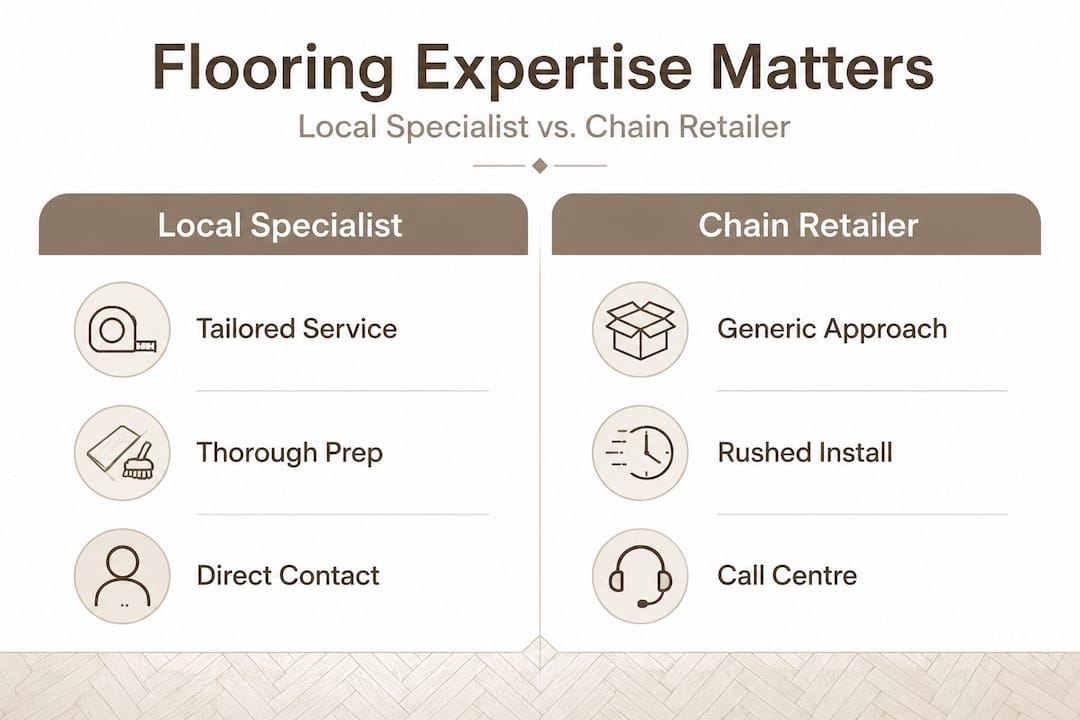
When you hire a local flooring specialist, you’re not dealing with a call centre or a rotating team of subcontractors. You’re speaking directly with the person who will measure your hallway, advise on your wood species, and fit every board by hand. This direct relationship changes everything about the experience.
Local specialists offer genuinely flexible scheduling. A national retailer may offer you a six-week installation window with little room for adjustment. A local professional can often work around your schedule, complete smaller jobs within days, and return quickly if any issues arise. For Glasgow homeowners juggling work and family commitments, this flexibility has real, practical value.
Direct communication also eliminates one of the most frustrating sources of flooring mistakes: the gap between what a salesperson promises and what an installer delivers. When comfort and value for Glasgow homes are your priorities, you need someone who listens carefully from the very first conversation. With a local specialist, the person you consult is typically the person doing the work.
Older and unconventional homes are where local knowledge really pays off. Victorian terraces, Edwardian tenements, and inter-war semis throughout Glasgow each present unique subfloor challenges. A local professional recognises these properties on sight and knows the questions to ask before a single board is laid. This is precisely why expert advice matters so consistently when it comes to premium wooden flooring.
Here’s what you can expect from a quality local specialist:
- Direct owner contact throughout the entire project
- Quick turnaround on quotes, surveys, and installations
- Tailored solutions for non-standard or period properties
- Community reputation built on referrals and repeat business
“Choosing a local flooring specialist meant I spoke with the same person from my first enquiry through to the final board being fitted. There were no surprises and no miscommunication.” A common sentiment shared by Glasgow homeowners who’ve made the switch from national retailers.
Pro Tip: Before you commit to any installer, ask directly whether the person quoting the job is the same person who will fit your floor. If the answer is no, ask to meet the fitter. Companies that subcontract frequently lose quality control at this exact stage.
Avoiding common flooring failures with local expertise
This promise of tailored service is crucial when you consider the risks of poor installation, especially the moisture issues that plague so many Scottish homes.
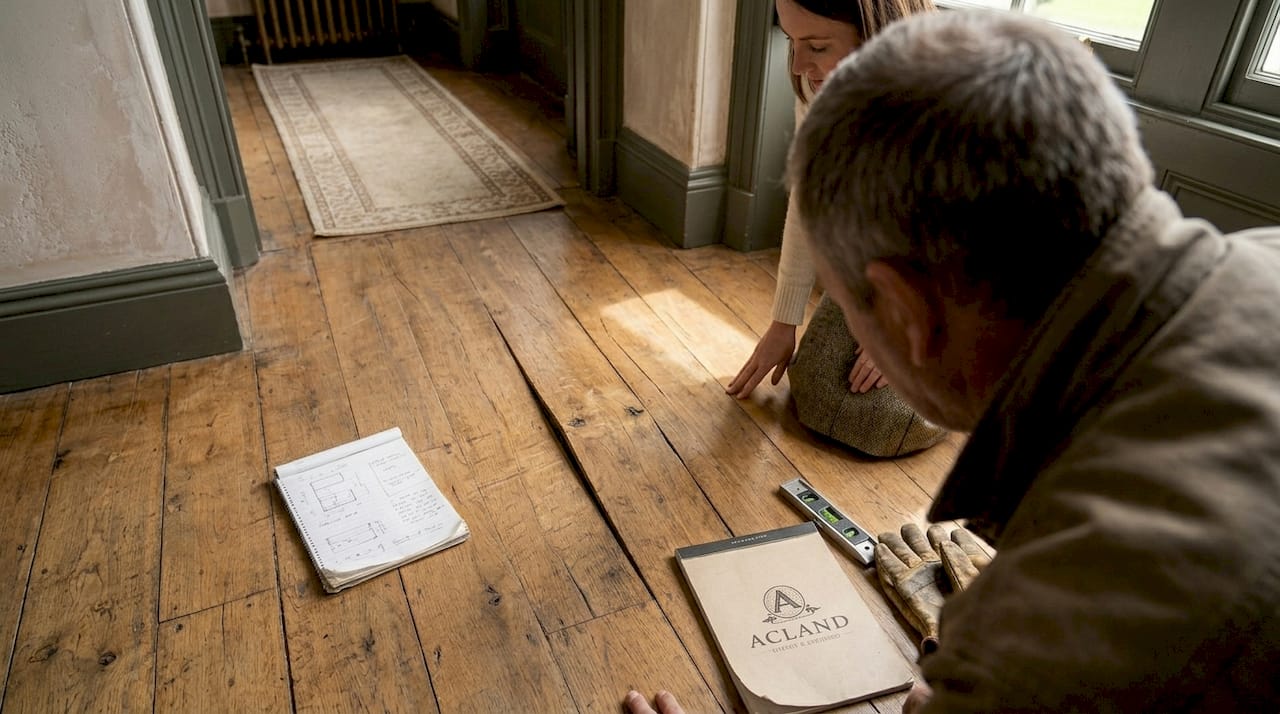
Moisture is wood’s biggest enemy. Scotland’s climate means higher ambient humidity, older properties often lack proper damp-proofing, and timber subfloors can retain moisture in ways that solid concrete slabs don’t. A specialist who works locally will assess wood floor quality with this context already built into their approach.
The difference between a thorough moisture check and a cursory one can mean thousands of pounds in repairs within a few years.
| Factor | Local specialist | Box-store fitter |
|---|---|---|
| Moisture testing | Full written report, calibrated meter | Often skipped or informal |
| Subfloor inspection | Detailed, with notes on remediation | Visual check only |
| Estimated failure rate | Significantly lower | Higher due to skipped prep |
| Average repair cost avoided | £800 to £2,500+ | N/A (risks passed to homeowner) |
Another frequently missed step is levelling. Many Glasgow properties, particularly those built before 1960, have timber subfloors that flex, dip, or creak. Overlaying these with a plywood sheet creates a stable, even base before any engineered or solid wood goes down. Box-store contractors working on tight schedules often skip this step entirely, leading to floors that creak underfoot or develop gaps over time.
Engineered wood flooring is often the preferred choice for Glasgow properties precisely because it handles moisture fluctuations better than solid wood. But even engineered boards will fail if they’re laid over an unprepared subfloor.
Pro Tip: Before any installation begins, ask your fitter for a moisture test certificate. A reputable specialist will be glad to provide one. If they seem reluctant or unclear about what it involves, that tells you a great deal about their standards.
Custom solutions for Glasgow’s unique homes
With detailed preparation, local pros set the stage for durable flooring. But their custom approach really shines in older homes where nothing is ever quite standard.
In Glasgow’s older homes with suspended timber subfloors, locals check for poor ventilation and overlay uneven floors with plywood. Skipping this step leads to creaks, flexing, and premature wear. National chains working to tight margins rarely build this level of care into their standard packages.
| Feature | Local specialist | National chain fitter |
|---|---|---|
| Pre-installation site survey | Detailed, often 60 to 90 minutes | Brief or remote quote |
| Subfloor adaptation | Custom approach per property | Standard process applied |
| Acclimatisation period observed | Always | Sometimes skipped |
| Guarantee length | Typically 5 to 10 years | Often 1 to 2 years |
Local pros follow a clear, considered process when working on period properties. Here are the key steps they take:
- Conduct a full site survey, noting floor type, room dimensions, and existing subfloor condition
- Perform moisture testing at multiple points across the room, not just the centre
- Apply a custom overlay where the subfloor is uneven, using plywood or self-levelling compound
- Allow sufficient acclimatisation time for the wood, typically 48 to 72 hours in the room where it will be fitted
- Provide aftercare advice specific to the property’s heating system and humidity levels
Exploring the full range of wood flooring types for Scottish homes with a local specialist will also ensure the species and construction you choose suit your particular home, not just a general product category.
How local knowledge supports lasting results and warranty
A custom fit and expert install are only as good as the ongoing service. Here’s how local professionals stand out in the long run.
When something goes wrong with a floor fitted by a national retailer’s subcontractor, the process of getting it fixed can be exhausting. You call the retailer, who contacts the installer, who may or may not be available, and weeks can pass before anyone looks at the problem. With a local specialist, you phone them directly. In many cases, they’ll visit within a day or two.
Benefits of local aftercare include:
- Faster issue resolution with no intermediaries involved
- Simple follow-up queries handled personally, not by a customer service team
- Higher accountability because their reputation in the community depends on it
Store subs may rush jobs, with many in the community favouring direct specialist hires for quality and accountability. This isn’t anecdotal. It reflects a pattern that experienced Glasgow homeowners recognise consistently.
“Direct specialist hires consistently earn stronger recommendations in local communities. Their livelihoods depend on the quality of the work, not on volume.”
A real-world example: a homeowner in the west end of Glasgow noticed a section of flooring beginning to lift six months after installation. Because they’d used a local specialist, the fitter visited within 48 hours, identified a localised moisture issue under a radiator, and resolved it at no extra cost. That same outcome through a national chain would likely have taken weeks and a formal warranty claim. Thinking about how you design flooring for your space is only worthwhile if you also plan for a reliable aftercare experience.
What most guides miss about choosing flooring specialists
Most flooring guides focus on products: which species, which finish, which thickness. Far fewer address the most important variable of all, which is who is actually fitting the floor.
Conventional advice tends to mention “get three quotes” and “check reviews.” That’s reasonable, but it misses the subtler wisdom that comes from experience. Quick, one-visit surveys are a significant red flag that most guides don’t flag strongly enough. A genuine specialist needs time. They need to look at the subfloor, ask about your heating, consider the property’s age, and think carefully before recommending anything.
Peer recommendations from neighbours and community groups are, in our experience, more reliable than online star ratings. A neighbour who shows you their finished floor and tells you exactly who fitted it is giving you evidence, not just an opinion. Online reviews can be curated. A completed floor a few streets away cannot.
We’d also challenge the assumption that longer guarantees automatically signal better quality. A national chain offering a five-year guarantee backed by a subcontractor workforce tells you very little about the actual quality of installation. A local specialist offering a similar guarantee with their own name attached to the work means considerably more.
Before you decide, if at all possible, visit a completed installation in your area. Ask your specialist if they can point you to a recent project nearby. The ones who are confident in their work will almost always say yes. If you’re still working through your options, exploring what it means to choose the right wood flooring for every room in your home is a worthwhile starting point.
Next steps: transform your home with trusted local specialists
If this article has made one thing clear, it’s that the right specialist makes as much difference as the right floor. Preparation, local knowledge, and genuine accountability aren’t extras. They’re the foundations of a floor that will look and feel exceptional for decades.

At Acland Wood Flooring, we specialise exclusively in wood floors, which means every piece of advice we give comes from deep, focused experience rather than a general flooring background. Whether you’re exploring expert local flooring fitters, browsing a range of wood flooring styles for your home, or working through our installation guide for a flawless finish, we’re here to help you make a confident, well-informed decision. Get in touch today to speak with someone who will actually be fitting your floor.
Frequently asked questions
What makes a local flooring specialist different from a chain retailer?
Local flooring specialists offer direct communication, tailored solutions, and greater accountability. Local firms emphasise owner contact, fast installation, and custom fits rather than volume-driven service.
How do specialists prevent common wooden flooring problems?
They conduct precise moisture testing, inspect subfloors thoroughly, and use installation methods suited to local property types. Since over 70% of failures are moisture-related, this preparation is critical.
Will using a local flooring expert improve my warranty experience?
Yes. Local specialists rely on community reputation and are far more likely to honour warranty claims quickly and without hassle. Direct specialist hires consistently outperform retailer subcontractors in aftercare.
Do local fitters handle unique period property challenges?
Yes. Local experts assess subfloors and adapt their methods for older homes, checking ventilation and overlaying uneven surfaces to prevent creaks and movement.