
Many Glasgow homeowners assume wood flooring means constant upkeep, warping in the rain, or a steep bill that never pays off. These assumptions are simply outdated. Modern wood floors are engineered to handle Scotland’s damp climate beautifully, and they bring genuine warmth, character, and long-term value that no other floor covering can truly match. Whether your home is a Victorian tenement in the West End or a new build in Bearsden, the right wood floor transforms a space in ways that carpet, tile, or vinyl just cannot replicate.
Key Takeaways
| Point | Details |
|---|---|
| Year-round comfort | Wood floors help keep Scottish homes warm, cosy, and practical in every season. |
| Better for your health | They are hypoallergenic, easy to clean, and free from hidden chemical releases. |
| Sustainable investment | FSC-sourced wood flooring is eco-friendly and increases your home’s value over time. |
| Design flexibility | Wood complements both classic and modern interiors, allowing endless personalisation. |
The unique benefits of wood floors for Glasgow homes
With misconceptions out of the way, let’s look directly at the core reasons wood floors are favoured for local homes.
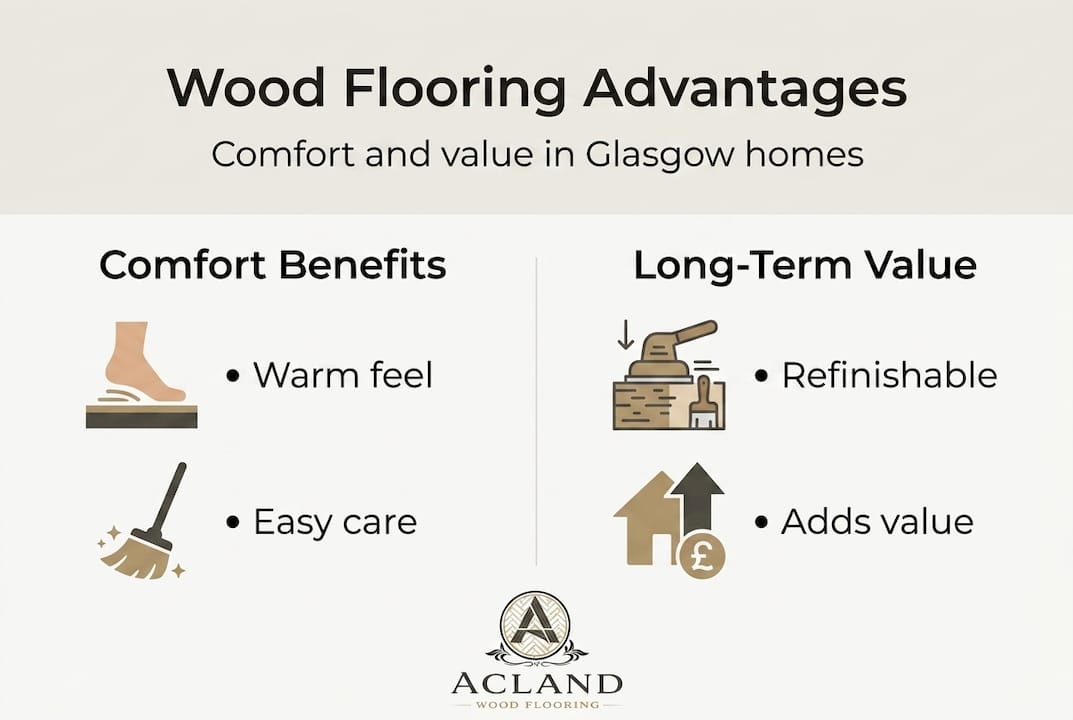
Wood has a natural thermal quality that makes it genuinely comfortable underfoot, even in cooler months. Unlike stone or ceramic tile, which draw heat away from your feet the moment you step on them, wood retains warmth and feels inviting throughout the year. For Glasgow households, where damp weather is a near-constant companion from October through to April, this is not a small detail. It is one of the most noticeable differences homeowners report after switching from carpet or hard tile.
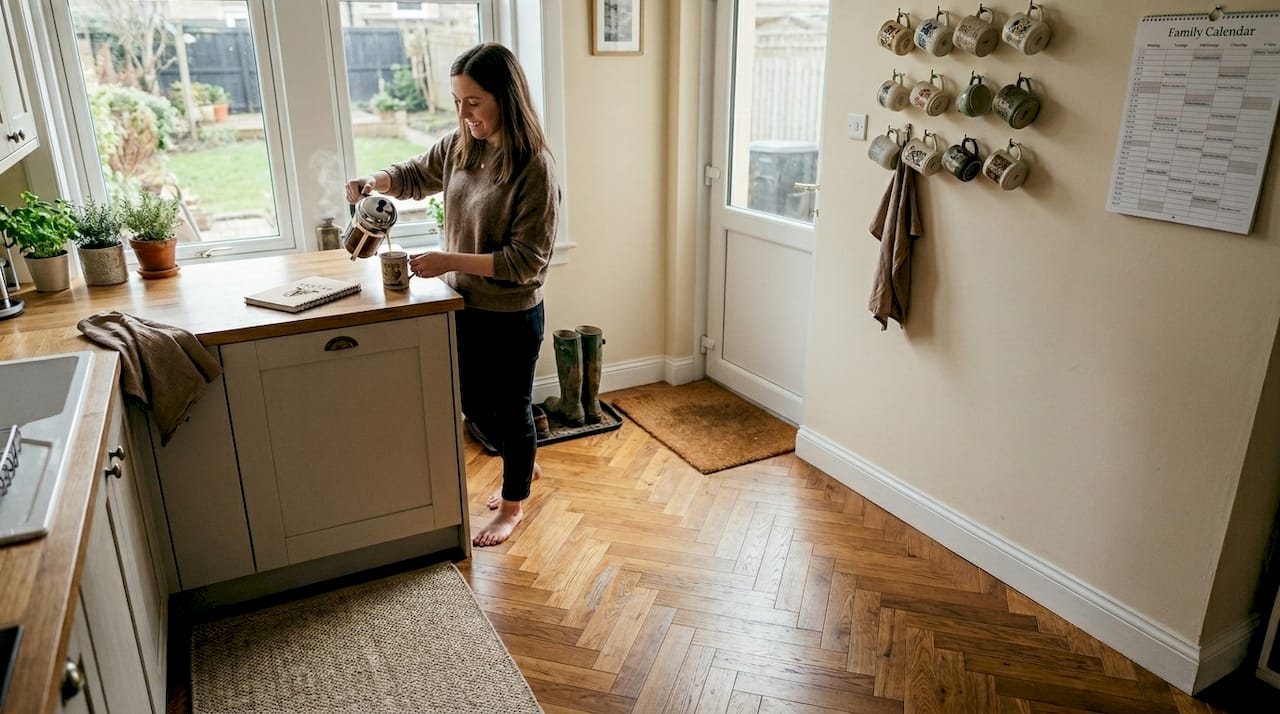
Beyond comfort, wood flooring is one of the most allergy-friendly flooring options available. It does not trap dust, pet dander, or allergens the way carpet fibres do. A quick sweep and occasional damp mop keeps the surface clean without specialist products or deep-cleaning sessions. This is particularly valuable for families with children, older residents, or anyone sensitive to airborne particles.
Key advantages at a glance:
- Naturally warm and comfortable, even in Scottish winters
- Hypoallergenic and simple to keep clean
- Available in FSC-certified sustainable options for eco-conscious buyers
- Wide variety of species, grains, and finishes to suit any interior style
- Adds genuine character that synthetic materials cannot replicate
| Feature | Wood flooring | Carpet |
|---|---|---|
| Warmth underfoot | High | High |
| Allergen trapping | Very low | High |
| Ease of cleaning | Easy | Moderate |
| Eco-credentials | Excellent (FSC) | Poor |
| Longevity | Decades | 10-15 years |
Pro Tip: If sustainability matters to you, look for the FSC (Forest Stewardship Council) label when selecting wood. FSC-certified timber is harvested responsibly and is a genuinely renewable resource compared to synthetic flooring alternatives.
When considering solid wood flooring value specifically, it is worth noting that real wood floors can be sanded and refinished multiple times over their lifespan, giving them a longevity that carpets and many budget alternatives simply cannot match.
How wood floors compare to other options
Understanding what makes wood floors special, it is useful to see how they stack up against other flooring solutions.
Carpet remains popular in Scottish bedrooms for softness and warmth, but it struggles in areas with foot traffic or moisture. It absorbs spills, harbours bacteria over time, and typically needs replacing within a decade. In hallways or living rooms where dirt and damp are regularly tracked in from outside, carpet often becomes a maintenance headache rather than a comfort feature.
Luxury Vinyl Tile (LVT) and Stone Plastic Composite (SPC) have grown considerably in popularity and are frequently marketed as the practical alternative to real wood. They are waterproof, inexpensive relative to solid wood, and easy to install. However, wood is widely preferred over LVT and tile for warmth and premium feel in UK homes, and many homeowners also raise concerns about phthalates in some vinyl products. For families conscious about indoor air quality, this matters.
Tiles, particularly ceramic and porcelain, are practical in bathrooms and kitchens but feel cold and unforgiving in living spaces. They can crack under heavy impact and offer very little thermal insulation. Most buyers in the UK prefer softer or warmer flooring surfaces throughout their main living areas, and tiles rarely feature in estate agents’ descriptions of desirable features.
“Wood flooring delivers something no synthetic alternative truly replicates: a surface that feels alive, improves with age, and connects your home to something genuinely natural.”
| Flooring type | Warmth | Allergen risk | Eco-rating | Typical lifespan | Premium feel |
|---|---|---|---|---|---|
| Solid wood | ★★★★★ | Very low | Excellent | 50+ years | ★★★★★ |
| Engineered wood | ★★★★ | Very low | Good | 25-40 years | ★★★★ |
| Carpet | ★★★★ | High | Poor | 10-15 years | ★★★ |
| LVT/SPC | ★★★ | Low | Fair | 15-20 years | ★★★ |
| Ceramic tile | ★★ | Low | Moderate | 30+ years | ★★★ |
For homes in areas with higher moisture, choosing wood flooring for humidity is a matter of selecting the correct species and format rather than avoiding wood altogether. Engineered wood in particular handles moisture fluctuations very well, making it a strong choice across Glasgow and the surrounding areas.
Making wood floors work for your lifestyle
Once you’ve seen the comparisons, you might wonder what day-to-day life is really like with wood floors.
The good news is that living with wood floors is genuinely straightforward. Many homeowners overestimate the care required, expecting a delicate surface that demands constant attention. In practice, routine maintenance involves very little effort.
How to keep your wood floors looking their best:
- Sweep or dry-mop daily in high-traffic areas to remove grit and dust before it can scratch the surface.
- Use a lightly dampened mop weekly, avoiding excessive water which can cause swelling in solid wood.
- Place felt pads under furniture legs to prevent scratching when items are moved.
- Reseal or oil the surface every few years, depending on the finish and how heavily the floor is used.
- Act quickly on spills by blotting rather than wiping, which prevents liquid from spreading into joins.
Pro Tip: Fit quality door mats at all external entrances. Grit tracked in on shoes is the most common cause of surface scratches on wood floors. A good mat catches the worst of it before it reaches your floor.
Families with pets and children often worry most. The reality is that a properly finished wood floor handles the daily reality of busy homes well. Harder species such as oak and ash resist dents better than softer woods. If you are planning to install herringbone flooring in a busy hallway or open-plan kitchen, an oiled finish is often more practical than lacquer, as small scratches can be spot-repaired without sanding the entire floor.
Choosing the right format for each room is equally important. Bedrooms suit wider planks for a relaxed, calm aesthetic. Kitchens and hallways benefit from engineered wood or a hard-wearing species. If you want to avoid common wood flooring errors, getting professional advice at the selection stage saves both money and frustration later.
The ease of cleaning wood floors is one of the most frequently cited reasons homeowners make the switch from carpet. No shampooing, no specialist treatments, and no lingering odours after pets or spills.
Enhancing home value and style with wood floors
Now, let’s explore the long-term impact wood floors make beyond just day-to-day comfort.
Wood flooring is widely recognised as a premium upgrade in property sales. Estate agents across Scotland consistently note that homes featuring real wood floors generate stronger buyer interest and often achieve higher selling prices. Buyers respond to the quality signal that wood delivers. It speaks to a home that has been cared for and invested in thoughtfully.
Why wood floors remain a long-term asset:
- They can be sanded and refinished rather than replaced, making them a multi-generational investment
- They suit both period properties and contemporary interiors, meaning they rarely feel dated
- FSC-certified wood carries strong eco-friendly credentials that appeal to an increasingly sustainability-conscious buyer pool
- The natural variation in grain and colour means no two floors are identical, adding genuine individuality
- Their value tends to appreciate alongside the property rather than depreciating
The design flexibility of wood is often underestimated. From pale Scandinavian-style ash boards to deep, rich walnut, the range of wood floor design ideas available means there is a match for virtually any interior vision. For homeowners unsure where to start, guidance on choosing the right wood flooring for each room makes a significant difference to the final result.
A wood floor installed properly today and maintained reasonably well can still be beautiful in fifty years. No other floor covering comes close to that lifespan.
Why wood floors remain unbeatable: Our honest take
We install and advise on wood floors every day across Glasgow and Central Scotland, and we hear the same doubts from homeowners before they commit. After the installation, we rarely hear those doubts again.
Cheaper materials have improved enormously. LVT looks convincing in photographs. But there is a quality that real wood delivers that synthetic floors simply cannot fake: the way it feels underfoot, the way it ages gracefully, and the way it responds to the character of a room over time. These are not abstract ideas. They are things people feel the moment they walk across the floor.
Scotland’s climate makes thermal comfort more important than in warmer parts of the UK. Wood’s natural insulation properties matter here in a way they simply do not in Mediterranean climates. We have seen countless conversions from LVT or tile back to wood for exactly this reason. If you want expert guidance on wood floors before making a decision, honest specialist advice is always worth seeking out.
Discover your perfect wood floor with our specialists
If you’re ready to explore what’s possible for your home, connect with our specialists for guidance and inspiration.
At Acland Wood Flooring, we work exclusively with wood floors, which means every recommendation we make comes from genuine expertise rather than a general flooring catalogue. Whether you are drawn to the timeless appeal of solid wood flooring for value and warmth, need advice on best choices for humid climates, or simply want to browse inspiring wood floor designs to find your style, we are here to help.

Get in touch today for a no-obligation consultation and discover how the right wood floor can transform your Glasgow home for decades to come.
Frequently asked questions
Are wood floors suitable for Scottish humidity?
Yes, with the right choice of engineered or pre-treated wood, wooden floors perform very well in Scotland’s damp climate. Selecting the appropriate species and format for each room is key.
Do wood floors add value to my home?
Wood floors are considered a premium upgrade that often increases your property’s resale value. Buyers across Scotland recognise real wood as a mark of quality and lasting investment.
How often do wood floors need maintenance?
Regular sweeping and occasional damp mopping are sufficient for day-to-day care, with resealing recommended only every few years depending on the level of use and the type of finish applied.
Are wood floors better for allergy sufferers?
Yes, wood floors do not harbour allergens the way carpet fibres do, making them a strongly recommended choice for anyone in the household who suffers from dust allergies or asthma.