
The wood floor insulation process is defined as fitting suitable insulation materials between or above the floor joists of a suspended timber floor to reduce heat loss, control moisture, and improve thermal comfort. Insulating suspended timber floors can cut heat loss through the floor by 60 to 80%, with typical annual energy savings of up to £200 for a semi-detached UK home on gas central heating. The process requires careful material selection from options including mineral wool, PIR rigid foam boards, sheep’s wool, and closed-cell spray foam, alongside strict ventilation management to protect the timber structure. Scotland’s older housing stock makes this particularly relevant: pre-1940s UK homes with suspended timber floors are the most common candidates for an insulation retrofit.
What are the best insulation materials for wood floors?
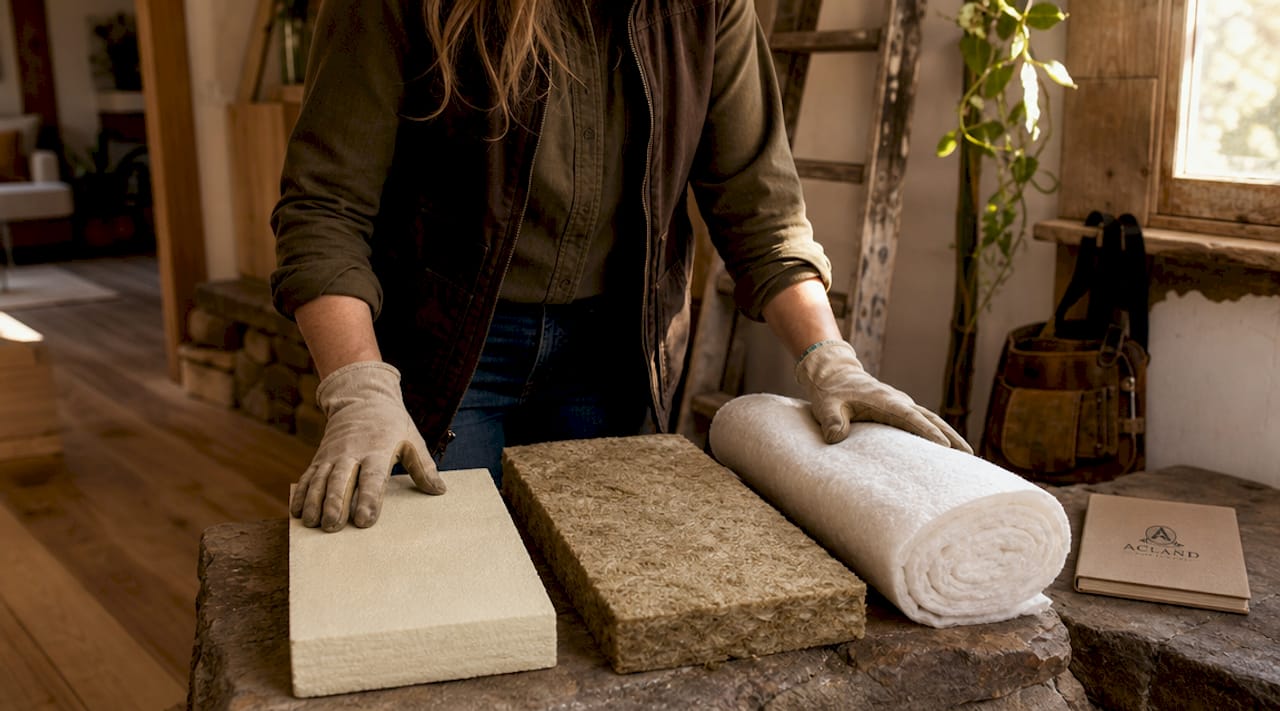
Choosing the right material is the single most consequential decision in the entire wood floor thermal insulation process. Each option carries different thermal performance, cost, and installation demands.
| Material | Thermal conductivity | Typical thickness needed | Best suited for |
|---|---|---|---|
| Mineral wool | 0.044 W/mK | 150–200mm | Standard joist bays with good access |
| PIR rigid foam | 0.022 W/mK | 80–100mm | Shallow crawl spaces |
| Sheep’s wool | ~0.040 W/mK | 150–200mm | Breathable, moisture-tolerant installs |
| Closed-cell spray foam | Lowest conductivity | Applied to fit | Irregular joists, tight clearances |
To meet the standard retrofit thermal target of 0.30 to 0.40 W/m²K, you need approximately 150 to 200mm of mineral wool or 80 to 100mm of PIR foam. PIR boards are popular in Scottish homes where crawl space clearance is limited, because they deliver the same performance at roughly half the depth. Mineral wool and polyester batts cost less and are easier to handle for DIY projects, but they require netting or timber battens to prevent sagging over time.
Closed-cell spray foam delivers the highest R-value and a complete moisture seal, lasting over 50 years with no maintenance. The trade-off is cost and complexity: spray foam is typically a professional-only job and can complicate future mortgage valuations if applied incorrectly.
- Mineral wool: affordable, widely available, good acoustic performance, requires support netting
- PIR boards: rigid, high performance per millimetre, cut cleanly with a handsaw
- Sheep’s wool: naturally breathable and moisture-regulating, premium price point
- Spray foam: fit-and-forget performance, but professional installation is strongly advised
Pro Tip: When using mineral wool or polyester batts, always install a vapour control layer on the warm side (facing up, towards the living space) to prevent moisture-laden air from condensing inside the insulation.
Understanding how your floor type affects material choice is covered in detail in this guide to thermal properties of wood floors.
How do you prepare a wood floor for insulation?
Preparation determines whether your insulation performs for decades or causes costly timber damage within a few years. Skipping this stage is the most common mistake homeowners make.
- Inspect the joists and boards. Look for signs of rot, damp staining, woodworm, or beetle damage before anything else. Inspecting joists for hidden timber damage before installing insulation is critical to prevent future failures. Any compromised timber must be treated or replaced first.
- Check and clear the air bricks. Locate every air brick on the external walls at ground level and confirm they are unobstructed. Blocked air bricks are the leading cause of subfloor condensation and rot.
- Assess subfloor access. Determine whether you can work from below via a crawl space or whether you will need to lift floorboards. Accessing the subfloor via airbrick openings or hatches is preferred over lifting boards where possible, as it preserves the floor surface and reduces labour.
- Measure the joist bays. Record the width and depth of each joist bay so you can cut insulation accurately. Note any pipes, cables, or ductwork running beneath the floor.
- Gather your tools and materials. You will need a tape measure, handsaw or utility knife, staple gun or timber battens, vapour control membrane, and your chosen insulation material.
Caution: Never block or reduce the ventilation path beneath a suspended timber floor. Improper ventilation management during insulation work leads directly to trapped moisture and timber rot. Ventilation takes priority over insulation thickness, every time.
Pro Tip: Shine a torch through each air brick opening before you start. If you cannot see light passing through to the opposite side of the subfloor, the ventilation path is obstructed and must be cleared before any insulation is fitted.
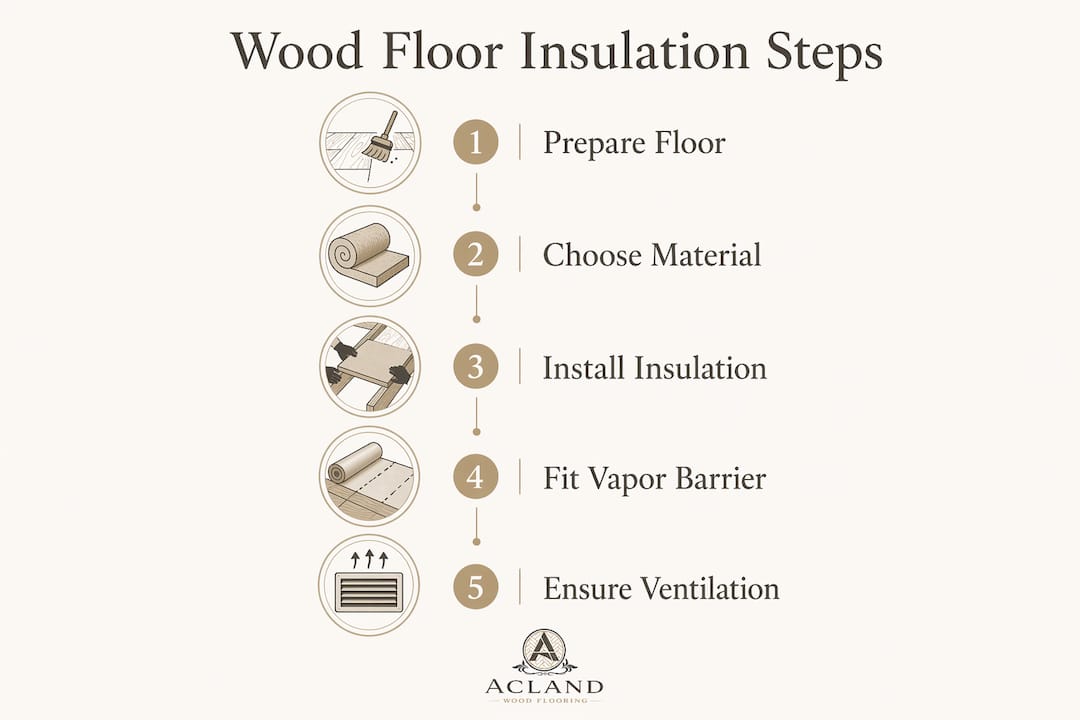
Step-by-step process for insulating a suspended timber floor
This is the core of any wood flooring insulation technique, and the sequence matters as much as the materials you choose.
Working from below (preferred method)
- Enter the crawl space wearing a dust mask, knee pads, and a head torch.
- Cut insulation batts 25 to 30mm wider than the joist gap for a friction fit. Oversize cutting allows the material to tension into place without compressing it, which would reduce thermal performance.
- Push each batt up firmly between the joists. For mineral wool, support it with garden netting stapled to the joist faces, or fix timber battens across the bottom of the joists at 400mm intervals.
- Maintain a 50mm air gap between the top of the insulation and the underside of the floorboards. This gap is not wasted space. It allows air to circulate and prevents condensation from forming against the timber.
- Fit the vapour control layer on the warm side of the insulation, lapping it 150mm up the walls and taping all joints.
- Work around pipes and cables by cutting the insulation to fit snugly rather than compressing it around them.
Working from above (when crawl space access is impossible)
- Lift floorboards carefully, numbering each one so they return to the same position.
- Drop insulation batts down between the joists, using a length of timber to position them accurately.
- Fit support netting or battens from above before replacing the boards.
- Refer to this guide on wood floor layering methods for advice on reinstating boards correctly.
| Method | Access required | Disruption to floor | Suitable for |
|---|---|---|---|
| From below | Crawl space clearance | None | Most pre-1940s homes |
| From above | Board lifting | Moderate | No subfloor access |
| Spray foam | Professional equipment | None | Tight or irregular spaces |
Pro Tip: If you are also planning underfloor heating, read up on wood floors with underfloor heating before finalising your insulation specification. The two systems interact directly, and the wrong insulation thickness can undermine heating efficiency.
What mistakes should you avoid when insulating wooden floors?
The wood floor insulation process fails most often not from bad materials but from poor execution. These are the errors worth knowing before you start.
- Blocking air bricks or ventilation paths. This single mistake causes more long-term damage than any other. Damp accumulates, joists rot, and the insulation itself becomes a liability rather than an asset.
- Compressing insulation batts. Forcing an oversized batt into a tight gap crushes the air pockets that give the material its thermal value. Compression reduces insulation effectiveness and defeats the purpose of fitting it at all.
- Leaving gaps at joist edges. Even a 10mm gap around the perimeter of a batt creates a cold bridge that undermines the whole installation. Cut carefully and check each piece before moving on.
- Skipping the timber inspection. Insulating over existing rot traps moisture and accelerates decay. The insulation will need to come out again within a few years, at significant cost.
- Ignoring irregular joist spacing. Older homes rarely have perfectly uniform joist bays. Measure each bay individually rather than assuming they are all the same width.
Pro Tip: For tight spaces or highly irregular joist layouts, closed-cell spray foam is the most practical solution. It fills voids completely and requires no cutting or support, making it ideal where standard batts simply will not fit cleanly.
Key takeaways
Effective wood floor thermal insulation depends on maintaining ventilation, selecting the right material thickness, and inspecting timber before any work begins.
| Point | Details |
|---|---|
| Heat loss reduction | Insulating a suspended timber floor cuts floor heat loss by 60 to 80%, saving up to £200 annually. |
| Material thickness | Use 150 to 200mm mineral wool or 80 to 100mm PIR foam to meet standard retrofit thermal targets. |
| Ventilation is non-negotiable | Always maintain a 50mm air gap under the boards and keep air bricks clear to prevent rot. |
| Cut batts oversized | Cutting insulation 25 to 30mm wider than the joist bay creates a secure friction fit without compression. |
| Inspect before you insulate | Check all joists for rot and damp before fitting any material to avoid trapping existing damage. |
What I have learned from years of working with wood floors
The question I hear most often is whether to go DIY or bring in a professional. My honest answer is: it depends entirely on your crawl space. If you can move freely beneath the floor, a competent DIYer can achieve excellent results with mineral wool and a staple gun. If you are working in a space under 400mm high, with pipes running in every direction, the job becomes genuinely difficult and the margin for error shrinks fast.
What surprises most homeowners is that ventilation management matters more than insulation thickness. I have seen beautifully fitted 200mm mineral wool installations fail within five years because one air brick was accidentally mortared over during external render work. The timber rotted from the inside, and the insulation had to come out completely. Getting the ventilation right is not a secondary concern. It is the primary one.
The other thing worth saying plainly: do not insulate over timber you have not inspected. Lifting a few boards before you start takes an hour. Discovering rot under sealed insulation two years later takes considerably longer and costs considerably more.
— John
Upgrade your floor from the ground up with Aclandwoodflooring

Once your insulation is in place, the floor above it deserves the same level of attention. At Aclandwoodflooring, we supply and install premium wood floors across Glasgow and the surrounding areas, pairing the right flooring specification with the thermal performance your home already has. Whether you are looking at solid wood flooring for lasting warmth and character, or exploring floating wood floor options that sit cleanly above an insulated subfloor, our team offers honest, expert advice tailored to your home. Get in touch with Aclandwoodflooring for a consultation and find out which flooring solution works best with your insulation upgrade.
FAQ
How much heat is lost through an uninsulated wood floor?
An uninsulated suspended timber floor can account for a significant proportion of a home’s total heat loss. Fitting insulation reduces floor heat loss by 60 to 80%, with annual savings of up to £200 for a typical semi-detached UK home.
What is the best insulation for suspended timber floors?
PIR rigid foam boards are the best choice where crawl space depth is limited, as they achieve the required thermal performance at 80 to 100mm thickness. Mineral wool at 150 to 200mm is the most cost-effective option where joist depth allows.
Do I need a vapour control layer when insulating wooden floors?
Yes. A vapour control layer fitted on the warm side of the insulation prevents moisture-laden air from condensing inside the material and against the timber joists, which would cause rot over time.
Can I insulate my wood floor without lifting the boards?
In most cases, yes. Accessing the subfloor via airbrick openings or existing hatches allows insulation to be fitted from below without disturbing the floor surface, which is the preferred method for preserving the existing flooring.
How do I prevent condensation when insulating a suspended timber floor?
Keep all air bricks clear and maintain a 50mm ventilation gap between the insulation and the underside of the floorboards. This airflow path prevents moisture from building up and protects the timber structure long term.