
Choosing the right wood flooring for your home in Glasgow or Central Scotland is more than a design decision. It is a long-term investment that shapes how every room feels underfoot, how easily it withstands daily life, and how your property competes on the market. With styles ranging from geometric statement patterns like chevron and herringbone to wide plank and engineered boards, the options are genuinely exciting. But without the right guidance, that excitement can quickly become overwhelming. This article breaks down what to look for, which styles suit which spaces, and why the installation is just as important as the product.
Key Takeaways
| Point | Details |
|---|---|
| Define your priorities | Focus on durability, style, and expert installation when picking wood floors for modern Scottish homes. |
| Compare leading styles | Herringbone, chevron, wide plank, and engineered boards each have aesthetic and practical benefits. |
| Check installation quality | Skilled fitting, particularly for statement patterns, is as important as the product itself for the best results. |
| Match style to space | Select your floor pattern based on room type, natural light, and your home’s interior design. |
How to assess wood flooring for modern interiors
Before you settle on a style, it helps to know what questions to ask. Modern interiors in Glasgow tend to favour clean lines, lighter palettes, and materials that feel natural without demanding excessive upkeep. Your wood flooring needs to fit that brief while also surviving real life.
Room size and natural light are your starting points. Lighter wood tones and wider boards make smaller rooms feel more open. Darker, narrower boards add intimacy and warmth to large open-plan spaces. The position of your windows matters too. Rooms with south-facing light can carry richer, more saturated wood tones. Rooms with north-facing light benefit from paler or mid-tone species.
Durability and maintenance are non-negotiable for busy households. Families with children or pets need a species and finish that stands up to regular cleaning, scuffs, and the odd muddy boot. Harder species like oak and ash outperform softer woods in high-traffic areas, and a satin or matt finish hides daily wear far better than a high-gloss lacquer.
Key criteria to assess before buying:
- Room use: High-traffic zones like hallways and kitchens need harder woods and durable finishes
- Subfloor condition: Solid and engineered boards have different requirements. Engineered is more forgiving
- Moisture levels: Scotland’s climate is damp. Engineered wood handles moisture variation better than solid
- Underfloor heating compatibility: Not all products work over UFH. Always check specifications
- Fitting method: Glue-down, floating, or nail-down each suit different subfloor types
Pro Tip: If you are considering a geometric pattern like chevron or herringbone, get your subfloor assessed before you buy the boards. As noted in research on statement pattern installation, small level errors become far more visually apparent in geometric layouts, so subfloor preparation matters even more than with straight plank runs. Learn more about avoiding common flooring errors before your project begins.
Understanding wood flooring types for Scottish homes gives you a practical foundation before you decide on any specific style.
Popular wood flooring styles for modern homes
With the main criteria in mind, let us explore the most popular and effective modern wood flooring styles for Scottish homes.
Herringbone is the style that has moved seamlessly from traditional townhouses into contemporary open-plan spaces. The V-shaped interlocking pattern creates a sense of movement and depth that straight planks simply cannot match. It works brilliantly in hallways where it draws the eye forward, and in reception rooms where it becomes an instant focal point. A well-laid herringbone floor layout requires precise measurement and careful starting-point selection. The geometry demands accuracy, but the results are genuinely dramatic.
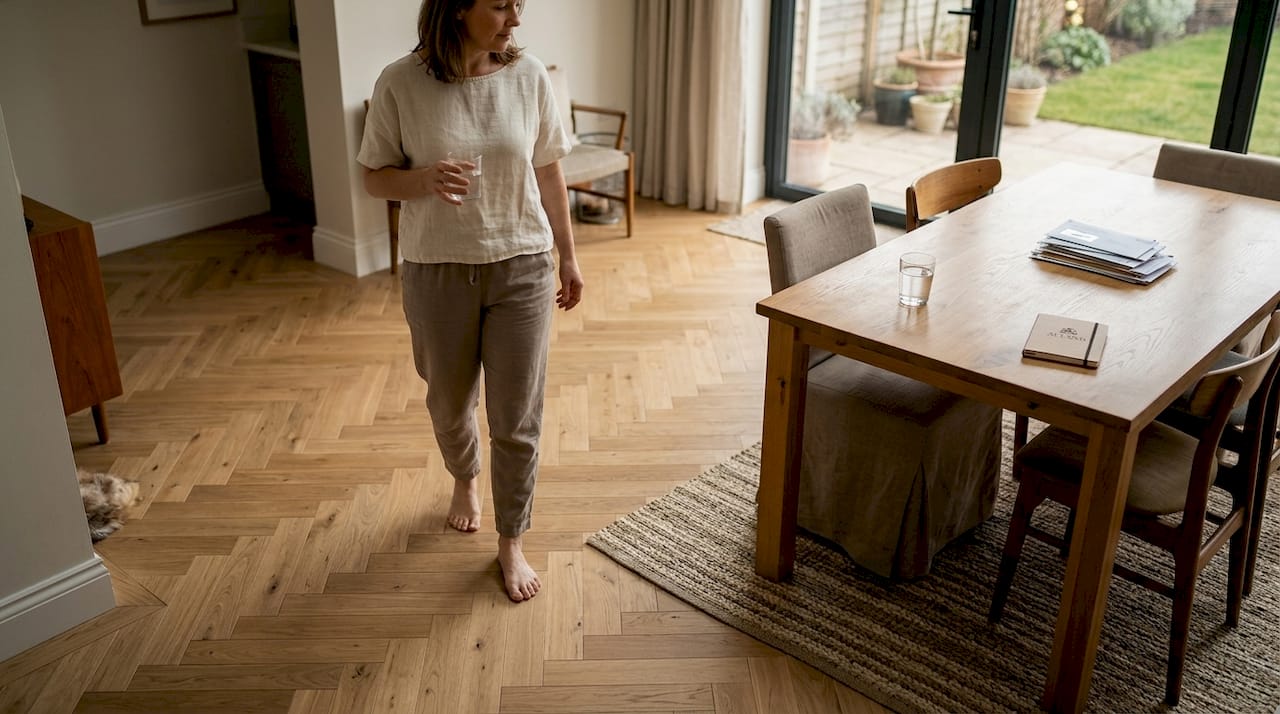
Chevron takes that drama further. Unlike herringbone, where boards meet at 90 degrees, chevron boards are cut at an angle so that the pattern forms a continuous arrow or peak. The effect is sharper and bolder. It suits larger rooms and open-plan layouts where the full pattern can be appreciated. Because the boards themselves are custom-cut, chevron is typically a more premium option. See our chevron flooring installation tips for a closer look at what the fitting process involves.
Wide plank flooring brings an entirely different energy. Boards of 180mm or wider give rooms a relaxed, elegant feel that pairs beautifully with Scandinavian-influenced interiors, natural textiles, and minimal furniture. The fewer seams mean the grain and character of the wood itself takes centre stage. This style is also more forgiving during installation, making it a practical choice for larger areas.
Engineered wood is not a single style but a construction method that supports all of the above patterns. A solid oak or walnut top layer sits above multiple layers of bonded timber, creating a product that performs better in Scotland’s variable humidity than solid wood alone. Engineered boards are the best choice for Glasgow climates because they resist the expansion and contraction that causes solid wood to gap or buckle.
Installation note: For geometric patterns, confirm your product system and installation approach in advance. Adhesive type, expansion gaps, and subfloor levelness carry more weight in a chevron or herringbone layout than in a standard plank run.
Pro Tip: When choosing between herringbone and chevron, consider the furniture and décor you plan to pair with the floor. A bold chevron pattern sits best with restrained, simple furnishings. A herringbone floor is more versatile and can hold its own alongside busier interiors.
Side-by-side comparison of top flooring styles
Having seen what each style offers, here is how they stack up against each other for the key qualities that matter most in a modern Scottish home.
| Style | Visual impact | Installation difficulty | Durability | Relative cost |
|---|---|---|---|---|
| Herringbone | High: geometric, dynamic | Moderate to high | High with oak or ash | Mid to premium |
| Chevron | Very high: bold, directional | High: custom-cut boards | High with engineered top layer | Premium |
| Wide plank | Elegant, relaxed | Low to moderate | High with harder species | Mid |
| Engineered (straight) | Natural, versatile | Low to moderate | Very high: stable in humidity | Mid to premium |
The table above shows that visual impact and cost tend to rise together, particularly for geometric patterns. However, the hidden cost is in the subfloor. As highlighted in guidance on chevron pattern installation, subfloor preparation and specification compliance with adhesive type and movement gaps matter even more than with straight plank runs.
The most important takeaway from this comparison is that installation difficulty is not just about time and cost. It is about the skill level required to avoid visible mistakes. Geometric floors with even minor alignment errors look wrong immediately and permanently. This is why choosing a specialist installer matters enormously for every room in your home.
Which wood floor style best suits your home?
The styles above each have their strengths, but the right pick depends on your home’s layout and how you use your space day-to-day.
Here are practical recommendations for common room types and situations:
- Open-plan kitchen and living areas: Wide plank engineered oak offers the visual flow and durability these high-use spaces demand. It runs seamlessly across zones without pattern interruption.
- Formal lounges and reception rooms: Herringbone in mid-tone oak strikes the ideal balance between character and contemporary style. Explore herringbone pattern ideas suited specifically to Glasgow homes.
- Hallways: Herringbone or chevron in narrower boards draws the eye forward and creates an immediate impression. Ensure the subfloor is fully level before installation begins.
- Bedrooms: Wide plank in a brushed or smoked finish adds warmth without visual noise. A softer species is acceptable here as foot traffic is lower.
- Homes with underfloor heating: Always choose engineered wood. Solid boards are more likely to expand and contract over a heated screed. Read the plank flooring installation guide for specific UFH considerations.
- Homes with pets or children: Go for a harder species like European white oak with an oiled or hardwax finish. It is repairable and conceals marks better than lacquered surfaces.
For Scottish homes specifically, moisture management and thermal performance should always factor into the decision. Scotland’s climate means your flooring will experience seasonal humidity shifts that softer or untreated products cannot handle reliably.
Pro Tip: If you opt for a statement chevron or herringbone floor, keep your wall colours neutral and your furniture restrained. The floor should be the feature. Competing patterns in soft furnishings dilute the effect and make the room feel busy rather than bold. When geometric patterns are paired with calm décor, the result is consistently striking.
The expert’s view: what really makes statement flooring work
Most articles will tell you that style choice is everything. Pick the right pattern, the right species, the right tone, and your floor will transform your home. That is true, but it is only half the story. After years of working on Glasgow homes, we have seen enough beautiful products ruined by poor fitting to know that craftsmanship is the real difference-maker.
Chevron and herringbone floors demand more from installers than a straight plank run. The geometry amplifies every imperfection. A subfloor that is even two millimetres out of level across a room will produce visible waviness in a herringbone pattern that no amount of finishing can correct. The same issue in a wide plank floor is far less noticeable. This is why avoiding flooring errors starts long before the first board goes down.
The conventional wisdom says: choose the most visually impressive pattern and the floor will speak for itself. Our experience says: choose your installer as carefully as your floor. Because a perfectly specified chevron floor, laid by someone without the technical knowledge to manage adhesive open times, expansion allowances, and starting geometry, will let you down. The product is only ever as good as the installation behind it.
Transform your home with expertly installed wood floors
For a modern home that truly stands out, expert guidance and installation complete the transformation.

At Acland Wood Flooring, we specialise exclusively in wood flooring for homes across Glasgow and Central Scotland. That focus means we understand the specific demands of Scottish properties: the climate, the construction, and the styles that genuinely work. Whether you are drawn to the elegance of herringbone flooring in Glasgow, the bold drama of chevron, or the timeless appeal of wide plank boards, we supply and fit only what we can stand behind. Browse our full range of engineered wood flooring options or find further wood floor design inspiration to help you picture what is possible in your home.
Frequently asked questions
Are herringbone and chevron floors suitable for underfloor heating?
Yes, both herringbone and chevron engineered woods work well over underfloor heating when installed by specialists with correct subfloor preparation and the right adhesive system, as specification compliance is particularly critical for geometric patterns.
What style of wood floor hides everyday wear and tear best?
Wide plank and brushed engineered wood floors typically conceal scuffs and daily marks more effectively than high-gloss finishes or intricate geometric patterns.
Which style adds the most value to modern Glasgow homes?
Herringbone floors and wide plank engineered boards are consistently the most valued options for contemporary appeal, durability, and broad buyer appeal in the Glasgow property market.
Is expert fitting essential for patterned wood floors?
Yes, statement patterns like chevron and herringbone require flawless installation to avoid visible alignment issues, and even small subfloor imperfections become obvious in geometric layouts.